Central Florida Greets Its First New Bank in a Decade as Portrait Bank Opens Its Doors in Winter Park

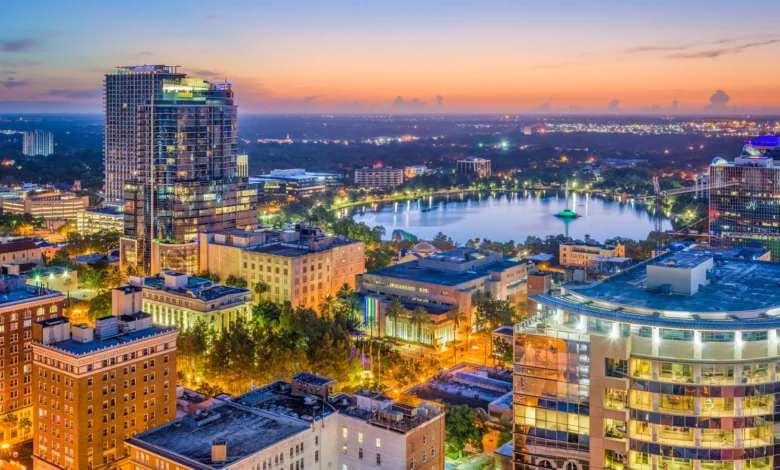
Portrait Bank officially commenced operations on Saturday, marking a significant milestone as central Florida’s first de novo bank in nearly a decade. Headquartered in Winter Park, just miles from the bustling Orlando skyline, the newly established financial institution enters a market that has experienced waves of corporate consolidation over the past two decades. Led by a team of seasoned banking executives and backed by substantial local investment, Portrait Bank aims to fill a perceived void in personalized, community-focused financial services for small-to-midsize enterprises, local families, and private wealth clients.
The opening follows three months after the institution secured its final charter approval from the Florida Office of Financial Regulation in June 2026. With the regulatory hurdles cleared, the executive team spent the summer aggressively onboarding clients ahead of the weekend launch, aiming to capitalize on a rapidly growing regional economy that has seen large-scale financial institutions dominate the local landscape at the expense of localized decision-making.
A Groundswell of Local Financial Support
Ahead of its public debut, Portrait Bank achieved a notable fundraising milestone, securing $43 million from 256 local investors. This capital haul significantly outpaced the initial $28 million capital requirement mandated by federal and state regulators. According to bank founder and Chief Executive Officer Erik Weiner, no single investor contributed more than $1 million, a strategy deliberately employed to ensure a diversified funding base rooted deeply within the central Florida community.
“The $43 million raised from local investors demonstrated how much the community was needing this, how excited they were, how much they rallied behind us,” Weiner stated. He added that the overwhelming response underscores a pent-up demand for a financial institution capable of understanding the nuances of the local economy without the rigid, centralized bureaucracy typical of multinational or mega-regional banks.
The broad shareholder base is viewed by financial analysts as both a stabilizing force and a powerful marketing asset. By tying the bank’s financial health directly to regional stakeholders, Portrait Bank has built an immediate network of advocates among business owners, professionals, and civic leaders across Orange County and the broader central Florida metropolitan area.
The Long Road to Launch: A Chronology of Regulatory Approval
The journey to Portrait Bank’s opening day began more than a year prior when a core group of regional banking veterans, spearheaded by Weiner, submitted formal applications to both the Florida Office of Financial Regulation and the Federal Deposit Insurance Corporation (FDIC). De novo banks—institutions built entirely from scratch rather than formed through mergers or acquisitions—have faced a notoriously rigorous and elongated approval process nationwide since the 2008 financial crisis, making successful launches a relative rarity in modern American banking.
The regulatory roadmap for Portrait Bank proceeded through several critical milestones:
- Late 2025: Founders officially submit foundational charter and deposit insurance applications to state and federal regulators.
- April 2026: The bank successfully secures vital conditional approvals from both the FDIC and state regulators, greenlighting the capital-raising phase.
- June 2026: Portrait Bank formally receives its banking charter from the Florida Office of Financial Regulation, allowing the management team to transition from capital accumulation to client onboarding.
- September 2026: Following a summer spent building infrastructure and courting prospective accounts, the bank opens its doors to the public on Saturday, Sept. 22, 2026.
Joining Weiner on the executive leadership team is Chief Financial Officer Jeff Jenkins. Jenkins brings vital institutional knowledge to the startup, having previously served as the CFO of Winter Park National Bank and holding the top financial officer role across four separate de novo banking ventures in the region. Regulators and industry observers alike often point to experienced leadership as a primary indicator of long-term viability for startup financial institutions navigating complex compliance and interest-rate environments.
Consolidation and the Case for Community Banking
Portrait Bank’s arrival addresses a structural transformation that has reshaped the central Florida banking sector over the past twenty-six years. According to industry data cited by Weiner, the number of independent banks headquartered in central Florida plummeted from 38 in the year 2000 to approximately half a dozen prior to Portrait’s launch.
This dramatic contraction was primarily driven by industry consolidation, as national and super-regional banking giants absorbed local institutions through mergers and acquisitions. While consolidation produced entities with vast balance sheets, it simultaneously reduced the availability of localized credit assessment, relationship-driven lending, and community-level philanthropic engagement.

“There’s not a lot of choices for clients, and they feel like they’re put into a box,” Weiner explained regarding the current landscape. He noted that corporate consolidation frequently results in diminished personalized service and a reliance on automated, distant underwriting committees that may struggle to evaluate the unique potential of local small businesses and real estate developers.
By contrast, Portrait Bank’s operating thesis relies on proximity and contextual understanding. Weiner, a near-lifelong resident of central Florida who relocated to the region at age eight from New York, emphasizes that his executive team possesses an innate grasp of how local business owners view the market, manage seasonal fluctuations, and plan for generational wealth transfer.
Capitalizing on Exceptional Demographic Tailwinds
Portrait Bank enters the market at an opportune time, benefiting from powerful demographic and economic tailwinds that continue to reshape central Florida. According to data from the Orlando Economic Partnership and the U.S. Census Bureau, the population of the Orlando metropolitan area expanded by 1.3% in 2025.
This growth rate comfortably outpaces the broader state of Florida’s growth rate of 0.8% and places Orlando sixth overall in population growth among the thirty most populous metropolitan areas in the United States. This rapid influx of new residents, remote professionals, and migrating corporate headquarters has generated surging demand for residential mortgages, commercial real estate development capital, treasury management services, and private wealth advisory work.
Economic analysts observe that as populations swell, the traditional banking needs of small-to-midsize enterprises—ranging from construction financing to equipment leasing—expand exponentially. While the largest national banks capture a significant share of retail deposits, small and mid-sized businesses frequently report feeling underserved by automated corporate lending models. De novo banks historically position themselves to capture this exact market segment by offering high-touch, flexible relationship banking.
Strategic Implications and Future Outlook

The successful capitalization and launch of Portrait Bank serves as a potential bellwether for the broader de novo banking landscape in the United States. Following years of depressed charter activity nationwide, regulatory bodies have expressed cautious openness to well-capitalized applications led by seasoned management teams, recognizing that healthy community banking ecosystems foster local economic resilience and small business innovation.
However, operating a de novo bank in the mid-2020s presents distinct challenges. Portrait Bank must navigate a complex macroeconomic environment characterized by fluctuating interest rate expectations, intense competition for core deposits from both traditional banks and digital-first fintech platforms, and rising operational costs associated with cybersecurity and regulatory compliance.
To mitigate these pressures, Portrait Bank’s leadership intends to maintain a sharp geographic focus on central Florida, resisting the temptation to pursue rapid, dispersed geographic expansion. By concentrating initial efforts on Winter Park, Orlando, and surrounding municipalities, the bank can optimize its human capital and leverage the deep local roots of its 256 founding investors.
Ultimately, Weiner envisions Portrait Bank as an enduring fixture of the local economy. Whether the institution can successfully alter the competitive dynamics of a market dominated by multi-trillion-dollar financial giants will depend on its ability to execute relationship-driven banking at scale. For now, the overwhelming community response and the successful injection of $43 million in local capital demonstrate that central Florida’s business community is more than ready for a banking alternative built in its own backyard.
Related posts: