Nubank, the digital banking behemoth that reshaped the financial services sector in Brazil, Mexico, and Colombia, has officially initiated its foray into the United States market. The company, founded by David Vélez, Cristina Junqueira, and Edward Wible, confirmed its operational launch in Miami, marking a significant strategic shift for a firm that has spent the last decade dominating the Latin American banking ecosystem. By launching an initial suite of products—including high-yield savings accounts, a no-fee credit card, and low-cost international remittance services—Nubank is signaling its intent to challenge established players in the U.S. fintech space.
The U.S. launch is being facilitated through a partnership with Lead Bank, a common strategic move for fintech firms aiming to enter the American market without waiting for the lengthy regulatory approval process required for a standalone national bank charter. While this partnership provides the immediate infrastructure necessary to serve customers, Nubank is simultaneously pursuing its own regulatory independence. In January, the company secured conditional approval from the Office of the Comptroller of the Currency (OCC) for a national bank charter, a process that is currently undergoing final review by the Federal Reserve and the Federal Deposit Insurance Corporation (FDIC). Cristina Junqueira, Nubank’s co-founder and head of the U.S. business, has indicated that the firm anticipates operating under its own independent charter by sometime next year.
The Product Suite and Market Positioning
At the launch event in Miami, company leadership outlined a value proposition designed to appeal to U.S. consumers who are increasingly sensitive to fee structures and interest rates. The current lineup includes deposit accounts offering a 3.50% annual percentage yield (APY), which is intended to attract liquidity in a high-interest rate environment. Furthermore, the firm is introducing a credit card devoid of annual fees that offers 1.5% cash back on all purchases, a competitive feature in a crowded U.S. credit market.

Perhaps most strategically, Nubank is leveraging its expertise in cross-border payments to offer low-cost international remittances. This move positions the firm to capture a significant share of the immigrant population in the United States who frequently send capital back to Latin America. By streamlining these transfers, Nubank is effectively bridging its existing international infrastructure with its new domestic customer base.
A Decade of Disruption: The Brazil Blueprint
To understand the weight of Nubank’s U.S. entry, one must analyze the conditions of its inception in Brazil in 2013. At the time, the Brazilian banking sector was defined by an extreme oligopoly. Five major financial institutions controlled approximately 80% of the market, characterized by exorbitant fees, branch-centric bureaucracy, and a profound lack of customer-centricity.
Nubank’s rise was predicated on a fundamental rejection of this status quo. By eliminating account maintenance fees and overdraft charges, the company successfully targeted segments of the population that had been marginalized by traditional incumbents. The firm’s "purple card" became a symbol of digital-first financial management. By operating exclusively through a mobile application, Nubank bypassed the overhead costs of maintaining physical branches, a savings it passed directly to its customers.
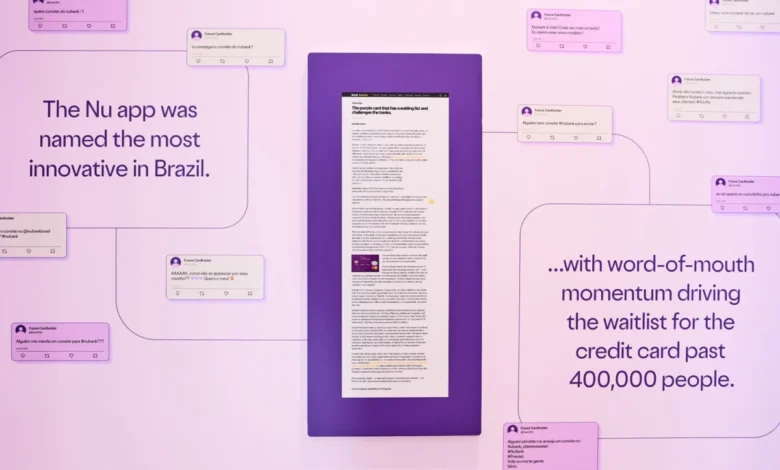
The company’s growth trajectory was aggressive. Between 2013 and the present, Nubank has scaled to serve more than 60% of the adult population in Brazil. Data from financial analysts suggests that the firm has effectively overtaken legacy giants such as Itaú and Caixa in terms of brand value and customer engagement metrics. A critical pillar of this growth was the company’s decision to rebuild credit underwriting from the ground up. Utilizing alternative data sets to assess risk—rather than relying solely on traditional, thin credit files—Nubank successfully brought millions of previously unbanked individuals into the formal financial system. In a single year, the firm added 5.7 million new credit card users, a testament to its ability to expand the total addressable market rather than simply stealing share from existing competitors.

Chronology of Expansion
The path to the United States was not a sudden decision but the culmination of a decade of international scaling.
- 2013: Nubank is founded in São Paulo, Brazil. The initial product, a credit card, is launched to bypass the need for a full banking license.
- 2017: The company introduces its digital savings account, NuConta, expanding beyond credit into banking services.
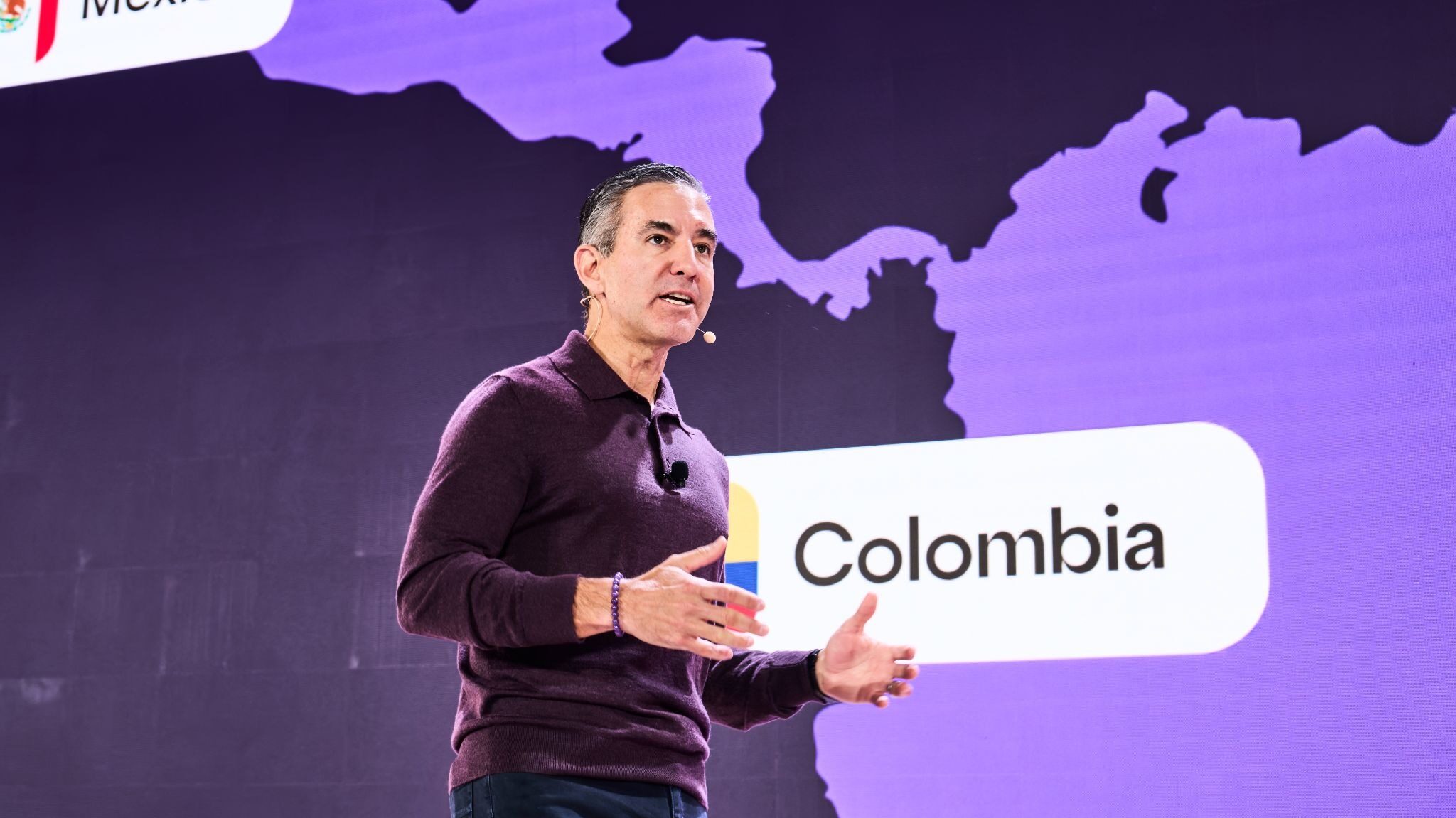
- 2019: Nubank initiates its first international expansion, entering the Mexican market.
- 2020: The firm enters the Colombian market, continuing its focus on the Latin American region.
- 2021: Nubank completes a high-profile initial public offering (IPO) on the New York Stock Exchange, signaling its ambition to be a global entity.
- 2025 (January): The Office of the Comptroller of the Currency grants conditional approval for a U.S. national bank charter.
- 2026 (September): Official rollout of U.S. services in partnership with Lead Bank.
Analysis of Implications for the U.S. Fintech Landscape
The U.S. market is markedly different from the environment in which Nubank thrived. Unlike the Brazilian banking sector of 2013, the U.S. market is highly competitive, saturated with both legacy institutions (such as JPMorgan Chase and Bank of America) and agile fintech competitors (such as Chime, SoFi, and Robinhood).
However, Nubank’s core competency—its ability to build a profitable business model around low-income or "underbanked" demographics—could be its primary differentiator. While many U.S. fintechs have struggled to achieve profitability, Nubank’s success in Latin America has proven that its unit economics are sound. By maintaining low acquisition costs and high customer retention, the firm has demonstrated an ability to navigate volatile economic cycles.
Financial analysts have noted that the "Nubank model" is predicated on high-frequency engagement. By bundling credit, savings, and payments, the firm creates a "financial operating system" that keeps users within its ecosystem. If Nubank can replicate this engagement in the United States, it may pose a significant threat to mid-sized regional banks that have been slow to modernize their digital platforms.
Furthermore, the firm’s focus on the U.S.-Latin America remittance corridor is a calculated play. According to World Bank data, the flow of remittances to Latin America and the Caribbean has seen consistent year-over-year growth. By positioning itself as the primary conduit for these funds, Nubank creates a "sticky" user base that relies on the platform for both domestic U.S. banking and international financial obligations.
Challenges Ahead
Despite its success, the firm faces significant headwinds in the United States. Regulatory scrutiny is substantially higher than in Latin American markets. As the company awaits full approval from the Federal Reserve and the FDIC, it must ensure its compliance frameworks are robust enough to meet stringent U.S. standards. The "partner-bank" model, while effective for a launch, involves a degree of dependency that the firm will need to move away from quickly to fully control its margins and regulatory destiny.
Moreover, consumer trust in the United States is deeply entrenched in legacy brands. Convincing American consumers to move their primary banking relationships to a foreign-born fintech will require significant marketing investment and a flawless user experience.
As David Vélez and his team embark on this new chapter, the industry will be watching closely. If Nubank can successfully adapt its "underdog" philosophy to the most competitive financial market in the world, it will not only solidify its position as a global leader in digital finance but also validate the broader trend of international fintech expansion. The next twelve months, leading up to the expected acquisition of its own national charter, will be the defining period for Nubank’s American ambitions.
Related posts: