Acknowledging Recent Translators and the Global Expansion of Bitcoin Education

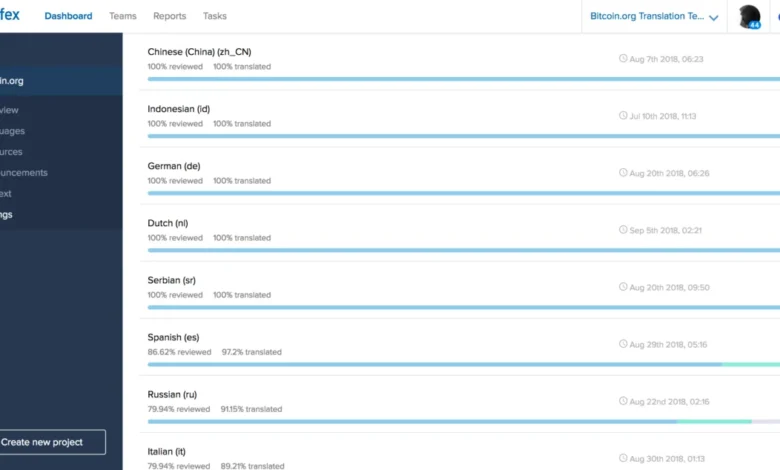
The Bitcoin.org platform, a cornerstone of the cryptocurrency ecosystem, has formally recognized a cohort of volunteer translators whose efforts have been instrumental in localizing educational resources for a global audience. This initiative, bolstered by a strategic sponsorship from the peer-to-peer exchange Paxful, serves as a testament to the decentralized nature of Bitcoin’s growth. By facilitating the translation of technical documentation and foundational literature into dozens of languages, these contributors are effectively lowering the barriers to entry for millions of potential users across diverse geopolitical landscapes.
The Mechanism of Global Bitcoin Adoption
While Bitcoin adoption is frequently measured through market capitalization, exchange volume, and institutional investment, the underlying infrastructure of "knowledge transmission" remains the most critical metric for long-term sustainability. As of late 2018, Bitcoin.org observed tens of millions of visitors, with approximately 50% of the traffic originating from non-English speaking regions. This demographic split underscores a fundamental reality: for a global digital currency to function effectively, its educational resources must be accessible in the native languages of its prospective users.
The translation project, hosted primarily through the localization platform Transifex, currently encompasses 70 distinct languages. Of these, 27 have reached a state of maturity that allows for full integration into the primary user interface of Bitcoin.org. This process is not merely linguistic; it is a technical undertaking that requires maintaining accuracy in financial and cryptographic terminology, ensuring that concepts like "cold storage," "private keys," and "consensus mechanisms" are communicated with precision, regardless of the target culture.
A Chronology of Linguistic Integration
The effort to internationalize Bitcoin.org has been an iterative process that gained significant momentum in the years leading up to 2018. The project began with the translation of high-level introductory pages aimed at the general public. As the ecosystem matured, the demand for technical documentation grew.
- Early Development: The initial phases focused on static web pages that explained the basic utility of Bitcoin, such as how to set up a wallet or make a transaction.
- The Technical Shift: In early 2018, the development team successfully ported the site’s technical documentation to the localization platform. This marked a significant milestone, as it allowed for the collaborative translation of complex whitepapers and developer guides.
- The Paxful Sponsorship: Recognizing that high-quality translation is often a thankless, labor-intensive task, the sponsorship from Paxful provided the financial resources to incentivize and honor the most active contributors. This funding was distributed as Bitcoin, a symbolic and practical gesture that aligned with the platform’s mission.
- Ongoing Maintenance: The project now operates on a rolling basis, where volunteers manage updates as new features or security protocols are introduced to the Bitcoin core software.
The Role of Infrastructure and Community Coordination
The success of the Bitcoin.org translation project is heavily reliant on the infrastructure provided by Transifex, which offers enterprise-grade localization tools. These tools allow for version control, collaborative review, and consistency in terminology, which are essential when dealing with decentralized teams working across disparate time zones.
Furthermore, the project has benefited from the oversight of community coordinators, such as the contributor known as "Komodorpudel." The role of the coordinator is to manage the workflow, resolve disputes regarding terminology, and ensure that new volunteers are onboarded efficiently. This human element is the "glue" that keeps the decentralized translation effort cohesive. By fostering a sense of community, coordinators have maintained a steady pipeline of contributions even in the absence of traditional corporate hierarchies.
Implications for the Bitcoin Developer Ecosystem
The decision to prioritize the translation of developer documentation is of particular strategic importance. By providing a technical foundation in languages such as Mandarin, Spanish, Russian, and Arabic, the project is nurturing a new generation of developers in non-English-speaking countries.
When developers in emerging markets can study Bitcoin’s source code and documentation in their own language, the time required to build local, region-specific applications is significantly reduced. This leads to the creation of bespoke products—such as localized merchant payment gateways or community-specific wallet interfaces—that are more culturally and economically relevant to those regions. In this sense, the translation project acts as a force multiplier for the development of the broader Bitcoin ecosystem, ensuring that the next wave of innovation is not limited to English-speaking hubs.
Supporting Data: The Scale of Global Engagement
To understand the scope of this project, one must examine the traffic patterns of Bitcoin.org. In the year 2018 alone, the site witnessed a record-breaking volume of visitors. While English remains the primary language of the core protocol’s discourse, the surge in traffic from countries with hyper-inflationary pressures or under-banked populations suggests that the demand for Bitcoin is largely driven by utility rather than speculation.
Statistical analysis of site engagement reveals that when a page is available in a user’s native language, the "bounce rate"—the percentage of visitors who leave after viewing only one page—drops significantly. This indicates that accessibility directly correlates with user retention. For a project that prides itself on being "open source" and "for everyone," the ability to provide localized content is not just a feature; it is a core component of the site’s mission to democratize finance.
Challenges in Technical Translation
Translating Bitcoin-related content presents unique challenges that distinguish it from standard website localization. Unlike translating marketing copy, technical documentation regarding blockchain technology requires an understanding of computer science and cryptography. There is also the challenge of "terminology drift," where different regions may adopt different colloquial terms for new technological concepts.
The volunteer teams have had to establish rigorous review processes to ensure that translations remain faithful to the original English documentation. This is critical for security: an error in a translated instruction regarding private key management or a security warning could have dire consequences for a user’s funds. Consequently, the project requires a multi-layered review system where senior contributors verify the work of new volunteers, ensuring a high standard of quality and safety.
Future Outlook and Conclusion
The work performed by the Bitcoin.org volunteer translation team is a clear example of the "Satoshi" philosophy: the idea that every individual, regardless of their background or location, can contribute to the security and growth of the network. As the project looks to the future, the goal is to expand the reach of these languages even further and to ensure that as the Bitcoin protocol evolves, the documentation keeps pace.
The recognition of these contributors is not merely a formality; it is an acknowledgement that the strength of Bitcoin lies not just in its hash rate or its market price, but in its ability to empower individuals through information. By bridging the linguistic gap, these volunteers are ensuring that the promise of a borderless, decentralized financial system remains available to anyone with an internet connection. As more businesses begin to accept Bitcoin and more users enter the space, the foundation laid by these translators will prove to be one of the most vital components of the global financial shift.
For those interested in contributing, the process remains open to the public. Through the Bitcoin.org GitHub repository, individuals can access the documentation, learn the workflow, and begin participating in the effort to translate the future of finance, one word at a time. The sustained commitment of these volunteers highlights a shared vision: a world where Bitcoin is accessible, understandable, and usable by all, irrespective of the language they speak.