South Africa to Revise Draft Cross-Border Crypto Regulations Following Massive Public Pushback

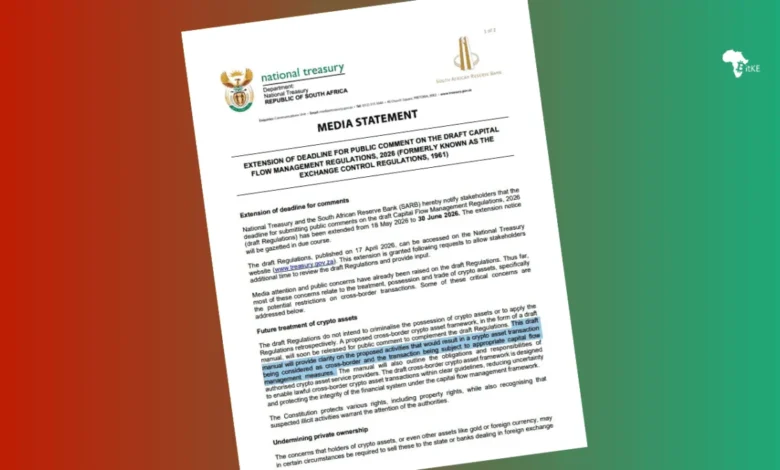
South Africa is set to overhaul its regulatory approach to digital assets following an overwhelming wave of feedback from the public, industry stakeholders, and financial experts. Finance Minister Enoch Godongwana announced that the National Treasury and the South African Reserve Bank (SARB) will revise the controversial draft regulations concerning cross-border cryptocurrency transactions. The initial proposal, designed to bring digital asset flows under the nation’s stringent exchange-control frameworks, inadvertently sparked a nationwide debate regarding financial innovation, economic participation, and the balance between robust oversight and over-regulation.
The decision to rewrite the framework marks a significant pivot in South Africa’s regulatory journey. Originally intended to curb illicit financial flows, capital flight, and money laundering via blockchain networks, the draft rules met fierce resistance from the cryptocurrency sector. Industry leaders argued that the stringent limitations on cross-border payments, stablecoin usage, and self-custody wallet transfers threatened to stifle legitimate economic activity, potentially driving users toward unregulated, shadow financial channels and isolating the country from the burgeoning global digital economy.
Background and Context: Bringing Crypto into the Regulatory Fold
For years, South Africa’s regulatory authorities have grappled with how to integrate decentralized digital assets into a tightly controlled traditional financial ecosystem. Governed historically by decades-old exchange controls designed to manage capital leaving the country, the South African Reserve Bank maintains strict oversight of foreign currency movements. As cryptocurrency adoption surged across the African continent—with South Africa emerging as one of the leading markets for digital asset adoption—regulators sought to close perceived loopholes that could facilitate capital flight or tax evasion.
In mid-2026, these efforts materialized when the National Treasury and the SARB officially invited interested parties to submit written comments on the draft Crypto Assets Manual for cross-border activities. The primary objective was clear: establish visibility and control over crypto-asset transfers moving across South African borders.
However, the methodology proposed in the draft manual alarmed the burgeoning domestic fintech and crypto sectors. Critics pointed out that treating digital assets with the same heavy-handed pre-approval mechanisms used for traditional fiat currency transfers failed to account for the speed, borderless nature, and technical architecture of blockchain technology.
The Chronology of Opposition: The Rise of CATASTROPHE
As the consultation period progressed, opposition coalesced into a powerful unified front. A coalition known as CATASTROPHE—the Crypto Asset Taskforce for Advancing Sound, Technology-Neutral Regulation for Opportunity, Prosperity, and a Healthy Economy—was formed to spearhead a national campaign against the restrictive provisions of the draft legislation.
CATASTROPHE brought together an unprecedented alliance of leading regulated Crypto Asset Service Providers (CASPs), major digital asset exchanges, financial institutions, academics, legal experts, economists, and entrepreneurs. Prominent entities within the coalition included major industry players such as VALR, Luno, AltCoinTrader, and EasyEquities.

The coalition launched an aggressive public awareness campaign, arguing that the draft rules would have disastrous unintended consequences. According to CATASTROPHE’s submissions, the proposed restrictions would severely harm domestic enterprises, destroy high-tech jobs, slow down broader economic participation, and place South Africa at a competitive disadvantage globally. Rather than achieving security, the coalition argued, the rules would penalize compliant businesses and everyday users while failing to deter sophisticated bad actors who operate outside formal channels.
Government Response and the Pivot Toward Flexibility
Recognizing the depth and validity of the concerns raised during the public comment window—which yielded thousands of detailed submissions—the government signaled a willingness to adapt.
Addressing the nation during his October 2026 budget statement, Finance Minister Enoch Godongwana acknowledged the friction caused by the initial proposals and outlined a more progressive path forward.
"We must aim to shift away from pre-approvals," Godongwana stated, signaling a major philosophical shift in how the state plans to monitor capital flows. "Instead, we must assess transactions for legitimacy and tax compliance."
Furthermore, the Finance Minister emphasized that the future regulatory framework would not operate in a vacuum. He confirmed that the treatment of crypto assets moving forward would be closely aligned with international standards and recommendations issued by the Financial Stability Board (FSB), ensuring that South Africa remains integrated with global regulatory harmonization efforts rather than charting an isolated and overly restrictive course.
Fact-Based Analysis of Implications for the South African Economy
The decision to draft a revised second version of the cross-border crypto regulations carries profound implications for South Africa’s financial landscape.
- Balancing Compliance and Innovation: By moving away from rigid pre-approval systems toward risk-based legitimacy and tax compliance checks, South Africa has the opportunity to position itself as a progressive hub for fintech innovation on the African continent. Pre-approval models often result in bureaucratic bottlenecks that make time-sensitive digital commerce practically impossible.
- Mitigating Capital Flight Without Stifling Growth: The core mandate of the SARB remains protecting the country’s foreign exchange reserves and preventing illicit financial flows. A revised framework that focuses on post-transaction auditing, robust Know-Your-Customer (KYC) protocols, and effective Anti-Money Laundering (AML) standards can achieve these protective goals without choking the legitimate operations of CASPs and enterprises.
- Alignment with Global Standards: Incorporating Financial Stability Board guidelines ensures that South African regulatory structures are interoperable with major global jurisdictions. This is crucial for local fintech firms seeking to attract international investment, partner with global banking networks, and expand their operations beyond domestic borders.
- Empowering Self-Custody and Decentralized Finance: One of the most contentious elements of the initial draft was its treatment of self-custody wallets. As consultations on the second draft proceed, finding a balanced approach to private wallet interactions will be critical to maintaining user trust and security within the domestic ecosystem.
Next Steps and the Road Ahead
Following the closure of the initial public comment phase and the government’s commitment to a revision, the National Treasury and the South African Reserve Bank are expected to release a refined second draft of the cross-border regulations. This subsequent phase will re-engage industry stakeholders, legal experts, and the public in further consultations.
The willingness of South African fiscal authorities to listen, review, and adapt in the face of constructive criticism has been widely welcomed by the digital asset community. As South Africa rewrites its decades-old monetary rules for the modern digital age, the upcoming regulatory draft will serve as a vital blueprint for how emerging economies can harness the economic potential of blockchain technology while safeguarding financial stability.