OpenBitcoin integrates real-time network analytics and educational resources to streamline the user experience for the Bitcoin ecosystem

As the global financial landscape continues to grapple with the complexities of digital assets, the necessity for reliable, transparent, and user-friendly data infrastructure has never been more pronounced. OpenBitcoin.com has emerged as a comprehensive platform designed to bridge the gap between technical blockchain data and everyday utility. By providing a unified interface that combines a blockchain explorer with extensive educational resources and financial tools, the platform caters to both seasoned participants and newcomers, all while maintaining a strict “Bitcoin-only” ethos.
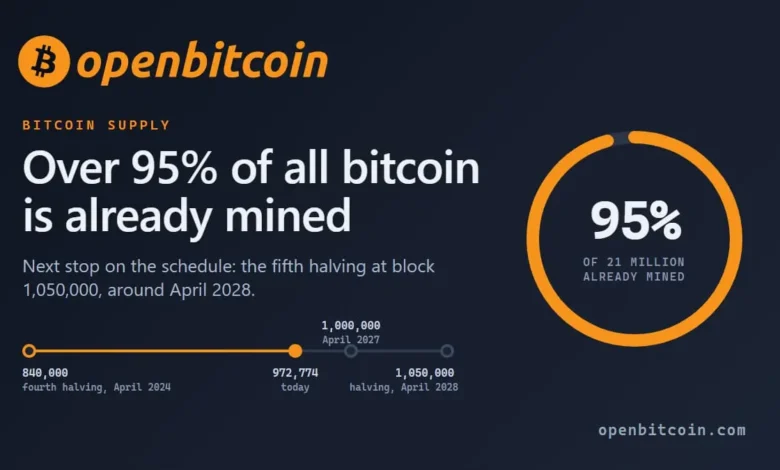
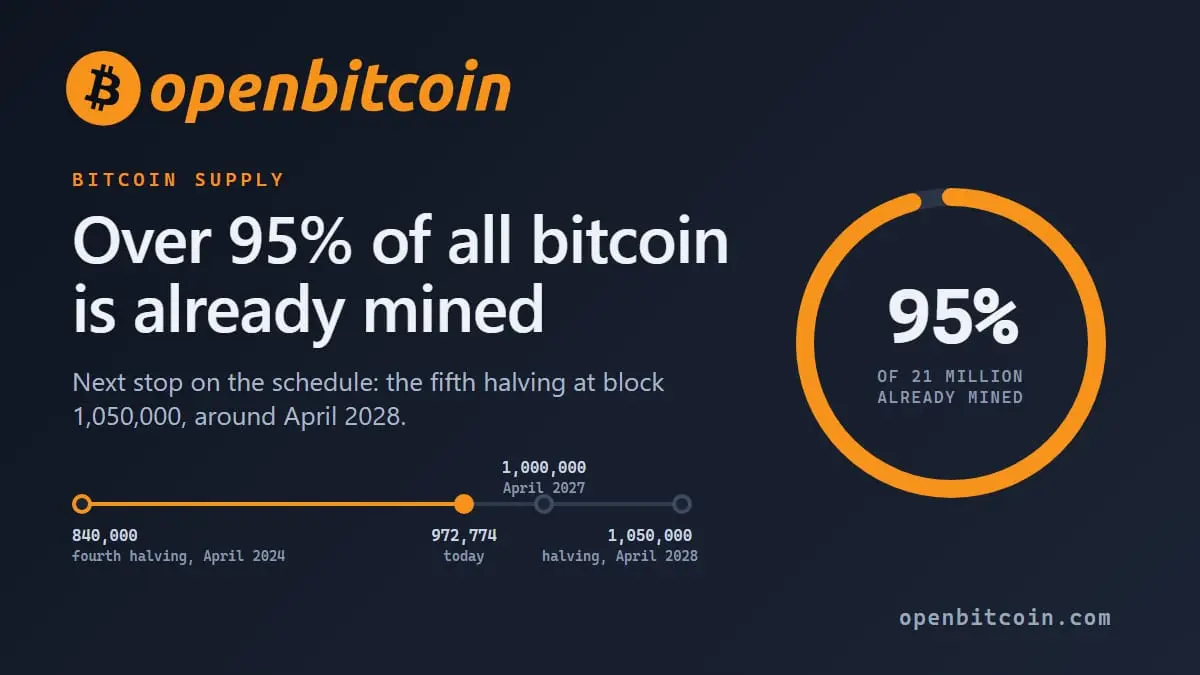
A core feature of the platform is its integration of live countdowns to critical network milestones, most notably the upcoming fifth Bitcoin halving scheduled for April 2028. By positioning these countdowns alongside essential daily utilities—such as address lookups, price conversion, and fee trackers—OpenBitcoin aims to provide users with a constant, macro-level perspective on the asset’s underlying monetary policy while they attend to immediate transactional needs.
The Mechanism and Economic Significance of the Halving
To understand the importance of the 2028 milestone, one must first grasp the foundational principles of Bitcoin’s issuance schedule. Since its inception, Bitcoin has operated on a deflationary monetary policy encoded into its protocol by its pseudonymous creator, Satoshi Nakamoto. Every 210,000 blocks, the reward granted to miners for securing the network is reduced by 50 percent. This process, known as the halving, is the mechanism that ensures the total supply of Bitcoin will never exceed 21 million units.
Currently, the network is in its fourth epoch, with miners receiving a block subsidy of 3.125 BTC. This results in the issuance of approximately 450 new coins per day. When the network reaches block 1,050,000, projected for April 2028, this subsidy will be slashed to 1.5625 BTC, effectively halving the daily supply of new coins to approximately 225.
The economic implications of this event are a subject of ongoing analysis by financial institutions and cryptocurrency researchers. Proponents of the “stock-to-flow” model argue that by reducing the supply influx while demand remains constant or increases, the protocol exerts upward pressure on market value. However, critics point to the fact that the halving is a pre-programmed event that is theoretically “priced in” by efficient markets long before it occurs. Regardless of the market outcome, the event serves as a critical stress test for the mining industry, as profitability margins tighten, forcing less efficient mining operations to either upgrade their hardware or exit the market.
A Chronology of Supply Milestones
The history of Bitcoin is defined by its supply progression. With over 95 percent of the total supply—approximately 20.1 million coins—already in circulation, the network is moving into a phase of increasing scarcity.
The trajectory of this scarcity is marked by specific milestones. Before the 2028 halving occurs, the network will reach a significant psychological threshold: block 1,000,000. Expected in April 2027, this round number will serve as a testament to the longevity and consistency of the blockchain’s production cycle. OpenBitcoin has dedicated a specific portal to this milestone, providing users with a live tracker to monitor progress toward this massive achievement. Following the 2028 event, the halvings will continue in four-year intervals until approximately the year 2140, when the final fraction of a Bitcoin will be mined and the total supply reaches its 21 million cap.
Streamlining Data for the Daily User
One of the primary challenges in the digital asset space is the fragmentation of information. Users often have to visit one site for market data, another for block exploration, and a third for educational guides. OpenBitcoin seeks to eliminate this friction through a "one-box" search architecture. By entering a transaction ID, block number, or wallet address, users receive a holistic overview of the relevant data without the need for account registration, software installation, or exposure to extraneous altcoin data.
This functionality is complemented by a suite of financial tools designed for transparency. The platform’s price converter supports 15 global currencies and enables real-time calculations between Bitcoin and its smallest unit, the satoshi. Furthermore, the inclusion of a cost-basis calculator and a historical price calendar provides users with the data required to understand the long-term performance of their assets. By allowing users to simulate historical buying patterns, these tools offer a factual, data-driven approach to understanding the volatility and growth of Bitcoin over the past decade.
Navigating Fees and Network Congestion
Transaction fees remain one of the most dynamic aspects of the Bitcoin network. Because fees are determined by a competitive auction system where users bid to have their transactions included in the next block, they can fluctuate significantly based on network activity. OpenBitcoin’s fee tracker removes the guesswork from this process by providing real-time data on current costs and offering insights into when network traffic is historically lowest.
For developers and advanced users, the site provides granular details on transaction sizes and inputs, ensuring that users can optimize their transactions for cost and speed. This focus on utility extends to the site’s educational component, which covers complex topics such as UTXO management, address poisoning, and the intricacies of the Lightning Network.
Educational Infrastructure and Security
A significant portion of the platform is dedicated to user safety and self-custody. In an industry where the loss of a private key often results in the permanent loss of funds, education on security is paramount. OpenBitcoin hosts a library of 19 guides that address foundational concepts and common pitfalls. Topics include:
- Self-Custody: Best practices for securing digital assets independently.
- Seed Phrase Management: Protocols for backing up and storing recovery phrases.
- Threat Detection: Recognizing and avoiding common scams and phishing attempts.
- Privacy and Inheritance: Planning for the long-term stewardship of digital holdings.
In addition to these guides, the platform provides 11 browser-based tools, several of which operate entirely offline. These include QR code generators, signed-message verifiers, and address validators designed to prevent errors caused by typos—a frequent cause of lost funds.
Bridging Data and Entertainment
In an effort to make technical concepts more accessible, OpenBitcoin has incorporated interactive elements that transform live network data into educational games. "Block Builder" and "Backlog Breaker" allow users to visualize the process of transaction confirmation and fee structures in a simplified, gamified environment. These tools do not merely serve as entertainment; they provide a tangible way to understand the abstract concepts of block space and mining incentives.
"Most bitcoin sites make you choose between a serious explorer and a site that explains things," the OpenBitcoin team stated in a recent release. "We wanted one place where you can check an address, see the price in your own currency, understand what a halving does, and get on with your day. Bitcoin only, no accounts, no noise."
Institutional Integrity and Open Source Methodology
The integrity of data in the cryptocurrency space is a recurring concern, as many platforms rely on third-party APIs that may be prone to manipulation or downtime. OpenBitcoin differentiates itself by pulling all figures directly from its own full nodes. By maintaining a transparent, open-source data layer, the platform ensures that the information provided to users is verified and unfiltered.
This commitment to independence is further underscored by the site’s business model. OpenBitcoin operates as an independent, data-driven resource and does not offer trading, custody, or investment advice. By eschewing the typical "exchange-linked" model of many cryptocurrency sites, the platform avoids the conflicts of interest that often plague the sector.
As the 2028 halving approaches, the importance of such neutral, resource-heavy platforms will only increase. By providing a synthesis of technical exploration, economic education, and user-centric utility, OpenBitcoin serves as a microcosm of the broader Bitcoin ecosystem: a decentralized, transparent, and robust infrastructure built for the long term. For researchers, developers, and the casual observer alike, the site acts as a gateway to understanding one of the most significant monetary experiments of the 21st century.