Why Kenya’s Regulated Unit Trust Funds Are Keeping a Safe Distance from Cryptocurrencies

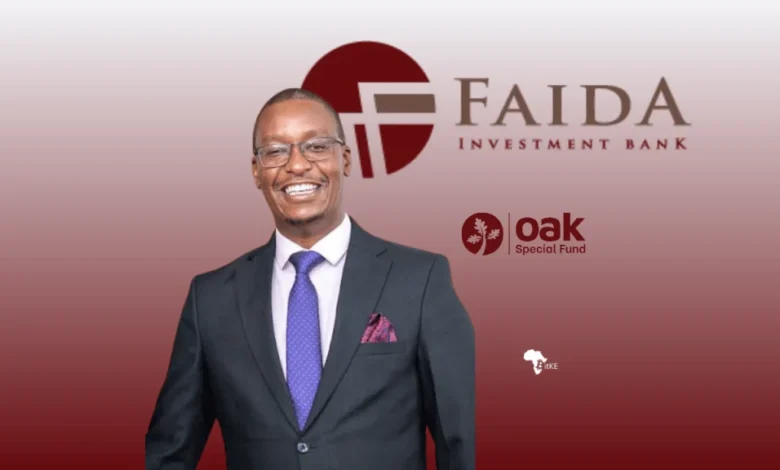
The institutional integration of digital assets within East Africa’s largest economies has long been a subject of intense speculation, regulatory scrutiny, and strategic hesitation. As blockchain technology matures and financial ecosystems across the globe seek exposure to decentralised finance, traditional wealth managers in Kenya find themselves walking a delicate tightrope. Ian Kahangara, the Chief Investment Officer of Faida Unit Trust Funds, recently shed light on this cautious approach, articulating the foundational rationale behind why collective investment schemes in the country continue to shun cryptocurrency allocations.
Operating under the stringent oversight of the Capital Markets Authority (CMA) of Kenya, institutional wealth managers carry a fiduciary responsibility that leaves very little room for speculative risk. With assets under management hitting approximately KES 19.42 billion by June 2026—placing the firm roughly 15th among a competitive landscape of collective investment schemes—Faida Unit Trust Funds oversees the financial futures of more than 9,500 clients. For Kahangara and his investment committee, the core mandate is clear: safeguarding hard-earned livelihoods, lifetime savings, and pension reserves against extreme market volatility. While the digital asset landscape offers tantalizing prospects for high returns, the structural risks associated with virtual assets remain incompatible with the risk-averse nature of regulated unit trusts.
Regulatory Frameworks and the Compliance Horizon
At the heart of the hesitation by Faida Investment Bank Limited and its flagship Oak Fund lies a regulatory vacuum that is only now beginning to close. Speaking directly on the operational limitations imposed on regulated entities, Kahangara emphasized that the firm must operate strictly within the legal parameters established by state watchdogs.
"We are at the tail end of regulations by the Capital Markets Authority of Kenya in terms of adopting virtual assets," Kahangara explained. "Remember, we are a regulated entity. You cannot have a regulated entity trading in unregulated products. That is black and white in terms of the directives we have been given by the Capital Markets Authority."
This rigid adherence to regulatory compliance highlights a broader tension within Kenya’s financial sector. For years, the Central Bank of Kenya (CBK) and the CMA maintained a conservative stance on cryptocurrencies, issuing repeated warnings to the public regarding the lack of consumer protection, fraud risks, and price volatility. However, the regulatory environment has begun to evolve rapidly. The impending implementation of frameworks such as the Virtual Asset Service Provider (VASP) regulations, with key compliance deadlines approaching in late 2026, signals a monumental shift toward formalizing the digital asset sector.
Despite these progressive regulatory steps, the transition from legislative drafting to institutional adoption is neither instantaneous nor guaranteed for risk-averse portfolios. State officials, including the Chief of Staff and Head of Public Service, have received comprehensive briefings on VASP regulations, pointing to a coordinated governmental effort to bring order to the crypto economy. Yet, until these frameworks are fully gazetted, tested, and operationalized for collective investment schemes, fund managers like Kahangara remain legally bound to avoid unverified asset classes.
Fiduciary Duty Versus Market Innovation
The Oak Fund, recognized as an approved umbrella brand managed by Faida Investment Bank Limited, is designed to give everyday investors diversified access to both local and international financial markets. Its product suite ranges from fixed-income instruments to balanced funds, each tailored to specific risk appetites and investment horizons. However, regardless of the underlying product, the core philosophy governing these portfolios prioritizes capital preservation and predictable liquidity over speculative growth.

Kahangara’s perspective reflects a deeply entrenched institutional caution regarding asset volatility and market consistency. In developing economies like Kenya, where retail investors often deploy their life savings into unit trusts to hedge against inflation and secure emergency funds, the tolerance for drawdowns is remarkably low.
"When people leave us with their money – hard-earned money, their livelihoods, their pensions – they can sleep easily and wake up knowing that we will still be there and advocating for their money," Kahangara noted.
This sentiment underscores the psychological and economic contract between asset managers and their clients. While younger demographics and tech-savvy investors frequently engage with cryptocurrencies directly through peer-to-peer platforms and localized exchanges, institutional capital demands a high degree of transparency, auditability, and regulatory recourse that decentralized protocols have historically struggled to guarantee.
Institutional Divergence: Banks vs. Unit Trusts
Interestingly, while collective investment schemes like Faida Unit Trust Funds maintain a strict embargo on digital asset exposure, other segments of Kenya’s financial services sector are slowly testing the waters of digital asset custody and fintech partnerships. Major commercial entities, such as ABSA Bank Kenya, have begun exploring digital asset custody services, anticipating a future where institutional clients will demand secure storage solutions for tokenized assets and cryptocurrencies.
This divergence creates a fascinating dynamic within the Kenyan financial ecosystem. Commercial banks, with their robust balance sheets and diversified revenue streams, are positioning themselves ahead of the institutional curve, developing infrastructure for custody and compliance. Conversely, unit trusts and mutual funds, which operate primarily as pass-through investment vehicles for retail and institutional wealth, must remain conservative until the regulatory dust settles completely. They cannot afford to experiment with capital that does not belong to them.
The Road Ahead for Digital Assets in Kenya
As Kenya moves closer to establishing a comprehensive licensing regime for Virtual Asset Service Providers under updated legislative acts, the landscape for institutional crypto adoption is bound to transform. Regulators have previously maintained a firm stance that no VASPs were officially licensed to operate within or from Kenya under early drafts of the VASP Act, illustrating the government’s initial strategy of containment before regulation.
However, as global financial institutions increasingly incorporate tokenized securities, central bank digital currencies (CBDCs), and regulated crypto-products into their portfolios, Kenyan asset managers will face mounting pressure from sophisticated investors to offer diversified crypto-linked products. The key challenge for regulators will be striking a balance between consumer protection and financial innovation, ensuring that local funds are not left behind in an increasingly digitized global economy.
For now, investors in schemes like the Oak Fund must be content with traditional asset classes—government securities, corporate bonds, and equities. Faida Unit Trust Funds’ refusal to touch cryptocurrencies is not a dismissal of blockchain technology’s potential, but rather a calculated adherence to legal boundaries and the sacred trust of fiduciary responsibility. Until the CMA officially opens the door and provides clear, unambiguous guidelines for virtual asset deployment, the guardrails protecting Kenya’s KES 19 billion-plus unit trust sector will remain firmly in place.