Mastering Algorithmic Breakout Strategies: A Technical Guide to Donchian Channels and Quantitative Execution

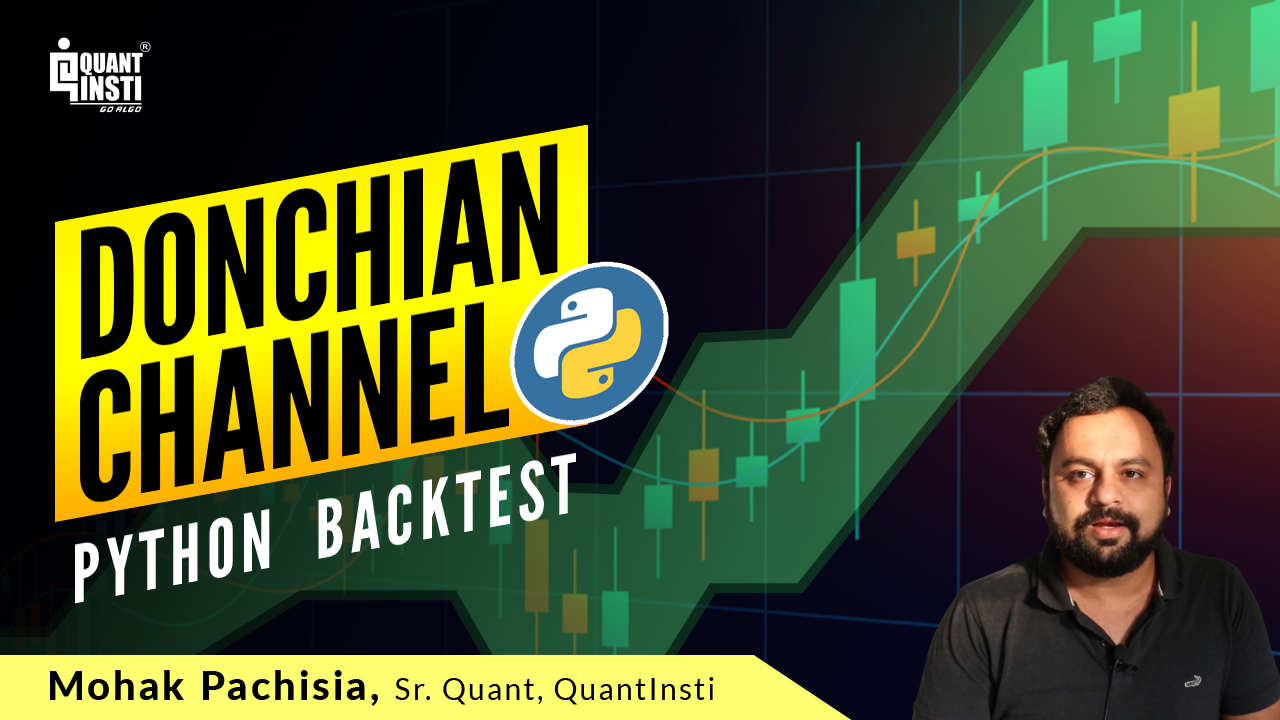
The landscape of algorithmic trading has shifted significantly over the past decade, moving away from purely discretionary decision-making toward systematic, rule-based frameworks that prioritize statistical validity. Among the most enduring concepts in this domain is the Donchian Channel, a volatility-based indicator that has served as a cornerstone for trend-following strategies since its inception by Richard Donchian in the mid-20th century. Recently, Mohak, a Senior Quant at the quantitative finance research firm QuantInsti, released a comprehensive technical breakdown aimed at bridging the gap between theoretical understanding and production-grade code. This initiative arrives at a time when retail and institutional interest in momentum-based algorithmic trading is reaching new highs, driven by the increasing accessibility of high-performance Python libraries and cloud-based backtesting infrastructure.
The Historical Context and Mechanism of Donchian Channels
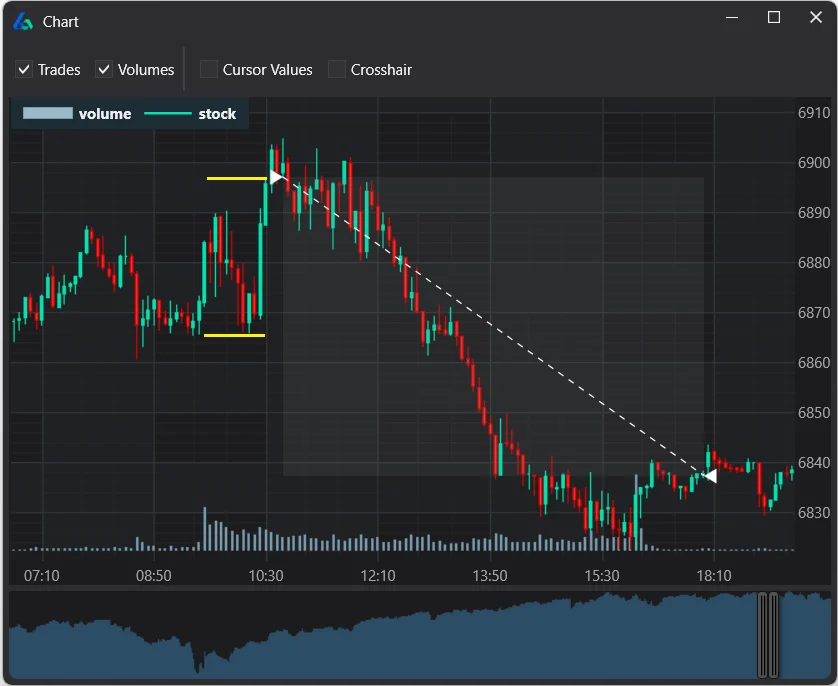
Donchian Channels are defined by a simple yet powerful logic: they identify the highest high and the lowest low over a specified lookback window, creating a dynamic envelope around price action. While modern traders often pair these with more complex oscillators or moving averages, the core utility of the Donchian Channel lies in its ability to quantify volatility and capture breakouts when price clears previous local extremes.
In the contemporary quantitative workflow, the implementation of such indicators requires rigorous attention to detail—specifically the elimination of look-ahead bias. A common pitfall for novice developers is the inclusion of future data points during backtesting. As highlighted in recent industry tutorials, the standard practice is to shift indicator bands by one bar. This ensures that the trading signal generated at the close of a period is based solely on information available at that moment, rather than the data point being evaluated. By aligning channel breakouts with secondary confirmation signals, such as specific candlestick patterns, traders can significantly refine their entry criteria, moving beyond simple signal-following to a more nuanced, logic-driven approach.
Chronology of Strategy Development and Testing
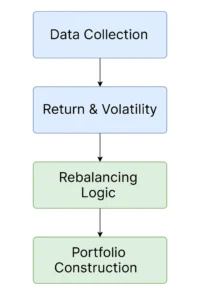
The process of moving from a conceptual breakout idea to a functional trading system follows a strict, multi-stage chronology. First, the quant identifies the market regime—typically trending markets—where breakouts are statistically more likely to succeed. Second, the developer constructs the indicator, ensuring that the calculation of upper and lower bands is mathematically sound. Third, the "strategy shape" is defined. This involves determining not just the entry logic, but the exit conditions, which are often overlooked by practitioners who focus too heavily on the "buy" signal.
During the testing phase, the developer must account for "real-world" frictions. This includes the application of transaction costs, such as slippage and commissions, which can often turn a profitable backtest into a losing strategy when applied in live markets. By using adjusted close prices and rigorously benchmarking against a buy-and-hold strategy, researchers can determine the true "alpha" of their breakout system. This benchmarking is not merely a box-ticking exercise; it is the fundamental process by which traders judge whether their strategy provides genuine value over a passive index investment.
Technical Analysis and Supporting Data
Quantitative analysis of breakout strategies reveals that their performance is highly sensitive to the chosen lookback period. A shorter window allows for quicker reaction to price shifts but invites higher noise and more frequent "whipsaws," where a trader is stopped out of a position prematurely. Conversely, a longer lookback window provides cleaner signals but may result in significant lag, causing the trader to capture only a fraction of a move.
Statistical studies of momentum strategies suggest that breakout systems perform optimally when integrated into a diversified portfolio. Data indicates that when volatility-based sizing is applied to Donchian-style systems, the equity curve exhibits lower drawdowns compared to fixed-position sizing. This is due to the inherent nature of the indicator: during periods of low volatility, the channels contract, naturally reducing the position size, and during periods of high volatility, they expand, allowing for larger exposure when the market trend is confirmed. This internal risk management, often referred to as "volatility targeting," is a staple of institutional-grade algorithmic systems.
Professional Perspectives on Quantitative Education
The demand for systematic education has led institutions like QuantInsti to standardize the path from research to execution. Industry experts argue that the barrier to entry in quantitative finance is no longer the availability of data or hardware, but the quality of the "plumbing"—the underlying architecture of the code that executes the trades.
The current educational ecosystem, which includes platforms like Quantra and certification programs such as the Executive Programme in Algorithmic Trading (EPAT), focuses on teaching students how to treat a trading strategy as a software product. This involves version control, rigorous unit testing, and simulation environments like Blueshift. By moving from simple Python scripts to institutional-class infrastructure, traders are better equipped to handle the complexities of live market execution, where liquidity constraints and latency can dramatically impact the viability of a breakout strategy.
Broader Market Implications
The proliferation of accessible algorithmic tools has profound implications for market efficiency. As more market participants adopt systematic strategies based on technical indicators like Donchian Channels, the "breakout" signal itself may become more self-fulfilling, or alternatively, more prone to "fake-outs" as institutional liquidity providers anticipate these common retail triggers.
Furthermore, the rise of "democratized" quantitative research means that strategies once reserved for hedge funds are now being stress-tested by a global community of independent traders. This shift forces a higher standard of rigor across the board. The ability to run walk-forward checks—a process where the strategy is optimized on one period and tested on an out-of-sample period—is now considered a baseline requirement rather than an advanced technique.
Conclusions for Future Research
For those looking to advance their work in momentum and breakout trading, the consensus is clear: code is only as good as the logic it contains. The transition from "understanding a concept" to "deploying a strategy" requires a deep-seated commitment to transparency and testing. Whether through the implementation of regime filters that disable breakout systems during range-bound markets or the integration of machine learning models to predict the probability of a breakout’s success, the path forward involves constant iteration.
As the industry continues to evolve, the focus will likely remain on the integration of these foundational technical indicators with more sophisticated risk management frameworks. While Donchian Channels may appear simple on the surface, their utility as a scaffolding for complex, institutional-grade strategies remains as relevant today as it was decades ago. For the serious practitioner, the next step involves moving beyond the basic channel break and exploring how these signals interact with liquidity, market microstructure, and exogenous volatility factors. Ultimately, the success of any quantitative trader will be measured not by the complexity of their code, but by the robustness of their results under varying market conditions. As demonstrated by the ongoing efforts of firms to provide open-source code and structured curricula, the tools to build, test, and refine these systems are more available than ever, provided the user approaches the craft with the discipline of a scientist and the caution of a risk manager.