Beyond the Political Rhetoric: How the Global Industrial Sector Is Quietly Driving Decarbonization and Economic Growth

In an era defined by polarized political debates and shifting regulatory landscapes, the global trajectory of climate action is frequently portrayed as hanging by a thread. Major governments across the industrialized world have demonstrated varying degrees of hostility, ambivalence, or pragmatic retreat regarding environmental mandates. In the United States, successive political shifts have brought about the rollback of federal incentives for clean-energy investments, sharp budget cuts targeting private-sector green initiatives, and the rescinding of bedrock regulations designed to limit greenhouse gas (GHG) emissions from power plants and vehicular fleets. Simultaneously, traditional climate champions in Europe have found themselves forced to recalibrate ambitious timelines and soften compliance burdens. These policy adjustments are driven by pressing geopolitical crises, such as the ongoing conflict in Ukraine, and acute energy security concerns that have temporarily superseded long-term environmental planning.
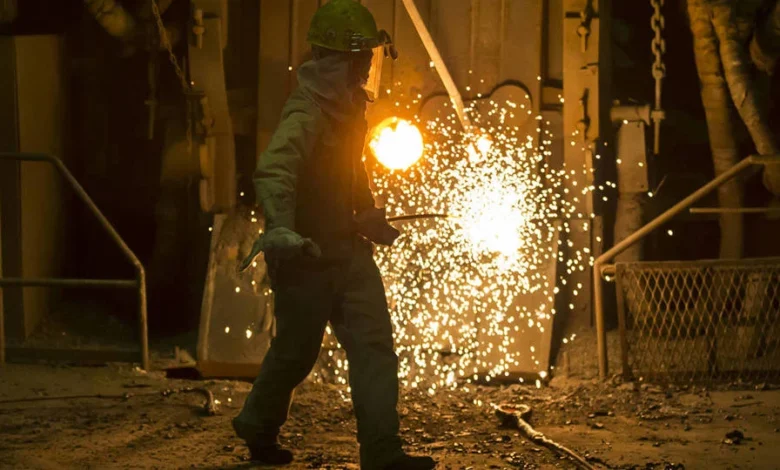
Yet, a myopic focus on federal policy reversals obscures a profound structural transformation occurring at the grassroots level of the global economy. Beneath the surface of political turbulence, the heavy industrial sector—traditionally responsible for roughly one-third of global greenhouse gas emissions—is quietly redefining its operational paradigms. Recent empirical research conducted by academic teams at institutions such as the Massachusetts Institute of Technology (MIT) reveals a compelling counter-narrative. Far from abandoning sustainability under adverse macroeconomic and political conditions, a growing cohort of multinational enterprises is successfully integrating decarbonization with core business objectives, simultaneously enhancing productivity, accelerating revenue growth, and shrinking their environmental footprints.
The Micro-Economics of Industrial Transformation
The mechanics of this quiet industrial revolution are rooted in a fundamental shift in corporate strategy. Historically, corporate environmentalism was frequently siloed as a compliance cost—a mandatory overhead expenditure undertaken primarily for public relations or regulatory appeasement. Today, however, forward-thinking industrial leaders are evaluating green investments through a rigorous, project-level lens. Individual manufacturing facilities are measuring progress holistically, balancing the total cost of inputs, including raw materials, labor, and advanced machinery, against strict target returns on investment.
This analytical framework has allowed firms to justify higher up-front capital expenditures for cutting-edge, low-carbon technologies when supported by economies of scale, clever operational efficiencies, or targeted public incentives. Rather than pursuing "green for green’s sake," modern industrial players are discovering that decarbonization frequently serves as a direct catalyst for operational excellence.
A prime illustration of this dynamic can be observed in Fort Worth, Texas, where industrial giant Siemens has capitalized on the exponential surge in demand for data-center components. To meet this massive market expansion, Siemens scaled up its manufacturing operations, achieving significant productivity gains and lower per-unit production costs. Critically, these financial efficiencies generated the internal capital and institutional confidence necessary to make aggressive decarbonization expenditures acceptable to senior leadership and plant directors.
While the rapid proliferation of data centers has sparked legitimate environmental concerns regarding their immense energy and water consumption, this sector possesses a distinct operational paradox. Although hyperscalers and technology infrastructure developers are generally resistant to paying an arbitrary "green premium" for components, they are acutely responsive to the bottom-line value of lower-emissions manufacturing processes. Cleaner production techniques inherently reduce overall energy demand, mitigating operational volatility and lowering long-term utility costs for the end user.
A similar convergence of public policy and private-sector innovation is evident near Montreal, Canada. At a major construction materials facility operated by Saint-Gobain, strategic infusions of public subsidies enabled heavy investments in industrial electrification and digital-technology upgrades. The result was a transformed manufacturing plant capable of achieving net-zero Scope 1 emissions (direct emissions from owned or controlled sources) and Scope 2 emissions (indirect emissions associated with the generation of purchased electricity). Crucially, these targeted state incentives did not merely reduce pollution; they yielded competitively priced, superior-quality green building products. Faced with comparable market choices, downstream customers increasingly opt for these lower-carbon alternatives, creating a self-reinforcing commercial advantage.
Navigating Regulatory Crosswinds and Global Competition
For other multinational enterprises, the impetus for sustainable technological innovation stems from the complex interplay of international trade rules and divergent regional standards. Consider the operational strategies of Outokumpu, a Finnish stainless-steel producer operating a key facility in Alabama, and the National Cement Company, a US subsidiary of the French industrial group Vicat.
Both companies operate in highly competitive global markets where they frequently contend with competitors operating under jurisdictions with laxer environmental and labor standards. This regulatory asymmetry creates inherent cost pressures that can disadvantage domestic producers adhering to stricter environmental baselines. However, the advent of sophisticated trade and environmental mechanisms—such as the European Union’s landmark Carbon Border Adjustment Mechanism (CBAM) and stringent regional regulations in jurisdictions like California designed to support localized, sustainable manufacturing—has fundamentally altered the competitive calculus.
Rather than seeking relief through lowered standards, firms like Outokumpu and Vicat are actively innovating, deploying advanced clean-production technologies to future-proof their operations against impending regulatory shifts. Their corporate strategies reflect a sober recognition that climate change is a generational, systemic issue that global markets and regulatory frameworks will inevitably address. By investing in decarbonization technologies today, these firms are securing their long-term viability and ensuring unimpeded access to lucrative international markets where carbon transparency is rapidly becoming a non-negotiable prerequisite for trade.
Macroeconomic Data and the Resilience of Clean Energy
The micro-level successes observed in industrial micro-markets are mirrored by broader macroeconomic trends. Despite regulatory headwinds in specific national capitals, global capital allocation toward clean energy has experienced staggering growth. Over the past decade, global investment in clean energy has surged by approximately 80%. In recent years, clean energy outspending relative to fossil fuels has reached a ratio of nearly two to one, signaling an irreversible structural reallocation of global capital markets.
In the United States, empirical analyses from energy economics researchers, including working papers from the MIT Center for Energy and Environmental Policy Research (CEEPR), indicate remarkable resilience within the domestic green transition. Recent estimates suggest that approximately three-quarters of the utility-scale clean-energy capacity pipeline initiated prior to the most recent shifts in federal leadership will successfully reach completion. Furthermore, roughly two-thirds of the projected cumulative emissions reductions from the electricity generation sector remain entirely on track to be achieved.
This surprising degree of resilience is underpinned by a confluence of economic and market tailwinds. While a dedicated green-product premium remains a valuable driver where it exists, corporations are increasingly motivated by foundational business fundamentals. Energy security, price volatility mitigation, and the imperative to insulate supply chains from geopolitical shocks provide powerful incentives for adopting localized, renewable, and efficient energy footprints. Moreover, in an increasingly tight labor market, corporate commitments to measurable sustainability metrics have proven to be an invaluable asset in attracting, motivating, and retaining top-tier engineering and management talent.
Chronology of the Modern Industrial Transition
To understand how the industrial sector reached this inflection point, it is necessary to examine the evolution of corporate climate strategy over the past twenty years:
- Late 2000s to Early 2010s (The Compliance Era): Corporate environmental initiatives were largely reactive, driven by mandatory compliance with emerging emissions caps and localized pollution standards. Sustainability departments operated largely as cost centers disconnected from core product development and profit generation.
- Mid 2010s to 2020 (The ESG and Pledge Wave): Public pressure, investor activism, and the popularization of Environmental, Social, and Governance (ESG) metrics led thousands of multinational corporations to announce long-term, net-zero carbon pledges. However, execution varied widely, with many firms relying heavily on corporate offsets rather than operational overhauls.
- 2021 to 2023 (The Legislative Super-Cycle): Major legislative packages—such as the US Inflation Reduction Act (IRA) and the European Green Deal—infused trillions of dollars in public subsidies, tax credits, and infrastructure investments into clean energy, creating an unprecedented alignment between state support and private capital deployment.
- 2024 to Present (The Operational Integration Phase): Characterized by political friction and regulatory rollbacks in certain major economies, this period has tested the durability of corporate climate commitments. Forward-thinking firms have decoupled operational decarbonization from shifting political winds, integrating advanced manufacturing technologies, artificial intelligence (AI), and industrial robotics to simultaneously drive down emissions and enhance productivity.
Industry Perspectives and Stakeholder Reactions
The divergence between federal political rhetoric and sub-national industrial action has prompted varied responses from key economic stakeholders. Industry associations and manufacturing coalitions have increasingly emphasized the practical economic imperatives driving green investments.
"The conversation in the boardroom has shifted decisively away from ideological debates," notes a senior industrial policy analyst based in Washington, D.C. "Executives are looking at raw energy efficiency, supply chain vulnerability, and the long-term cost of capital. When installing a heat pump, upgrading a blast furnace, or integrating AI-driven energy management systems lowers your operational costs and shields you from utility price spikes, it stops being a political statement and simply becomes smart business."
Labor organizations, while mindful of the workforce transitions required in carbon-intensive sectors like oil and gas, have similarly emphasized the job-creation potential embedded in advanced clean manufacturing. Modern industrial facilities utilizing robotics and digital upgrades require highly skilled technicians, creating stable, well-remunerated career pathways that appeal to younger demographics entering the industrial workforce.
Conversely, legacy fossil fuel sectors and heavy extractive industries continue to display varying degrees of resistance, citing substantial upfront capital expenditure requirements and the complex engineering challenges associated with electrifying high-heat industrial processes. Yet, even within traditional energy circles, risk management frameworks are evolving. Financial institutions and institutional investors are increasingly pricing climate-related asset degradation and regulatory transition risks into their lending portfolios, compelling even reluctant operators to account for long-term decarbonization horizons.
Fact-Based Analysis of Broader Implications
The resilience of industrial decarbonization in the face of political hostility holds significant implications for the future global economy. First, it demonstrates that technological transitions of this magnitude possess their own underlying momentum once critical cost thresholds and economies of scale are achieved. Clean energy technologies—ranging from utility-scale solar and advanced battery storage to green hydrogen and industrial efficiency software—have entered a deflationary cost curve. Once a technology becomes cheaper and more efficient than its legacy counterpart, market adoption becomes difficult for governments to arrest, regardless of partisan shifts.
Second, the integration of artificial intelligence and advanced robotics into manufacturing processes is accelerating this trend. Industrial automation enables precision energy management, predictive maintenance, and real-time emissions monitoring, allowing plant managers to optimize energy consumption down to the individual machine level. This technological convergence ensures that sustainable operations are concurrently hyper-efficient operations.
Finally, the global race for industrial competitiveness means that nations or regions that actively attempt to turn back the clock on clean energy risk marginalizing their own industrial base. As international markets increasingly demand carbon transparency—enforced by mechanisms like the EU’s CBAM—domestic manufacturers that fail to innovate will find themselves locked out of vital export markets. Forward-looking corporations recognize this reality clearly, even when political leaders attempt to obscure it.
Conclusion
The ongoing industrial transition toward sustainability underscores a fundamental truth about modern economic development: what begins as a normative or regulatory obligation ultimately succeeds only when it is underwritten by sound economic fundamentals. While many heavy industries remain complex and difficult to transition—with the oil and gas sector representing the most prominent challenge—the overarching momentum behind industrial decarbonization is robust and multifaceted.
As global temperatures continue to rise and extreme weather events exact a mounting toll on infrastructure and supply chains, the cost of inaction becomes increasingly quantifiable. Forward-looking enterprises understand that innovation in advanced manufacturing, supported by artificial intelligence and driven by customer, community, and employee demand, offers the surest pathway to resilient, profitable operations.
If the global industrial sector can achieve these remarkable gains in productivity and emissions reductions despite the active hostility of major federal governments within the world’s most dynamic economy, the potential under a well-crafted, supportive public policy strategy is immense. While the future trajectory of national politics remains inherently unpredictable, the structural convergence of economic growth, industrial competitiveness, and clean energy is already a reality on the ground. The clean energy transition may have originated as a virtuous environmental endeavor, but its ultimate triumph is secured by a far more enduring force: it has proven to be a winning business strategy.