Mastering Python Decorators for Robust Software Engineering and Boundary Logic Management


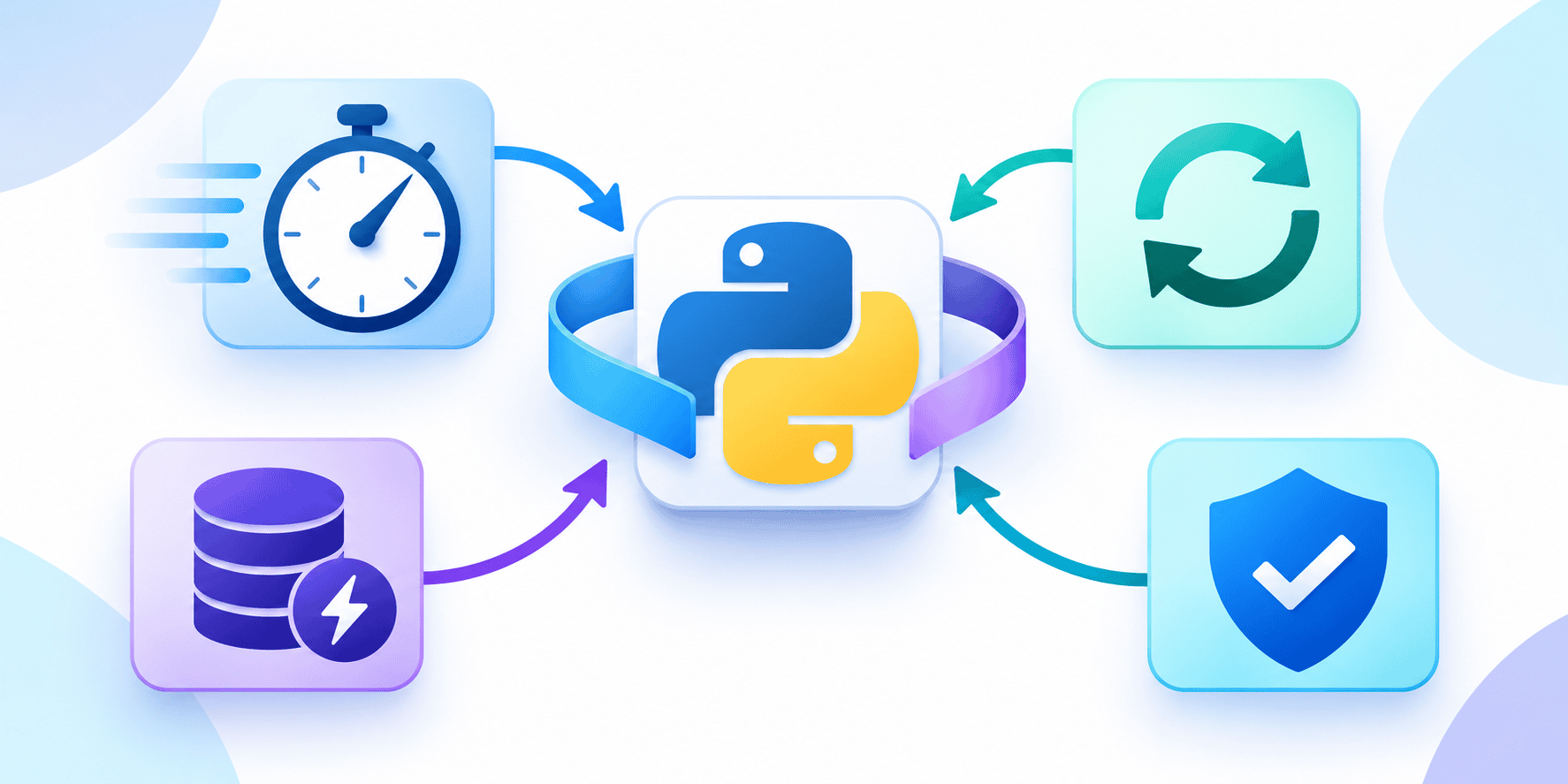
In the rapidly evolving landscape of modern software development, maintaining clean, maintainable, and scalable codebases is a perennial challenge. Python decorators, a powerful yet frequently misunderstood feature of the language, serve as a fundamental tool for managing "boundary logic"—the repetitive tasks that occur at the entry and exit points of functions. By abstracting concerns such as timing, retry logic, caching, and input validation into reusable wrappers, developers can decouple essential business logic from administrative overhead. This structural refinement is not merely a matter of aesthetic preference; it is a critical strategy for reducing technical debt, improving testability, and ensuring that individual modules remain focused on their primary objectives.
The Evolution of Boundary Logic and Technical Debt
The necessity for decorators often emerges during the lifecycle of a software project. Consider a typical data feature pipeline: initially, a developer might implement a straightforward function to load embeddings from a local repository. Within weeks, however, the complexity of the production environment demands additional guardrails. Requirements such as checking file existence, verifying positive batch sizes, managing network timeouts, and tracking execution latency are introduced.
In many organizations, the path of least resistance is to manually inject this boundary code directly into the function body. This "copy-paste" approach leads to significant long-term costs. When multiple functions handle retries, timing, and validation in slightly different ways, the codebase becomes brittle and inconsistent. For instance, if one function implements a three-attempt retry loop while another attempts five, debugging the pipeline under failure conditions becomes exponentially more difficult. This lack of uniformity is a primary driver of technical debt, as the logic becomes obscured by the scaffolding required to support it.
Mechanics: Function Reassignments and Syntactic Sugar
At its core, a decorator is a function that accepts another function as an argument and returns a new function—a wrapper—that executes additional code before and after the original operation. Python’s "@" syntax is, effectively, "syntactic sugar" for a standard reassignment. When a function is defined with a decorator, the language evaluates the decorator at import time and binds the result to the function’s name.
This timing is crucial for system architecture. Because decorators run at definition time, they are ideal for registering functions in global tables or initializing resources that should exist before the application begins processing requests. However, this also implies that if a decorator fails to return a valid object, the function name will be bound to "None," triggering immediate runtime errors upon the first attempt to invoke the function. Understanding this lifecycle is the first step in moving from a casual user of decorators to an architect of robust software systems.
Closures and the Preservation of State
The power of the decorator pattern lies in the concept of closures. A closure allows an inner function—the "wrapper"—to retain access to the variables and parameters of its enclosing scope, even after that scope has finished executing. In the context of a decorator, the wrapper remembers the specific function it is intended to call, as well as any configuration parameters passed to the decorator itself.
To maintain the contract of the original function, modern decorators must adhere to specific standards. This includes the use of *args and **kwargs to forward all inputs, and the use of functools.wraps to ensure that metadata such as docstrings, function names, and annotations are preserved. Without these precautions, tools such as profilers, documentation generators, and automated testing frameworks will struggle to interpret the decorated code, often reporting the name of the wrapper function instead of the original.
Timing and Execution Analysis
Monitoring the performance of individual components is a standard requirement for production-grade software. While simple timing can be achieved by logging timestamps, the use of time.perf_counter() within a try/finally block is the industry standard for measuring execution duration. By wrapping logic in this way, developers ensure that even if a function terminates due to an exception, the execution time is captured and logged.
This is particularly vital in distributed systems where identifying the "bottleneck" function is a prerequisite for optimization. By moving this measurement into a decorator, organizations can ensure that every relevant function across the entire stack is profiled with identical methodology, eliminating the ambiguity inherent in manual timing implementations.
Implementing Reliable Retry Strategies
Retry logic is perhaps the most common source of "accidental complexity" in Python code. When a service call fails due to transient network issues, the system must attempt the operation again without exposing the caller to the failure. However, a naive implementation—such as an infinite loop or a poorly constructed try/except block—can lead to severe issues, including resource exhaustion or the suppression of critical errors.
A professional-grade retry decorator acts as a factory, allowing for the configuration of maximum attempts, delay intervals, and specific exception types. By explicitly defining which exceptions trigger a retry, developers avoid the common trap of catching and retrying logic errors that should, in fact, cause the program to crash. Furthermore, the inclusion of a "backoff" strategy—increasing the wait time between retries—can prevent cascading failures in downstream services, a practice essential for maintaining system stability.
The Role of Caching in System Performance
functools.lru_cache provides a sophisticated, thread-safe implementation of memoization that is suitable for a wide range of production applications. By storing the results of function calls based on their input arguments, developers can drastically reduce the load on databases or external APIs.
The primary implication of using a cache decorator is the requirement for "purity." A cached function should not have side effects, nor should it return mutable objects that could be modified by the caller, as this would pollute the cache and lead to non-deterministic behavior. For long-running processes, the choice of maxsize is a critical configuration parameter. A cache without a limit is a slow-motion memory leak that will eventually lead to an OutOfMemory (OOM) error. Effective cache management requires regular monitoring of cache_info() to ensure that the hit-to-miss ratio justifies the memory expenditure.
Input Validation and the Principle of Boundaries
The final pillar of robust decorator design is input validation. Using the inspect module to bind function arguments allows developers to create decorators that enforce invariants—such as ensuring a value is positive or falls within a specific range—before the function is even executed.
This approach serves as an early-warning system. By validating inputs at the function boundary, the system prevents invalid data from propagating deep into the business logic. This drastically simplifies error reporting; instead of debugging a cryptic TypeError or ValueError deep within a complex algorithm, developers receive an immediate, descriptive error message at the entry point. While this should not replace formal schema validation for complex data models, it is an exceptionally efficient method for guarding critical parameters in high-throughput functions.
Conclusion: Trust, Maintenance, and Complexity
The overarching objective of using decorators is to make a function’s boundary clearer and more reliable. When used correctly, they enable a declarative style of programming where the intent of the code—such as "this function should be retried" or "this function should be cached"—is visible at a glance.
However, developers must exercise restraint. Stacking too many decorators on a single function can obscure the execution flow, making it difficult for new engineers to predict how a call will behave. As a general rule of thumb, if the logic requires more than three decorators, it may be a sign that the underlying function is doing too much and should be decomposed. Ultimately, the most maintainable code is that which strikes a balance between abstraction and clarity, ensuring that the "scaffolding" of an application never becomes more complex than the application itself.