The Evolution of Agentic AI Architecture From Brute Force Orchestration to Specialized Swarms in 2026

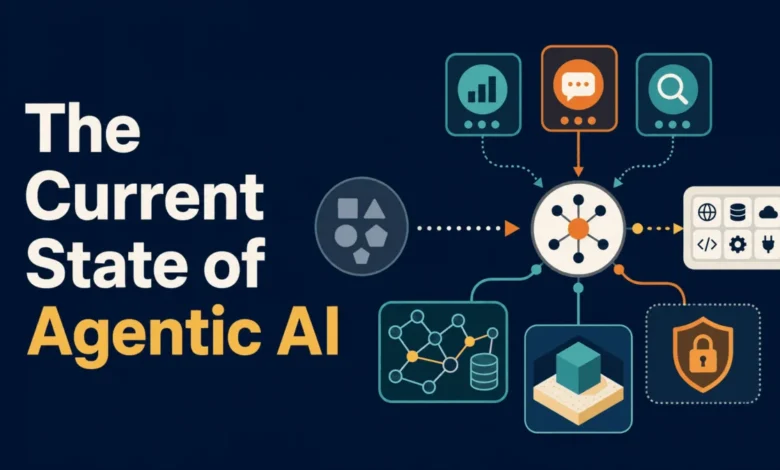
The landscape of artificial intelligence has undergone a fundamental structural transformation as of mid-2026, moving away from the monolithic, do-everything models that dominated the early 2020s toward a decentralized ecosystem of specialized agentic swarms. Only a year ago, the industry was preoccupied with brute-force orchestration—a paradigm where engineers spent thousands of hours hand-crafting complex Reasoning and Acting (ReAct) loops and fighting with brittle prompt chains. Today, that complexity has been internalized by foundation models or offloaded to standardized protocols, marking the most significant shift in software architecture since the transition from monoliths to microservices.
The End of Brute-Force Orchestration
In the 2024-2025 era, the primary challenge for AI practitioners was forcing Large Language Models (LLMs) to follow logical steps. Frameworks like LangChain and LlamaIndex were utilized to build external "scaffolding" around models, essentially using Python code to tell the model: "Think, then act, then observe, then repeat." This approach, while revolutionary at the time, was plagued by high latency, excessive token consumption, and a high rate of "hallucination loops" where the agent would become stuck in a cycle of self-correction.
By mid-2026, the industry has largely abandoned these external loops. Modern foundation models now feature native "System 2" thinking—a reference to dual-process theory where the model engages in slow, deliberate reasoning before generating an output. These models utilize hidden reasoning tokens, allowing them to explore multiple solution branches and self-correct internally. Consequently, the role of the AI engineer has pivoted. Instead of building the "brain" of the agent, engineers are now focused on designing the "nervous system"—the infrastructure that allows specialized agents to communicate and execute tasks within secure environments.
Chronology of Agentic Evolution: 2023 to 2026
The transition to the current state of agentic AI followed a rapid three-year trajectory:
- 2023: The Proof of Concept Phase. The emergence of AutoGPT and BabyAGI demonstrated the potential for autonomous agents, though they were largely unreliable for production use.
- 2024: The Orchestration Era. Developers began using "agentic workflows," focusing on iterative loops and Reflection patterns. This period saw the rise of Retrieval-Augmented Generation (RAG) as the standard for grounding agents in real-world data.
- 2025: The Standardization Breakthrough. The introduction and widespread adoption of the Model Context Protocol (MCP) provided a universal language for agents to interact with tools. Native reasoning models began to replace external planning scripts.
- 2026: The Swarm Dominance. Enterprise AI shifted toward "Swarm Architecture," where dozens of specialized, low-cost models collaborate rather than relying on a single massive model.
The Shift to Agentic Swarms and Microservices
The most visible change in 2026 is the rise of the "agentic swarm." In this architecture, a single, massive model is no longer tasked with handling 50 different tools. Instead, production teams deploy a collection of smaller, highly specialized agents that communicate via standardized protocols.
Industry data suggests that this "micro-agent" approach has reduced operational costs by nearly 40% for enterprise users. By using smaller models—such as the 2026 iterations of Qwen or Llama—for specific tasks like SQL generation or data analysis, companies can reserve expensive, high-compute models for the "Triage Agent" role, which serves as the router and synthesizer for the entire swarm.
A typical enterprise swarm today consists of three primary layers:
- The Triage Agent: An advanced reasoning model that interprets user intent and routes tasks to the appropriate specialist.
- Specialist Agents: Narrowly scoped models (e.g., a "PostgreSQL Specialist" or a "Salesforce Connector") that possess specific tool permissions.
- The Synthesis Agent: A model tasked with gathering the outputs from various specialists and formatting them into a final, coherent response for the user.
This modularity allows for "stateless-per-agent" execution. While the individual agent is stateless, the system maintains a "stateful-across-the-system" profile, ensuring that context is passed seamlessly during handoffs.
Standardization via Model Context Protocol (MCP)
Until recently, connecting an AI agent to a local database or a proprietary API was a tedious process requiring custom JSON schemas and manual error handling. The emergence of the Model Context Protocol (MCP) as an open standard has effectively solved this "integration tax."
MCP acts as a universal adapter. In the current 2026 market, most major SaaS platforms—from GitHub to Slack and SAP—provide native MCP servers. This allows an agent to query a server, discover what tools are available, and execute them without the developer having to write a single line of integration code.
| Feature | Old Paradigm (Pre-2025) | Current State (Mid-2026) |
|---|---|---|
| Tool Integration | Custom API wrappers and hardcoded schemas | Standardized MCP server connections |
| Credential Management | API keys stored in agent environments | Isolated execution on the MCP server |
| Scalability | Monolithic bottleneck | Parallelized swarm execution |
| Maintenance | Brittle; requires updates for every API change | Dynamic tool discovery via protocol |
Persistent Memory and Learning Graphs
A critical advancement in 2026 is the implementation of "Memory Graphs." In previous years, agents "forgot" everything once a session ended, or relied on simplistic vector databases that often lost the nuance of long-term relationships between data points.
Modern architectures now utilize graph databases like Neo4j or specialized AI-native memory layers that act as a persistent ledger of every execution. When a swarm completes a task, a background "Memory Agent" analyzes the trajectory, extracts key facts, and updates the system’s global knowledge graph. This allows the AI to "learn" from its own history. If an agent fails to access a specific database on Monday, the Memory Agent records the failure and the solution, ensuring that on Tuesday, the swarm does not repeat the same error. This continuous learning happens without the need for expensive fine-tuning of the underlying models.
Security Challenges: The Expansion of the Attack Surface
The transition to multi-agent swarms has not been without its risks. Cybersecurity experts have raised alarms regarding "AIjacking"—a form of indirect prompt injection that is particularly effective against swarm architectures.
In a monolithic system, a prompt injection only affects one model. In a swarm, if a "Mail Reader Agent" encounters a malicious instruction in an email, it can potentially "pivot" that instruction to a "Database Agent" or a "Financial Transaction Agent" during a handoff. This lateral movement mirrors traditional network intrusion patterns, making the security of handoff protocols a top priority for 2026.
To combat this, enterprise systems have implemented three layers of defense:
- Sandboxed Tool Execution: Tools no longer run in the same environment as the model; they are executed in isolated containers with strictly defined permissions.
- Handoff Verification: Every time an agent transfers control to another, a "Security Guardrail" model verifies that the context being passed does not contain adversarial instructions.
- Human-in-the-Loop (HITL) Triggers: High-stakes actions, such as deleting data or authorizing payments, require an explicit cryptographic signature from a human user, which the agent cannot bypass.
Broader Impact and Industry Implications
The shift to agentic AI architecture has profound implications for the global labor market and the software development lifecycle. The "AI Engineer" of 2026 is less of a coder and more of a systems architect. The focus has moved from "how do I get this model to work?" to "how do I optimize the communication between these twenty models?"
Market analysts from firms like Gartner and Forrester suggest that by the end of 2026, 75% of new enterprise applications will be "agent-native," meaning they are designed from the ground up to be navigated by AI agents rather than human-centric graphical user interfaces (GUIs). This is already being seen in the rise of "Headless SaaS," where companies provide APIs and MCP servers but no longer invest heavily in front-end dashboards.
The path forward for developers is clear: the era of the individual, all-knowing AI is over. The future belongs to the architects of resilient, specialized, and secure swarms. Those who master the art of swarm topology, memory integration, and protocol-based tool calling will define the next decade of computing. As these systems become more autonomous, the emphasis will remain on drawing firm security boundaries and ensuring that while the agents do the work, humans remain the ultimate authority in the loop.