Context Managers Beyond Opening Files: Mastering Resource Lifecycle Management in Python

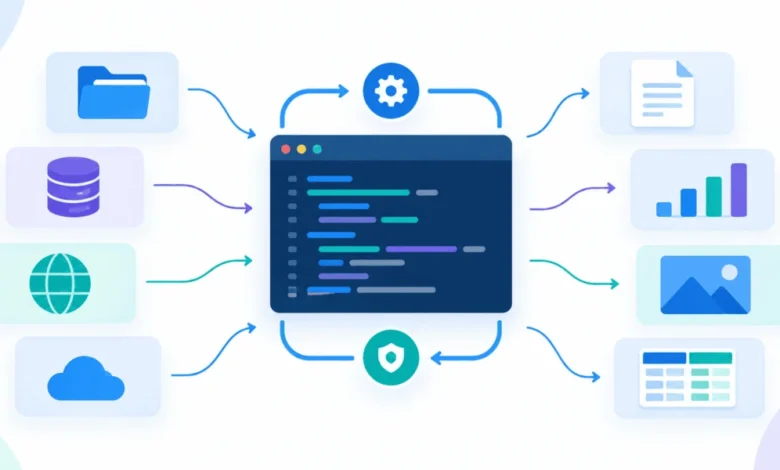
Python developers frequently encounter context managers through the standard file-handling pattern: with open(path, ‘r’) as file:. While this implementation effectively ensures that file descriptors are released upon block exit, the utility of the context manager protocol extends significantly further into the realm of system architecture, performance profiling, and state management. By treating the with statement as a boundary for resource lifetimes rather than a mere convenience for file closure, developers can eliminate a broad category of "zombie" processes, stale environmental variables, and memory leaks that often plague complex machine learning and data processing pipelines.
The Problem of Brittle Housekeeping
In typical data science workflows, evaluation scripts perform substantial housekeeping before execution. This often involves creating temporary scratch directories, modifying environment variables to point toward high-performance storage caches, adjusting library log levels to suppress noise, and initializing high-resolution timers. Traditionally, this logic is placed at the top of a script, with a corresponding cleanup phase appended to the bottom.
This linear approach is fundamentally fragile. If an evaluation function encounters a malformed record or an unexpected exception, the execution flow is interrupted, and the cleanup logic at the bottom of the script is skipped entirely. The consequences are rarely catastrophic in the short term but are damaging in production environments. A stale cache path can lead to data contamination in subsequent runs, and an improperly reset logger can obscure critical warnings for hours. In large-scale training clusters, these orphaned directories—sometimes totaling gigabytes of discarded artifacts—accumulate, leading to disk exhaustion and system instability.
The Anatomy of the Context Manager Protocol
The Python language reference defines the with statement as a formal sequence that guarantees resource disposal regardless of execution outcome. The protocol relies on two primary methods: enter(), which initializes the context and returns the object to be bound to the as clause, and exit(), which performs the teardown.
Crucially, the exit() method is executed regardless of whether the code block concludes normally, returns early, or raises an unhandled exception. The data model explicitly dictates that exit() receives three arguments: exception type, exception value, and traceback. If these arguments are None, the block executed successfully. If an exception occurred, the developer has the power to either propagate that exception or suppress it by returning a truthy value from exit(). In professional software engineering, suppressing exceptions is generally discouraged unless specifically intended, as it masks underlying failures that require debugging.
Constructing Robust Timers and State Handlers
One of the most immediate applications of this protocol is the creation of a reliable timer. Using the time.perf_counter() function, developers can encapsulate the measurement of wall-clock time within a class-based context manager. By placing the stop-time calculation within exit(), the duration is captured even when the process crashes. This allows for post-mortem analysis of why a specific stage of a pipeline failed, providing a clear timestamp of how long the process lasted before the error occurred.
Beyond simple instrumentation, developers often need to revert changes to global state. The @contextmanager decorator from the contextlib module simplifies this significantly. By utilizing a generator function, developers can write code that executes setup before a yield statement and teardown in a finally block. This ensures that even if an exception occurs during the yielded process, the finally block will execute, restoring the system to its previous state. This pattern is particularly useful for toggling log levels or modifying global configurations, ensuring that environmental noise is minimized without risking permanent changes to the logging infrastructure.
The Evolution of Temporary Resource Management
The standard library’s tempfile module provides a specialized context manager in the form of TemporaryDirectory. Historically, manual management of scratch directories led to "collision" bugs where concurrent runs competed for the same directory path. By using TemporaryDirectory, the developer receives a uniquely named, ephemeral path that is automatically purged upon exiting the context.
This is a significant improvement over manual directory deletion, which frequently fails due to file locking on operating systems like Windows. While the underlying cleanup may still encounter errors, the use of context managers centralizes the lifecycle of the data. For complex scenarios, the introduction of the delete=False parameter in recent Python versions allows for the retention of data in the event of an error, facilitating post-mortem debugging without requiring code changes to the cleanup logic itself.
Managing Dynamic Resources with ExitStack
For scenarios where the number of resources—such as multiple file handles or socket connections—is determined at runtime, the ExitStack utility is essential. Unlike nested with statements, which become unreadable when the number of resources is dynamic, ExitStack acts as a registry. Developers can dynamically add managers to the stack using enter_context() or register simple cleanup functions using callback().
The stack unwinds in reverse order, mirroring the behavior of nested blocks. This ensures that dependencies are handled correctly—for instance, closing a file before the parent directory is removed. The professional implication here is profound: by offloading resource tracking to a dedicated stack object, the code remains clean and maintainable. However, developers must be wary: an ExitStack that persists beyond the lifetime of its intended context can lead to resource leaks, as the stack only triggers cleanup when the context exits or close() is explicitly called.
Strategic Implications for Production Systems
The transition from manual cleanup to context-managed resource lifecycles is not merely a stylistic choice; it is a defensive programming requirement. In modern AI engineering, where jobs often run on ephemeral cloud instances, the ability to ensure a "clean exit" is a primary determinant of system reliability.
A survey of common pitfalls reveals that the most frequent errors occur when global state—such as the Current Working Directory (CWD) or os.environ—is modified without a guaranteed restore path. The unittest.mock.patch.dict() function is a powerful tool here, often overlooked outside of testing environments. It provides a robust, atomic way to swap dictionary-based state, ensuring that even if a process is interrupted, the environment is restored to its original state.
Best Practices for Implementation
To standardize these patterns within a development team, the following heuristic should be applied:
- Classes for Statefulness: Use a custom class when the context manager must retain state (like a timer’s elapsed time) for access after the block ends.
- @contextmanager for Simple Flows: Use the generator-based decorator for simple, linear setup-yield-cleanup cycles.
- Library Managers for Standard Tasks: Always prefer built-in solutions like tempfile.TemporaryDirectory or contextlib.chdir over custom implementations to ensure platform-specific edge cases are handled by the core developers.
- ExitStack for Complexity: Use ExitStack when the resource set is unknown at design time, but be cautious of the object’s scope to avoid memory leaks.
By adhering to these principles, engineering teams can ensure that their software behaves predictably under duress. The goal is to move cleanup logic out of the "hopeful" end of the script and into the "guaranteed" execution path provided by the language’s protocol. In an era where production systems must manage massive datasets and complex distributed configurations, the context manager remains one of the most effective tools for maintaining system integrity and reducing the overhead of operational maintenance. As Python continues to evolve, the integration of these patterns will remain a hallmark of high-quality, production-grade engineering, ensuring that error paths are as well-maintained as the happy path.