Trading Signal Pool: Aggregating Dozens of Indicators for Enhanced Predictive Power

A novel approach to quantitative trading, the Trading Signal Pool, is gaining traction as a method to overcome the limitations of individual technical indicators. This sophisticated technique aggregates numerous individual signals into a single, percentage-based meta-signal, aiming to extract a more robust and reliable predictive edge from market data. The core principle is to filter out weak predictors and amplify the signal from strong, converging indicators, effectively transforming a collection of disparate signals into a cohesive market sentiment indicator.
What a Trading Signal Pool Actually Is
At its heart, a Trading Signal Pool is a sophisticated form of ensembling applied to technical analysis. Instead of relying on the often marginal edge of a single indicator, it combines the insights of dozens, if not hundreds, of individual signals. On any given trading bar, the pool calculates the precise percentage of its constituent signals that are currently active or "true." This aggregated percentage then becomes a meta-signal upon which trading rules are built. For instance, a trader might decide to initiate a trade only when the Signal Pool’s percentage exceeds a predefined threshold, such as 67%, 80%, or another level determined through rigorous backtesting and optimization.
The power of this approach lies in its ability to identify confluence. While a single indicator might generate a weak or noisy signal, a scenario where dozens of independent signals from diverse categories—such as trend, momentum, volatility, market breadth, and sentiment—simultaneously point in the same direction offers a significantly more compelling market insight. This concept draws a parallel to principles observed in evolutionary biology, specifically the "1-mutant neighborhood" idea. In this context, a single mutation might be insignificant, but a cluster of nearby mutations all pointing towards a beneficial adaptation creates a much more structurally reliable and impactful change. Similarly, a single trading signal can be fragile, but a confluence of many signals acting in concert provides a more robust foundation for trading decisions.
A Worked Example: From Simple to Complex
To illustrate the concept, consider a simplified example involving three variations of the 2-period Relative Strength Index (RSI). Each RSI variation might be set with different parameters or applied to slightly different data manipulations. On any given bar, these three signals could result in four possible states for the pool: 0% true, 33% true, 67% true, or 100% true. A trader could then establish a rule to enter a trade only when the pool reaches 67% or higher, or perhaps only when all three signals align (100% true). The threshold here becomes a crucial parameter that can be systematically tested and optimized.
However, the true potential of a Signal Pool is unlocked when it incorporates a wide array of genuinely diverse signals. Instead of pooling just three RSI variants, a robust Signal Pool might combine dozens of indicators from distinct categories: mean reversion indicators, trend-following indicators, volatility measures, market breadth indicators, intermarket analysis signals, sentiment indicators, and more. This broad spectrum of inputs allows the pool to reflect a more comprehensive view of the prevailing market regime, moving beyond a single analytical lens to capture a more holistic market picture.
Why Pool Signals at All?
The efficacy of traditional technical analysis indicators has been a subject of ongoing debate. Many classical indicators, while initially effective, often exhibit a decaying edge over time as market dynamics evolve and their predictive power diminishes. The original research on indicators like the RSI, for example, demonstrated their effectiveness on specific historical datasets, but their performance has often been less pronounced on subsequent market data across different timeframes and asset classes. This phenomenon of a small, decaying edge is common to nearly every classical indicator.
Signal Pools offer a strategic advantage in combating this decay through three primary mechanisms: uniqueness, ensembling, and a tolerance for non-intuitive signals.
Edge Lives in Uniqueness
A widely respected figure in quantitative trading, Jaffray Woodriff of Quantitative Investment Management, has articulated a framework for identifying genuine trading edges. He posits that to possess a significant edge, a trading approach must embody at least one of three key characteristics:
- Unique Data: Utilizing data sources or types not commonly accessible or analyzed by the broader market.
- Unique Modeling: Employing novel or highly sophisticated analytical techniques to process standard data.
- Unique Implementation: A distinctive way of combining or executing signals that deviates from conventional practices.
Build Alpha directly addresses the third point through its advanced strategy generation tools, including a genetic algorithm and an LLM orchestrator, designed to discover unique implementation strategies. The platform also supports the first point by integrating a vast array of non-price-based data, such as Commitment of Traders (COT) data, market breadth indicators, sentiment data, options flow, and the ability to import custom data sources. The Signal Pool mechanism, in turn, provides a clean and effective way to address the second point—unique modeling—by creating a proprietary meta-signal from existing indicators. Even when the underlying signals are well-known, the percentage-based pooled signal itself constitutes a unique feature, offering a novel perspective on market conditions.
Explainability Is Overrated
A significant hurdle for many traders is the need for complete explainability of a trading strategy before they are willing to trust it. This requirement, however, can be a substantial bottleneck, limiting the scope and innovation of strategies that traders are willing to explore. Proponents of this approach argue that with sufficient sample size and statistical significance, the why behind a strategy’s success becomes less critical than its consistent, demonstrable performance.
This perspective is echoed by some of the most successful figures in quantitative finance. Jim Simons, the founder of Renaissance Technologies and widely regarded as the most successful systematic trader in history, famously emphasized a data-driven approach that prioritized statistical robustness over intuitive understanding. As detailed in Gregory Zuckerman’s book, "The Man Who Solved the Market," Simons and his research team did not spend excessive time formulating intuitive trade ideas. Instead, they allowed the data to reveal anomalies that signaled opportunities. They were comfortable wagering on signals that met rigorous statistical measures, even if they couldn’t fully explain the underlying causal mechanisms.
Zuckerman notes: "More than half of the trading signals Simons’s team was discovering were non-intuitive, or those they couldn’t fully understand. Most quant firms ignore signals if they can’t develop a reasonable hypothesis to explain them, but Simons and his colleagues never liked spending too much time searching for the causes of market phenomena. If their signals met various measures of statistical strength, they were comfortable wagering on them."
The implication for Signal Pools is clear: the need to understand precisely why a confluence of dozens of indicators crossing a specific threshold might predict short-term market movements is secondary to the signal’s statistical validity. If a Signal Pool demonstrates consistent performance and passes stringent robustness tests, its predictive power is significant, irrespective of a readily available narrative explanation.
The Ensemble Argument
Ensembling is a fundamental concept in machine learning and statistical prediction, recognized for its ability to transform multiple weak predictors into a single, strong predictor. This technique is central to the success of various advanced algorithms, including random forests and gradient boosting, and has been a hallmark of winning teams in competitive data science challenges like the Netflix Prize.
Jaffray Woodriff, further elaborating on this principle, stated: "I stumbled upon the winning concept of creating one super-model from a large and diverse group of base predictive models." This aligns directly with the Signal Pool methodology. By pooling individual signals, traders are essentially ensembling at the signal level, rather than at the strategy level. This approach leverages the same statistical benefits as ensembling complete strategies, but it offers an additional layer of control and flexibility.
The practical outcome is that indicators which may have lost much of their individual edge can be revitalized. An isolated RSI signal might offer little predictive power on its own. However, when combined with twenty other signals from diverse categories within a Signal Pool, it can contribute meaningfully to a more robust composite signal. This ensembling effect is crucial for maintaining profitability in markets where the edge of individual indicators has naturally eroded.
Build an OR Signal in One Click
A particularly noteworthy feature of Signal Pools is their capacity to effortlessly create "OR" logic conditions within trading strategies. Most traditional strategy development focuses on "AND" conditions, requiring multiple criteria to be met simultaneously. However, the ability to trigger a trade when either signal A or signal B is true is equally valuable.
A Signal Pool provides an elegant solution for implementing OR logic. By including the desired signals in the pool and setting a threshold just above zero (e.g., greater than 0%), the pool will signal true whenever at least one of the constituent signals is active. This is precisely the behavior of an OR gate. Conversely, setting the threshold at 100% effectively creates an AND condition, as all signals must be true for the pool to reach that level. The spectrum of thresholds between 0% and 100% allows for nuanced logical combinations that extend beyond simple AND/OR gates.
Create a Custom News Filter
Signal Pools also serve as an exceptionally clean and integrated method for building sophisticated news event filters without requiring complex custom coding or additional infrastructure. This is achieved by leveraging the same underlying pooling mechanic but applying it to different types of signals and adjusting the threshold logic.
Consider the example of filtering trading activity around Federal Reserve (Fed) meetings. A Signal Pool can be constructed to include signals related to specific macro-economic events or news releases associated with a Fed Meeting day. If the pool is set to trigger when the percentage of active signals is greater than 0%, it can be used to initiate trades on the news, capturing potential volatility or immediate market reactions. Conversely, by setting the threshold to be less than 0% (or, more practically, by inverting the logic and triggering when the pool is not active), traders can use the same pool to implement news avoidance rules, steering clear of trading during periods of high uncertainty or potential information asymmetry.
This dual functionality is powerful. The same set of news signals, configured within a single Signal Pool and editor, can drive two diametrically opposed trading strategies: one that trades on the event, and another that avoids it. Furthermore, this approach allows for the seamless integration of news-based filters with existing regime or signal filters within a single rule, streamlining strategy construction and reducing the complexity of multi-filter stacking.
Build One in 4 Steps
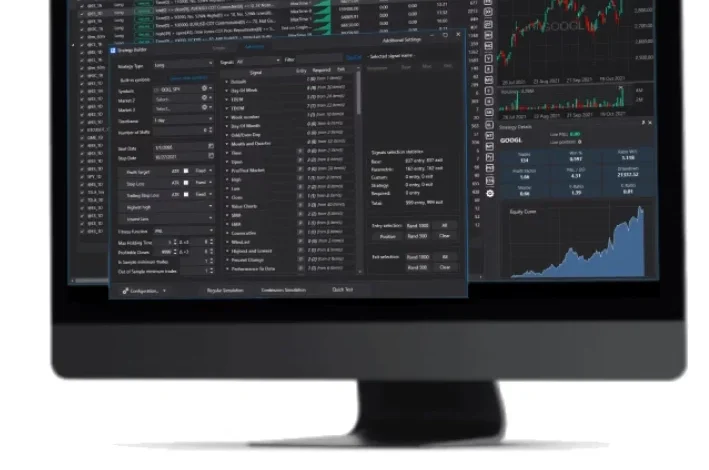
Build Alpha’s Custom Signal Editor is specifically engineered to facilitate the rapid creation of Signal Pools, abstracting away the complexities of coding and scripting. The process is designed to be intuitive and accessible, allowing traders to move from a raw idea to a fully integrated trading strategy in just four straightforward steps:
Step 1: Open the Editor
Access the Custom Signal Editor through the File menu or by using the F4 shortcut. Select "Pool" as the signal type from the options presented in the top right corner of the interface and assign a descriptive name to your new Signal Pool. This initial step sets the foundation for building your composite signal.
Step 2: Add Signals from the Library
This is where the breadth of the Signal Pool is established. Build Alpha offers access to over 7,000 built-in signals across more than 17 distinct categories. The key to an effective pool is diversity. Instead of pooling multiple variations of the same indicator (e.g., five different RSI settings), it is generally more advantageous to pool signals from disparate categories. This includes, but is not limited to: Price Action, Technical Indicators, Chart Patterns, Seasonality, COT Data, Market Breadth, Sentiment, Volatility, Volume, Intermarket, Multi-Timeframe analysis, Yields & Spreads, Option Flows, Economic Data, News events, and even Custom Python signals.
Furthermore, within each signal definition, parameters and lookback periods can be varied. For instance, a single RSI definition can be expanded into dozens of individual pool members by specifying a range for its lookback period (N), its threshold value (V), and the number of bars over which it is evaluated (O). This parameter variation allows for a highly granular and customized signal pool. Once configured, the "Plot" function enables users to visualize the Signal Pool’s behavior on any chosen market, with the subplot displaying the percentage of true signals on each bar. The symbol dropdown facilitates quick inspection of the pool’s performance across different markets without reconfiguring the entire setup.
Step 3: Convert the Pool into a Trading Signal
Once the signals and their parameters are defined, the next step is to convert the raw Signal Pool into a tradable signal. This is achieved by clicking "Create Signal" and defining a specific threshold rule. For example, a trader might set the rule to "trade only when the pool is at or above 80%." The threshold values can be further fine-tuned using an intuitive interface, and once satisfied, the signal is saved.
Step 4: Use the Pool in the Strategy Engine
The newly created custom Signal Pool is now seamlessly integrated into Build Alpha’s main Strategy Builder. It appears under the "Custom Signals" group and can be utilized as an entry condition, an exit condition, or as a requirement that must be met for other signals to be considered. Build Alpha’s intelligence can then identify complementary signals to build around the custom pool. Crucially, when a strategy is generated that incorporates this Signal Pool, Build Alpha automatically embeds the pool’s definition directly into the exported code. This ensures that the entire logic of the Signal Pool is present in the generated code for platforms like TradeStation, NinjaTrader, MetaTrader, and Python, eliminating the need for manual integration.
Forex, Stocks, Futures, Crypto: It All Works
The power and versatility of Signal Pools are not confined to a specific asset class. The methodology is asset-class agnostic, meaning it functions effectively across a wide spectrum of financial instruments. Whether traders are analyzing forex pairs, equities, exchange-traded funds (ETFs), futures contracts, commodities, interest rates, or cryptocurrencies, the same engine, threshold logic, and export capabilities apply.
This broad applicability is particularly relevant in markets like forex, which can sometimes be saturated with technical analysis-based signals and vendors offering what are often thinly disguised speculative instruments or short-volatility strategies. By empowering traders to build their own robust strategies, Build Alpha provides a pathway to escape this noise. The validity of a Signal Pool strategy ultimately rests on its performance during rigorous robustness tests, independent of any subscription fees or external validation.
Automating a Signal-Pool Strategy
A critical aspect of modern trading is the ability to automate strategies for consistent execution. Build Alpha excels in this area by generating fully automatable strategy code for all major retail and professional trading platforms. This includes popular choices such as TradeStation, NinjaTrader 8, MultiCharts, MetaTrader 4 and 5, TradingView Pine Script, ProRealTime, and Python integration for platforms like Interactive Brokers.
Beyond code generation, Build Alpha offers advanced portfolio management capabilities. The platform can connect directly to live data brokers, enabling users to monitor positions, track Profit and Loss (P&L), and receive trade alerts for any strategy driven by a Signal Pool. As with all new strategies, it is imperative to subject any Signal Pool-driven approach to a comprehensive robustness testing pipeline before deploying it in live trading environments. This includes various tests such as noise analysis, walk-forward optimization, Monte Carlo simulations, and comparisons against random strategies to ensure the strategy’s resilience and reliability.
The Honest Caveat
It is crucial to acknowledge that pooling weak signals does not magically create predictive edge where none exists. If the underlying signals lack genuine information content for the specific market and timeframe being analyzed, the Signal Pool will likely yield similar results. The true benefit of this approach stems from the statistical aggregation of breadth across multiple signals that each possess at least a small, consistent edge. The principle of "garbage in, garbage out" remains paramount. The robustness testing pipeline is the essential tool for discerning which signals contribute meaningful information and which do not.
Takeaways
The Trading Signal Pool represents a significant advancement in quantitative trading methodology, offering several key benefits:
- One Number, Many Signals: A Signal Pool consolidates dozens of individual signals into a single composite output, represented as the percentage of underlying signals that are currently true on each trading bar.
- Threshold = Trading Rule: The trading logic is defined by the threshold applied to the percentage. Whether it’s a threshold of 67%, 80%, exactly 100% for AND logic, or greater than 0% for OR logic, the threshold dictates the strategy’s activation.
- Breadth Beats Depth: The efficacy of a Signal Pool is maximized by pooling signals across diverse categories such as mean reversion, trend, volatility, market breadth, and intermarket analysis, rather than focusing on multiple variants of the same indicator.
- Ensembling Is the Point: Signal Pools leverage the statistical power of ensembling, transforming numerous weak predictors into a single, stronger composite signal—a mechanism akin to those employed by advanced machine learning models.
- Statistics > Narrative: The need for a clear, intuitive explanation for why a Signal Pool works is secondary to its statistical validity. Rigorous robustness validation (including noise, walk-forward analysis, Monte Carlo simulations, and vs. random tests) provides more reliable evidence of its efficacy than narrative explanations alone.
- Four Steps, No Code: Build Alpha streamlines the creation of Signal Pools, requiring only four simple steps: open the editor, add signals, set the threshold, and generate strategies. The platform automatically embeds the pool’s logic into exported code.
Summary
In an era where market participants often have access to the same data and employ similar analytical tools, the remaining edge in classical technical analysis is often small and subject to decay. Trading Signal Pools offer a powerful solution by aggregating numerous "weak" predictors into a single, composite signal that carries substantially more information than any individual indicator. This approach provides a unique feature, as defined by trading luminaries, without necessarily requiring proprietary data or complex machine learning models. Signal Pools simplify the implementation of OR logic, making it as accessible as AND logic. Furthermore, they enable traders to continue utilizing familiar indicators while extracting enhanced signal content from them. Build Alpha’s platform facilitates the creation, validation, and export of these sophisticated Signal Pools with just a few clicks, positioning them as an invaluable tool in the modern quantitative trader’s arsenal.
For those interested in exploring the integration of artificial intelligence in strategy generation, further details on Build Alpha’s LLM Orchestrator can be found through their resources, with advanced capabilities anticipated in upcoming releases.
The development and application of sophisticated trading tools like Signal Pools are driven by a deep understanding of market dynamics and a commitment to quantitative rigor. David Bergstrom, Founder of Build Alpha, brings extensive experience in professional trading, market making, and quantitative strategy development. His background in high-frequency trading and his expertise in programming languages like C++, C#, and Python, coupled with a focus on data science and machine learning, underpin the innovative features offered by the platform.
Frequently Asked Questions
What is a Trading Signal Pool?
A Trading Signal Pool is a consolidated meta-signal derived from aggregating multiple individual trading signals. It quantises the collective strength of these signals into a percentage, indicating how many of them are simultaneously active on any given trading bar. This percentage can then be used as a trigger for trading rules when it crosses a specified threshold.
Why use a Signal Pool instead of a single indicator?
Individual technical indicators often possess only a minor predictive edge, which can be difficult to isolate and exploit effectively. Signal Pools, through the statistical principle of ensembling, combine many such weak predictors into a more robust and reliable composite signal. This approach offers broader market context, reduces reliance on any single indicator, and can uncover patterns that might be missed by conventional single-indicator analysis.
Can a Signal Pool be used to build OR conditions?
Absolutely. By setting a Signal Pool threshold above 0%, the pool will activate whenever at least one of its constituent signals is true, effectively creating an OR logic gate. This contrasts with traditional methods that predominantly focus on AND conditions (signal A AND signal B).
Does a Signal Pool work for forex, stocks, futures, and crypto?
Yes, Signal Pools are asset-class agnostic. The methodology is applicable to any market with standard Open, High, Low, Close (OHLC) data, including forex pairs, equities, ETFs, futures, commodities, interest rates, and cryptocurrencies.
What signals can I include in a Signal Pool?
Build Alpha provides access to over 7,000 built-in signals spanning more than 17 categories. These include traditional price action and technical indicators, as well as more diverse data types such as chart patterns, seasonality, COT data, market breadth, sentiment, intermarket relationships, volatility measures, option flows, news events, and custom Python signals.
Do I need to know why a Signal Pool works?
Not necessarily. As demonstrated by successful quantitative traders like Jim Simons, statistical significance and out-of-sample performance are paramount. If a Signal Pool successfully passes rigorous robustness tests, its trading efficacy is validated, irrespective of whether its precise causal mechanism is immediately apparent or easily explained.
Can a Signal Pool be automated and exported to a trading platform?
Yes. Build Alpha automatically generates fully automatable strategy code for a wide range of popular trading platforms, including TradeStation, NinjaTrader 8, MultiCharts, MetaTrader 4/5, TradingView Pine Script, ProRealTime, and Python. The Signal Pool logic is seamlessly embedded within the exported strategy code.