AI May Not Cause Total Jobs Armageddon Afterall: Google Reports on How AI Is Being Used at Work

The report, titled the AI & Economy ATLAS (Activity, Task, Landscape, and Adoption Study), provides one of the first data-driven looks at how AI is actually being integrated into the American economy. By analyzing usage patterns across Google’s suite of AI services—including the Gemini app, API integrations, and browser-based tools—the study reveals that AI has diffused into nearly every corner of the labor market. From professional services and business consulting to construction, leisure, and hospitality, the technology is being utilized not to eliminate roles, but to augment the efficiency and capabilities of existing employees.
The Evolution of the AI Narrative: From Doom to Utility
The trajectory of AI’s public perception has moved through several distinct phases over the last 24 months. When large language models (LLMs) first gained mainstream traction, many industry insiders and tech futurists predicted a "total-job-destruction Armageddon." The fear was particularly acute in white-collar sectors, where it was assumed that any role involving writing, coding, or data analysis would be rendered obsolete within months.
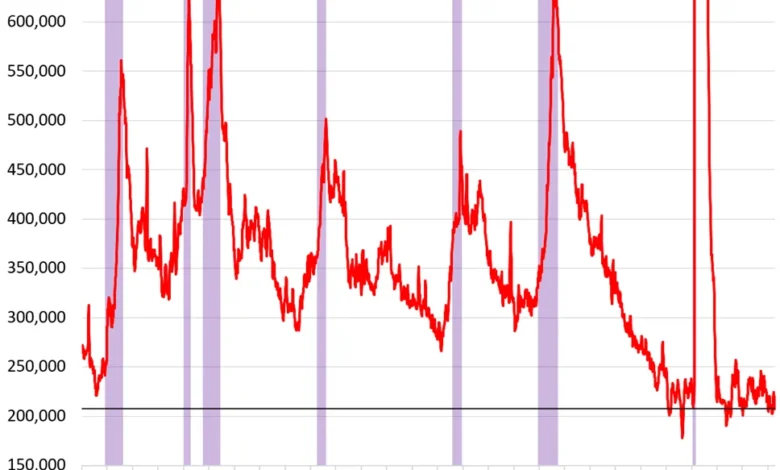
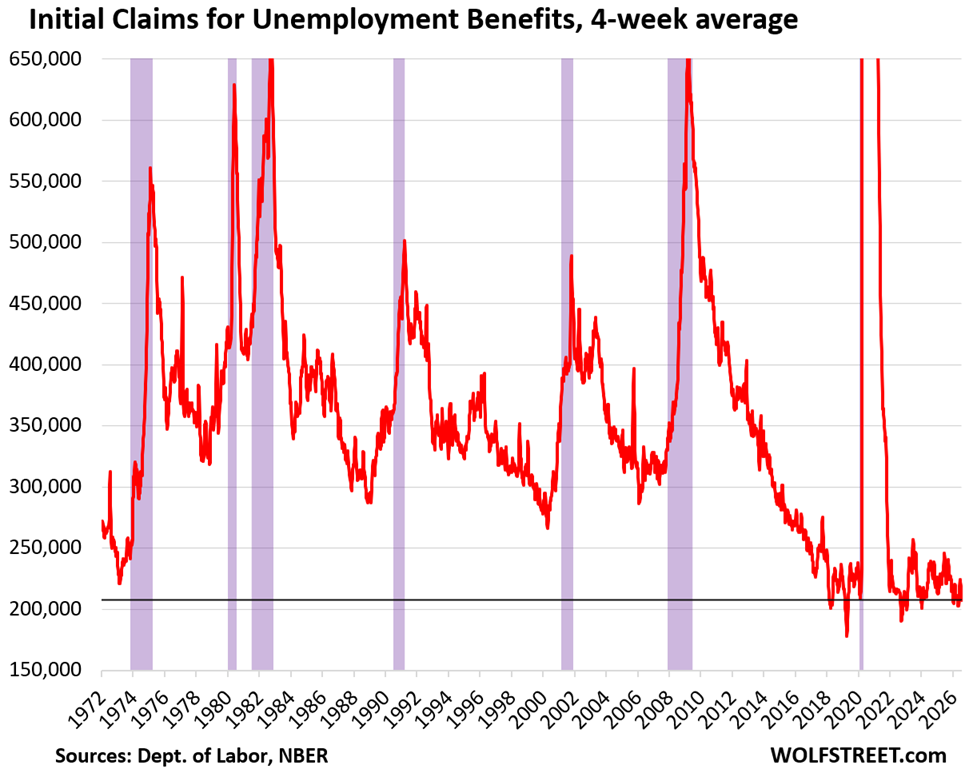
However, as 2023 and 2024 progressed, the catastrophic unemployment figures predicted by some models failed to materialize. While the tech sector did experience a wave of high-profile layoffs, the broader U.S. labor market remained remarkably resilient. Data from the Department of Labor consistently showed initial unemployment claims at historic lows. Many workers impacted by tech-sector downsizing were able to secure new positions quickly, often before their severance periods ended. Furthermore, many of the "job cuts" announced by global corporations were revealed to be the elimination of vacant roles or strategic shifts in hiring rather than a direct result of AI replacing human bodies.
Google’s ATLAS report reinforces this reality, suggesting that the initial alarmism may have overlooked the complexity of human occupations. Most jobs are not a single task that can be automated away; they are a constellation of responsibilities, many of which require the nuanced judgment, physical presence, and interpersonal skills that AI currently lacks.
Widespread Diffusion vs. Shallow Integration
One of the most striking revelations in the ATLAS report is the breadth of AI adoption. The technology is now present in 68% of all occupations, covering a staggering 88% of the total U.S. workforce. This includes high-tech roles like software development and market research, but also traditional sectors such as agriculture and forestry.
Despite this broad reach, the "depth" of AI integration remains relatively shallow. For the median occupation utilizing AI, the technology is used for only 21% of total tasks. Only a tiny fraction of the workforce—roughly 3%—uses AI for more than 75% of their daily responsibilities. These highly integrated roles are concentrated in specific niches, such as software quality assurance, human resources specialization, and document management.
This "wide but shallow" adoption pattern suggests that AI is being treated as a tool for specific sub-tasks rather than a full-service replacement for a professional. Workers are using AI to draft emails, summarize long reports, or generate initial ideas, but they remain the primary drivers of the final output.
Collaborative Intelligence: The Non-Routine Cognitive Shift
The ATLAS data indicates that the vast majority of AI interactions are collaborative and assistive. In the professional world, "non-routine cognitive tasks"—which include hypothesis testing, creative design, and strategic planning—account for about 35% of all tasks. However, these tasks represent nearly 65% of work-related AI interactions.
The study categorizes the primary intents of AI users into four main buckets:
- Partial Drafting and Generation: Creating initial versions of documents or code.
- Review and Refinement: Using AI to check for errors or improve the tone of a piece of work.
- Ideation and Strategy: Brainstorming new concepts or analyzing potential business outcomes.
- Information Retrieval and Learning: Using AI as a more sophisticated search engine to find and synthesize information.
Crucially, attempts to automate tasks "end-to-end" represent less than 10% of AI conversations in the data. This suggests that the "human-in-the-loop" model is not just a theoretical preference but the current practical reality of the AI economy.
Breaking the White-Collar Stereotype: AI in Manual Trades
While much of the media coverage focuses on AI in office environments, the ATLAS report highlights a significant and growing use of AI in physical and manual labor. While about a third of heavily physical occupations show no AI usage, workers in technical trades are finding innovative ways to leverage the technology.
The report notes a disproportionate use of "multimodal AI"—tools that can process images and video—among automotive technicians, industrial mechanics, and electricians. These workers use AI to interpret complex diagnostic results, debug intricate electrical wiring through photos, and inspect heavy machinery for signs of wear and tear. In these contexts, the usage rate of multimodal AI is more than double the overall work baseline.
This suggests that AI is serving as a "hands-on collaborator," providing real-time learning and troubleshooting support for workers who are often in the field and away from a traditional computer desk. A forester might use AI to identify tree diseases from a smartphone photo, or an industrial engineer might use it to optimize a factory floor layout in real-time.
The Economic Correlation: Wages, Education, and AI Intensity
There is a clear and strong correlation between AI usage and economic status. In the U.S. workforce, a 1% increase in an occupation’s median earnings is associated with a 2.5% increase in AI usage intensity. The median salary for occupations observed using Google’s Gemini tools is approximately $83,000—about $20,000 higher than the national employment-weighted median.
This relationship holds true even when controlling for educational attainment. Higher-earning workers, who typically possess more scarce skills and expertise, are adopting AI at the highest rates. However, the ATLAS report points to a complex nuance: while high-earning experts use AI the most, the technology is often most effective at assisting with tasks that require "lower-to-middle" levels of expertise. This suggests that AI may be acting as a "leveler," helping workers bridge the gap between intermediate skills and high-level output, even as those at the top of the pay scale use it to further enhance their productivity.
The Challenge for Entry-Level Workers
While the data paints a positive picture for existing workers, it hints at a potential "barrier to entry" problem for the next generation. Traditionally, "grunt work"—repetitive, entry-level tasks—served as the training ground for fresh-out-of-college employees. These tasks allowed young workers to learn the ropes of an industry while providing value to their firms.
As AI allows experienced workers to automate this "grunt work," the traditional entry point for young professionals is being squeezed. Junior analysts, paralegals, and junior developers may find it harder to secure first-time roles if the tasks they would have normally performed are now being handled by a senior staff member with an AI co-pilot. This shift in the labor market is still in its early stages and remains one of the more concerning "untracked" changes in the employment landscape.
Corporate Strategy and the Monetization of Productivity
Google’s release of this data also provides insight into the business model of the AI era. The company is not just providing a service; it is integrating AI into the fundamental infrastructure of modern work. Google monetizes its AI offerings through a variety of channels, including:
- Subscription Bundling: Integrating Gemini into Google Workspace and increasing monthly fees (in some cases by as much as 16.7%).
- API Usage: Charging companies for tokens, storage, and caching as they integrate AI into their own proprietary services.
- Cloud Infrastructure: Leveraging its massive data centers to provide the compute power necessary for other businesses to run their models.
By positioning AI as a tool for "doing the job better," Google and other tech giants are shifting the conversation away from job replacement—which carries significant political and social baggage—toward productivity enhancement, which is an easier sell to both corporate clients and the public.
Broader Implications for the Future of Work
The findings of the ATLAS report suggest that the "AI Revolution" is following a path similar to previous technological shifts, such as the introduction of the personal computer or the internet. These technologies did not lead to a permanent reduction in the number of jobs; instead, they changed the nature of the work being done and increased the overall economic output.
However, the speed of AI adoption is unprecedented. The fact that 88% of U.S. employment is already touched by AI indicates a rate of diffusion far faster than that of the internet in the 1990s. This necessitates a rapid evolution in education and professional development. If AI is to be a permanent "collaborator," the ability to "prompt" and manage AI tools will become as fundamental a skill as literacy or basic numeracy.
Furthermore, the low unemployment claims cited in the report indicate that the U.S. economy is currently in a state of "high churn" rather than "high contraction." Workers are moving between roles and industries, but they are not leaving the workforce entirely. The challenge for policymakers and business leaders in the coming years will be managing this transition, ensuring that the benefits of AI-driven productivity are broadly shared and that the "expertise gap" does not leave behind those in lower-wage or less-educated sectors of the economy.
In conclusion, while the threat of automation remains a valid topic of long-term concern, the current data suggests that AI is functioning as a powerful tide that is lifting the capabilities of the American worker. From the mechanic in the garage to the developer in the office, AI is becoming the invisible partner in the modern workforce—not by taking the job, but by helping the worker master it.