Americans hate, hate, hate high gas prices, but they’re less sensitive to them than auto dealers ironically expected.

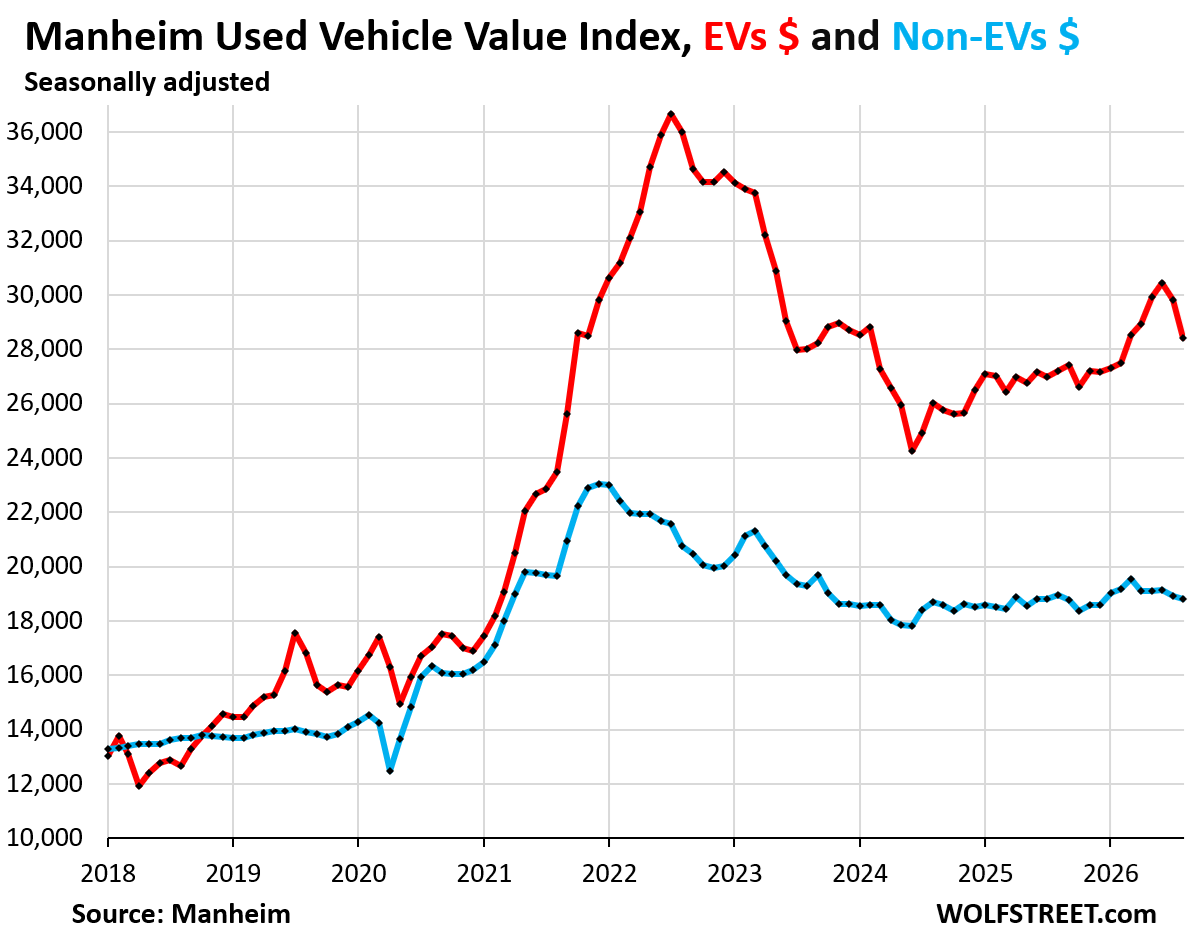
The automotive retail sector recently experienced a period of volatility driven by a miscalculation of consumer behavior regarding fuel costs. Between February and mid-May 2026, a notable spike in gasoline prices prompted auto dealers across the United States to aggressively alter their inventory strategies. Anticipating a surge in consumer demand for electric vehicles (EVs) as a means to mitigate rising transportation costs, dealers flocked to wholesale auctions, significantly inflating the prices of used battery-electric vehicles.
Data from the Manheim Used Value Index indicates that during this four-month window, wholesale prices for used EVs climbed by 11.5% on a seasonally adjusted basis. This surge marked the most significant appreciation for the segment since the anomalous market conditions of 2021 and 2022. Conversely, non-EV vehicles—a category encompassing internal combustion engine (ICE) models and hybrids—remained relatively stable, experiencing only a minor 0.3% dip during the same period. However, the anticipated mass migration of consumers toward EVs failed to materialize, leading to a sharp correction in the late summer months.
A Correction in Wholesale Markets
By July and August, the market sentiment shifted abruptly. As it became clear that consumers were not abandoning their preferred vehicle segments in response to temporary fuel price fluctuations, dealers began to retreat from the aggressive bidding seen earlier in the year. Wholesale prices for used EVs plunged by 6.6% over this two-month period, effectively erasing the gains achieved since February. In contrast, the non-EV segment saw a more modest decline of 1.7%, suggesting that while the broader used vehicle market was cooling, the EV segment suffered from a specific, inventory-driven speculative bubble.
The wholesale auction market serves as the primary mechanism for dealers to replenish their retail inventories. These vehicles typically originate from rental fleet liquidations, off-lease returns from finance companies, and corporate or government fleet turnover. The discrepancy between the spike in wholesale EV pricing and the eventual cooling reflects a disconnect between dealer expectations—driven by the assumption that fuel price sensitivity would dictate consumer choice—and the actual purchasing patterns of the American public.
The Structural Decline of Fuel’s Economic Weight
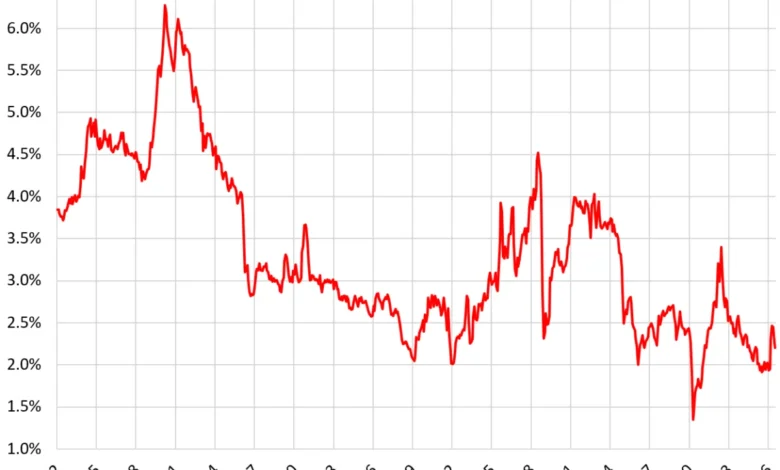
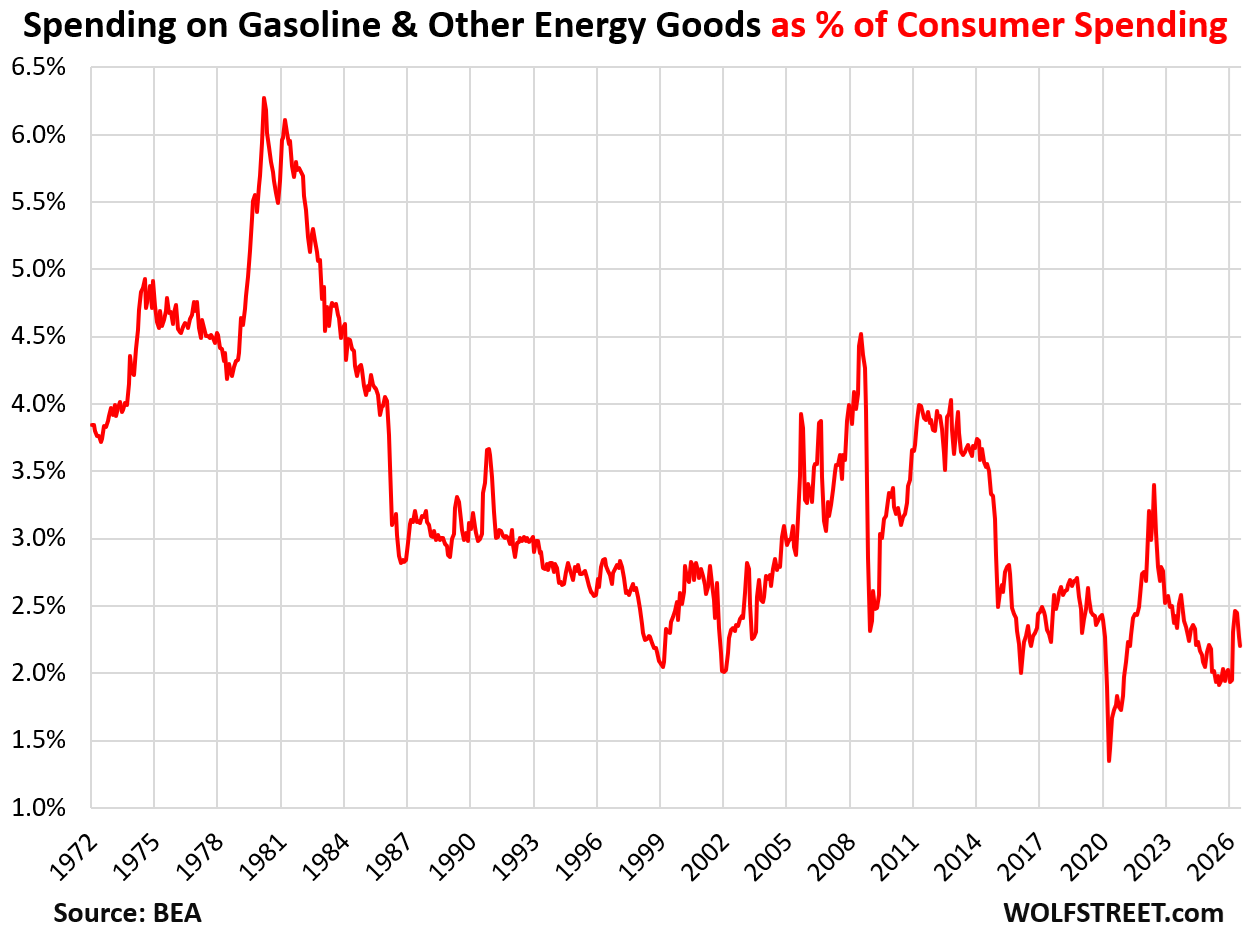
To understand why consumer behavior did not align with dealer expectations, one must examine the evolving role of gasoline in the average American household budget. A retrospective analysis of economic data reveals a long-term structural shift in how consumers allocate their income. In 1972, prior to the 1974 oil crisis, approximately 4% of total consumer spending was dedicated to gasoline and other energy-related goods, such as utility natural gas and heating oil. By 1980, this figure had climbed to over 6%.
However, the decades following 1980 saw a steady decline in the share of consumer spending captured by fuel. This shift is attributable to several factors: increased vehicle fuel efficiency, a reduction in the number of miles driven per capita, and a pivot toward higher expenditures in sectors such as healthcare, housing, and telecommunications. Gasoline consumption per capita plummeted from a peak of 42 gallons per month in 1978 to 33 gallons per month by 2025.
By early 2026, just before the recent price spike, gasoline and energy expenditures accounted for only 2% of total consumer spending. Even during the peak of the price increase in April 2026, the share of total consumer spending allocated to gasoline rose to only 2.5%, before receding to 2.2% by July. While the psychological impact of seeing rising prices at the pump remains significant, the economic weight of these costs within the broader household budget has diminished to the point where it is no longer the primary driver for major long-term capital investments, such as purchasing a new or used vehicle.
Consumer Preferences vs. Market Speculation
The disconnect between dealer inventory acquisition and consumer demand highlights a fundamental misunderstanding of the current American automotive market. While high gas prices are an immediate, visible burden that often sparks public outcry, they are not the sole, or even the primary, factor in vehicle selection for the majority of buyers.
Data suggests that American consumers continue to prioritize vehicle utility, size, and brand loyalty. The enduring popularity of large, powerful pickup trucks—which are notorious for their poor fuel economy—demonstrates that consumers are willing to absorb the cost of fuel to obtain the vehicle features they desire. Despite the increase in gasoline prices during the first half of 2026, demand for heavy-duty, less fuel-efficient vehicles remained resilient.
Industry analysts observe that auto dealers, who frequently derive higher margins from these larger, high-performance vehicles, may have ironically overestimated the extent to which a temporary fuel price hike would drive a shift toward EVs. This miscalculation resulted in a temporary inflation of used EV prices that was not supported by underlying retail demand.
Implications for the Automotive Industry
The recent market volatility offers several takeaways for the automotive sector. First, the reliance on gasoline price volatility as a predictor of EV demand is increasingly unreliable. As the share of income spent on energy continues to shrink, the "price shock" effect—while emotionally resonant—has a limited impact on the fundamental decision-making process for vehicle procurement.
Second, the episode highlights the risks of speculative inventory management. Dealers who relied on the assumption that retail consumers would shift to EVs to "dodge" gas prices found themselves overleveraged with inventory that did not align with the actual preferences of their customer base. The subsequent price correction in July and August serves as a market mechanism that forces dealers to recalibrate their acquisition strategies.
Third, the data confirms that the EV market is still maturing and is subject to its own specific demand curves, which are not perfectly correlated with the price of crude oil. For manufacturers and dealerships, the challenge lies in distinguishing between short-term noise—such as temporary gas price spikes—and long-term shifts in consumer preferences.
Broader Economic Context
When viewed against the backdrop of the broader economy, the volatility in the used EV market is a micro-economic event with macro-economic underpinnings. The soaring costs of housing and health insurance have arguably created a "crowding out" effect, where essential services absorb a larger portion of disposable income than ever before. In this environment, a rise in gasoline prices, while frustrating to the consumer, is often perceived as an inconvenience rather than a catalyst for a lifestyle or vehicle segment shift.
Furthermore, the rise of the "prosumer" in the automotive space—where buyers are increasingly informed by digital data, vehicle reviews, and lifestyle considerations—has made the car-buying process more complex. Consumers are less likely to make a reactive purchase based on a single variable like fuel cost and more likely to evaluate the total cost of ownership, including depreciation, insurance, and maintenance, in addition to fuel.
Ultimately, the events of early to mid-2026 underscore a critical lesson for the automotive industry: the American consumer is not as easily moved by fuel prices as historical models might suggest. The "hate" for high gas prices is real, but it is not a sufficient driver to move the needle on the long-term, structural preferences of the American public. As dealers look toward the future, the ability to accurately forecast consumer demand—independent of the daily fluctuations at the gas station—will remain a primary competitive advantage. The cooling of the used EV market at the end of the summer is a testament to the reality that in the modern automotive landscape, consumer desire often outweighs the immediate economic pressure of fuel prices.