The 9/11 Era at Twenty-Five: How Al-Qaeda’s Attacks Redefined Global Power Dynamics

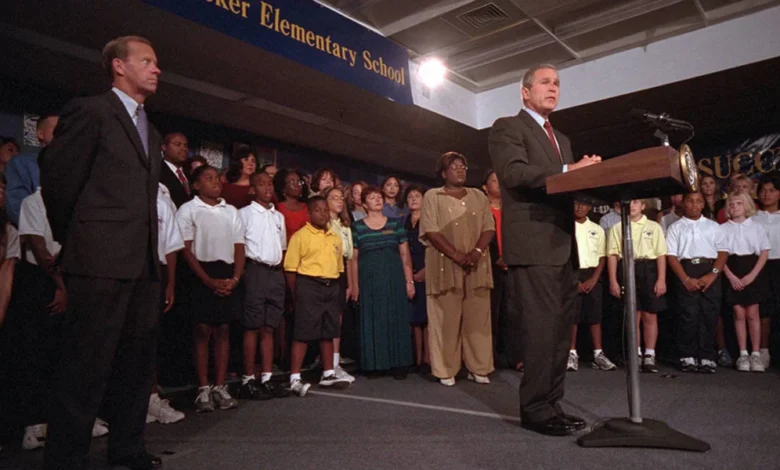
Twenty-five years after the devastating terrorist attacks of September 11, 2001, the geopolitical landscape of the twenty-first century continues to bear the profound scars of that fateful Tuesday. The coordinated strikes orchestrated by al-Qaeda fundamentally altered the historical trajectories of the United States and the Russian Federation, while also accelerating the strategic ascension of the People’s Republic of China. Authored from Madrid by former European Union High Representative for Foreign and Security Policy Javier Solana and Director of EsadeGeo Angel Saz-Carranza, historical reflections on this quarter-century milestone emphasize that the events in New York, Washington, and rural Pennsylvania did more than claim thousands of innocent lives; they set in motion a domino effect of security decisions, military campaigns, and diplomatic realignments that birthed the fractured, multipolar, and highly volatile global order we navigate today.
To understand the architecture of modern international relations, analysts must examine how the world stood at the dawn of the millennium. The year 2001 had barely begun when fresh leadership assumed power in the world’s two preeminent nuclear and military superpowers. George W. Bush had taken office in the United States with a foreign policy platform that initially favored a degree of strategic retrenchment and missile defense focus, while Vladimir Putin had recently consolidated his rule in Russia, seeking to restore the country’s stature on the world stage following the tumultuous post-Soviet collapse of the 1990s. Meanwhile, China was in the early, explosive phases of economic globalization, having formally entered the World Trade Organization later that same year, focused inward on modernization and industrial development.
The immediate aftermath of the terrorist attacks abruptly shattered these nascent paradigms. In an instant, the United States pivoted from a position of unrivaled post-Cold War complacency to a state of total mobilization driven by an existential fear of asymmetric warfare and transnational terrorism. This article examines the chronology of those pivotal hours, the vast supporting data of the ensuing era, the immediate and long-term official responses, and the deep-seated structural implications that continue to define twenty-first-century geopolitics a quarter-century later.
Chronology of a Day That Changed the World
The events of September 11, 2001, unfolded with terrifying precision across the Northeastern United States, transforming the morning routine of a global superpower into a historic crisis management scenario.
At 8:46 a.m. Eastern Daylight Time, American Airlines Flight 11, a hijacked Boeing 767 carrying 92 people, crashed into the North Tower of the World Trade Center in New York City. Initially viewed by many observers as a catastrophic aviation accident, the reality of a coordinated assault became inescapable at 9:03 a.m., when United Airlines Flight 175—another hijacked Boeing 767 with 65 people on board—slammed into the South Tower of the World Trade Center on live television.
As smoke billowed over Lower Manhattan and evacuation procedures commenced, the crisis expanded to the nation’s capital. At 9:37 a.m., American Airlines Flight 77, a hijacked Boeing 757 carrying 64 people, struck the western facade of the Pentagon, the headquarters of the United States Department of Defense, resulting in massive structural damage and significant loss of life within the military establishment.
With the nation’s airspace under unprecedented assault, the Federal Aviation Administration took the historic step of grounding all civilian aircraft across the United States, leaving thousands of planes stranded at airports nationwide. Meanwhile, a fourth hijacked aircraft, United Airlines Flight 93, experienced a passenger revolt as individuals aboard learned via phone calls of the attacks in New York and Washington. Defying their captors, the passengers fought back against the hijackers, causing the plane to crash into an empty field near Shanksville, Pennsylvania, at 10:03 a.m. This final act of resistance prevented the aircraft from hitting its intended target in Washington, D.C., widely believed to be the United States Capitol or the White House.
By the end of the day, 2,977 victims—excluding the 19 al-Qaeda hijackers—had lost their lives. It remains the deadliest act of terrorism in world history and the catalyst for a fundamental restructuring of international law, security protocols, and state sovereignty.
Supporting Data and Quantitative Impact
The repercussions of the September 11 attacks can be measured not only in diplomatic shifts, but also in staggering economic, human, and institutional figures accumulated over the subsequent 25 years.
According to analyses by the Watson Institute for International and Public Affairs at Brown University, the United States federal government’s post-9/11 "War on Terror" cost upwards of $8 trillion when factoring in direct military operations, homeland security expansions, veteran care, and interest payments on war-related national debt. Direct military engagements in Iraq and Afghanistan alone accounted for hundreds of thousands of combat and civilian deaths, with estimates placing total war-related fatalities—including direct violence, displacement-related disease, and infrastructure collapse—well into the millions across the broader Middle East and Central Asia.
Domestically, the architecture of United States governance underwent a profound transformation. The passage of the USA PATRIOT Act in October 2001 drastically expanded the surveillance capabilities of federal law enforcement and intelligence agencies, granting sweeping powers to monitor communications, financial transactions, and foreign intelligence activities. Furthermore, the creation of the Department of Homeland Security in 2002 consolidated 22 disparate federal agencies into a single cabinet-level department, representing the largest restructuring of the United States federal government since the aftermath of World War II.
Externally, global military spending experienced a continuous upward trajectory. According to data compiled by the Stockholm International Peace Research Institute (SIPRI), world military expenditures surpassed $2.4 trillion annually by the mid-2020s, driven in large part by persistent counterterrorism commitments, intelligence apparatus upgrades, and, eventually, a return to great-power competition between Washington, Beijing, and Moscow.
Official Responses and Strategic Shifts
The immediate reactions of global powers to the 9/11 attacks set the stage for decades of complex diplomatic maneuvering and military entanglement.
In Washington, the Bush administration formulated the "Bush Doctrine," which asserted the right of the United States to launch preemptive military strikes against perceived hostile states and terrorist organizations harboring weapons of mass destruction or anti-Western extremists. This doctrine led directly to the United States-led invasion of Afghanistan in October 2001, aimed at dismantling al-Qaeda’s sanctuary and toppling the ruling Taliban regime. Subsequently, the focus shifted toward Iraq, culminating in the March 2003 invasion predicated on allegations of weapons of mass destruction programs, which later proved unfounded.
Internationally, the initial response was marked by widespread solidarity with the United States. For the first time in its history, the North Atlantic Treaty Organization (NATO) invoked Article 5 of the Washington Treaty on September 12, 2001, declaring that the attack on the U.S. was an attack on all 19 member states. This invocation paved the way for decades of allied military participation in the International Security Assistance Force (ISAF) in Afghanistan.
Russia, under President Vladimir Putin, made a decisive early pivot toward cooperation with Washington. Putin was the first foreign leader to call President Bush following the attacks, offering immediate airspace clearance, intelligence sharing, and logistical support for the U.S. campaign in Central Asia. At the time, Moscow viewed Islamic extremism in the Caucasus—particularly in Chechnya—as its own primary security threat, leading to a temporary alignment of interests between Washington and Moscow.
Meanwhile, the People’s Republic of China adopted a cautious, pragmatic stance. Beijing condemned the attacks and supported United Nations Security Council Resolution 1373, which targeted terrorist financing. Critically, the distraction of the United States by protracted wars in the Middle East provided Beijing with a strategic window of opportunity. While Washington expended blood, treasure, and diplomatic capital on counterinsurgency campaigns, China dedicated its immense resources to internal economic development, technological modernization, and regional integration through initiatives such as the Boao Forum and early blueprints for the Belt and Road Initiative.
Broader Implications and the Contemporary Geopolitical Order
A quarter-century later, the lingering aftershocks of September 11 are clearly visible in today’s fractured global architecture. The post-9/11 focus on counterterrorism eventually eroded, giving way to a resurgence of great-power rivalry.
The cooperation initially forged between the United States and Russia dissolved over subsequent years, poisoned by disagreements over NATO enlargement, the 2003 Iraq War, color revolutions in the former Soviet space, and ultimately, Russia’s military interventions in Ukraine. Historians note that the unilateralism practiced by Washington in the decade following 9/11 established precedents that other powers later weaponized to justify their own territorial and strategic ambitions.
For China, the post-9/11 era functioned as a crucible for its rise. By avoiding direct entanglements in Middle Eastern quagmires, Beijing cemented its role as the world’s primary manufacturing hub and an indispensable engine of global trade. As the quarter-century mark of the attacks is reached, the global stage has largely moved past the "War on Terror" paradigm, returning instead to a competitive multipolarity characterized by technological decoupling, economic nationalism, and contested regional security architectures.
Ultimately, the terrorist attacks of September 11, 2001, served as a historic watershed that dissolved the optimistic, unipolar certainty of the post-Cold War 1990s. Twenty-five years later, the international community continues to live within the institutional, psychological, and geopolitical contours forged in those terrifying hours, serving as an enduring reminder of how swiftly history can be redirected by acts of extremist violence.