Beyond the Blueprint: Why Africa’s Development Future Demands a Complete Intellectual Overhaul

JOHANNESBURG — As the global international order undergoes a profound fragmentation, cracks in traditional economic development models are widening across the African continent. Compounded by escalating climate disruptions, sovereign debt distress, and shifting geopolitical alliances, governments are finding their traditional policy maneuvering room severely restricted. Despite these stark realities, major multilateral institutions, global donor agencies, and international financial bodies continue to steer African nations toward a familiar, standardized destination: a formal, industrialized economy characterized by steady gross domestic product growth, formal salaried employment, and the uncritical adoption of technology transfers from advanced foreign partners.
However, historical analysis reveals that this idealized economic trajectory was neither universally accessible nor structurally neutral. The wealth accumulated by advanced industrial economies was historically underwritten by centuries of colonial extraction, slavery, and the systemic appropriation of foreign land, labor, and natural resources. Today, as the world accelerates through the digital and green transitions—transformations that voraciously consume critical African minerals, data, and human labor—economists and regional analysts warn of a dangerous historical recurrence. These modern transitions risk reproducing extractive colonial dynamics, thereby widening global economic divides. Supporting this concern, recent data highlights that between 2000 and 2024, the richest 1% of the global population captured 41% of all newly created wealth, while the bottom half of humanity secured a mere 1%.
To break free from this cycle of uneven development, policymakers and international stakeholders argue that Africa cannot overcome its contemporary challenges by applying the exact knowledge, economic, and innovation frameworks that helped create them in the first place. Addressing the structural gap between the rigid economies that global institutions were designed to manage and the fluid, complex realities on the ground will require three fundamental intellectual ruptures. These transformations call upon multilateral development banks, non-governmental organizations, and African governments to abandon outdated economic assumptions and empower local societies to pursue development pathways tailored to their specific, diverse needs.
Main Facts and the Structural Crises of Global Development
At the heart of the current debate is a fundamental mismatch between institutional economic metrics and on-the-ground realities. For decades, international financial institutions—such as the International Monetary Fund and the World Bank—have prioritized macroeconomic indicators like GDP growth, formal sector employment rates, and industrial export volumes. Yet, these metrics frequently fail to capture the lived experiences of hundreds of millions of citizens across the Global South.
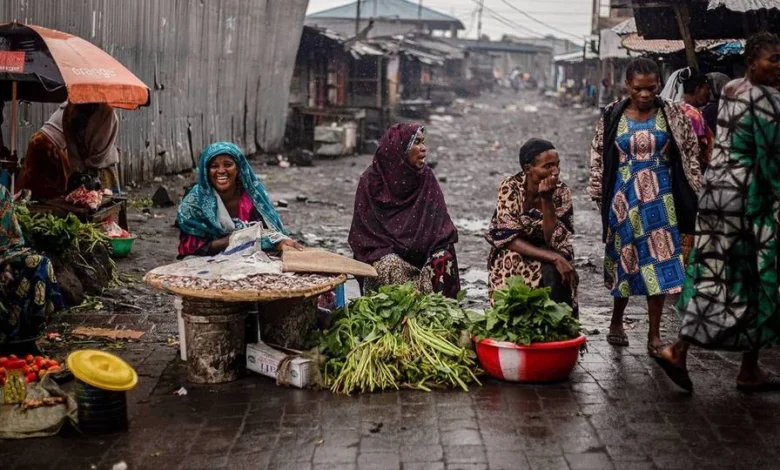
In Sub-Saharan Africa, approximately 87.6% of the workforce is engaged in informal employment, according to recent International Labour Organization data. These workers typically operate without formal legal security, state protections, or standard policy recognition. Rather than relying on a single, steady paycheck, the informal workforce navigates a complex survival matrix that combines micro-trading, small-scale farming, domestic care work, digital gig platforms, transnational remittances, and community-based enterprises. Far from being a temporary transitional phase on the path to modernization, this informality represents a durable, highly adaptive system of economic survival and value creation.
Despite this, traditional development finance continues to penalize hybrid and informal arrangements. Requirements such as formal business registration, strict tax compliance, and conventional collateral often act as insurmountable barriers, determining arbitrarily who can access public procurement contracts, development loans, and commercial support. Critics argue that instead of attempting to forcefully "formalize" populations into institutional frameworks designed without their participation in mind, policymakers must expand social protections, recognize communal production networks, and fundamentally reevaluate the metrics of innovation to ask not just how much growth is generated, but who owns it, who benefits, and who bears the risks.
Background Context and Chronological Evolution of Modern Development Paradigms
The post-World War II era birthed the modern international development architecture, anchored by the Bretton Woods institutions. Throughout the 1960s and 1970s, newly independent African nations inherited administrative structures and economic blueprints modeled after Western industrialization. These models assumed a linear progression: agrarian societies would transition through state-led industrialization into consumer-driven service economies.
By the 1980s and 1990s, this paradigm shifted toward structural adjustment programs (SAPs), enforced by international lenders. SAPs mandated sweeping privatizations, trade liberalizations, and state retrenchment. While these policies aimed to stabilize macroeconomic indicators, they frequently dismantled public health, education, and social safety nets, leaving many African economies deeply indebted and structurally vulnerable.
Entering the 2000s and 2010s, the development discourse pivoted toward technology-led growth, foreign direct investment, and the integration of African markets into global value chains. However, the subsequent commodity super-cycles largely enriched multinational corporations and local political elites while failing to spark broad-based industrial transformation or quality job creation. By the mid-2020s, converging global shocks—including post-pandemic inflation, tightening monetary policy in advanced economies, and the existential threats of climate change—exposed the deep fragility of these imported growth models. Today, the continent stands at a historic crossroads, prompting critical thinkers to demand a departure from inherited economic doctrines.
The Three Intellectual Ruptures: Redefining Value, Authority, and Uncertainty
To forge a sustainable path forward, policy experts emphasize that a comprehensive intellectual overhaul must occur across three distinct dimensions.
1. Redefining Economic and Innovative Value
The first rupture requires a fundamental reimagining of what constitutes economic and innovative value. Traditional economic theory views informal labor as a deficit to be corrected. In contrast, a modern governance framework must recognize that value is frequently generated through relational, non-monetized, and communal networks. Policymakers are urged to design interventions that protect informal workers without erasing the hybrid nature of their livelihoods, ensuring that state resources support cooperatives and grassroots enterprises with the same vigor historically reserved for multinational corporations.
2. Redistributing Knowledge and Authority
The second rupture pertains to knowledge production and institutional authority. Innovation has never been the exclusive domain of corporate research laboratories, elite universities, and centralized government ministries. Across Africa, vital innovations emerge through traditional apprenticeships, communal land stewardship, repair cultures, grassroots civic tech movements, and distributed governance networks.
A prime illustration of this decentralized capacity is found in Sudan’s Emergency Response Rooms. Operating amidst active conflict zones, these local networks have independently organized food distribution, emergency healthcare, and community relief when state-centered frameworks collapsed or proved inaccessible. Similarly, community philanthropy networks operating in Kenya and South Africa demonstrate how external financial resources can be channeled to strengthen local institutions rather than imposing rigid, top-down projects conceived by foreign donors. Bridging this gap requires development institutions to treat marginalized actors as legitimate knowledge producers, sharing financial resources and decision-making authority accordingly.
3. Transforming Action Under Uncertainty: Beyond Solutionism
The third rupture addresses how development actors behave under conditions of systemic uncertainty. International organizations have long suffered from "solutionism"—the compulsive search for easy, standardized, ready-made answers to complex structural problems. Climate change, rapid advancements in artificial intelligence, demographic shifts, and geopolitical instability have rendered the traditional linear path from "developing" to "developed" status obsolete.
Yet, African governments are frequently incentivized to import foreign "best practices" while being severely penalized when local experimentation fails. A clear example of this dynamic is the rapid proliferation of artificial intelligence hyperscaler data centers across various African municipalities. While pitched as engines of modernization, these facilities often generate acute local challenges—including intense water stress, increased carbon emissions, and skyrocketing local electricity tariffs—while the primary financial returns accrue to foreign technology firms. Responsible governance under uncertainty requires public institutions to question, delay, or reject projects whose net public value has not been rigorously proven.
Conversely, multilateral organizations must become more comfortable financing high-uncertainty experiments whose outcomes cannot be guaranteed beforehand. Such ventures must be governed transparently with active community participation, equipped with institutional "hospicing" mechanisms—processes designed to gracefully pause or decommission harmful or obsolete programs. The success of these initiatives must be measured not merely by GDP expansion or patent counts, but by their ability to enhance societal adaptive capacity and distribute the risks and rewards of innovation equitably.
Official Responses and Stakeholder Perspectives
As these debates gain traction within international policy circles, reactions from global and regional stakeholders reflect a growing tension between traditional institutional preservation and the push for systemic reform.
Representatives from multilateral development banks maintain that structural reforms are already underway. Officials point to recent increases in concessional financing, debt-relief advocacy, and targeted investments in digital infrastructure as evidence of institutional responsiveness. "Our objective remains to foster resilient, competitive economies capable of integrating successfully into the global marketplace," noted a senior representative of a major international financial institution speaking on condition of anonymity. "While we acknowledge the unique socio-economic dynamics across African nations, formalization and industrial integration remain proven catalysts for long-term poverty reduction."
Conversely, African civil society leaders, grassroots organizers, and progressive economists argue that incremental reforms within the existing architecture are fundamentally insufficient. Dr. Amina Bello, a prominent regional economic analyst based in Nairobi, emphasized that international institutions must move beyond rhetoric. "For decades, we have been invited to sit at tables where the menu was already written," Dr. Bello stated. "True reform does not mean giving African nations a slightly louder voice in archaic institutions; it means granting us the sovereignty to design economic systems that reflect our values, our relational networks, and our ecological realities."
Broader Impact and Global Implications
The implications of these proposed intellectual ruptures extend far beyond the African continent, offering vital lessons for global economic governance in an era of polycrisis. As traditional liberal international orders fracture, the demand for pluralistic, locally grounded development models is resonating across the Global South.
If international financial institutions fail to adapt to these diverse realities, they risk alienating key partner nations, deepening regional instability, and perpetuating cycles of resource extraction disguised as green and digital transitions. On the other hand, embracing these three intellectual ruptures—re-evaluating sources of value, redistributing authority to grassroots networks, and mastering the art of responsible experimentation and institutional decommissioning—could pave the way for a more resilient, equitable global governance architecture.
Ultimately, the future of African development does not lie in replicating the historical trajectories of advanced industrial powers. Rather, it depends on making the economies that people actually inhabit visible, contestable, and governable, thereby unlocking sustainable pathways tailored to the complex and dynamic realities of the twenty-first century.
Related posts: