Beyond the Vault: Why Decentralized Stablecoins Are Outpacing Traditional Banking Rails

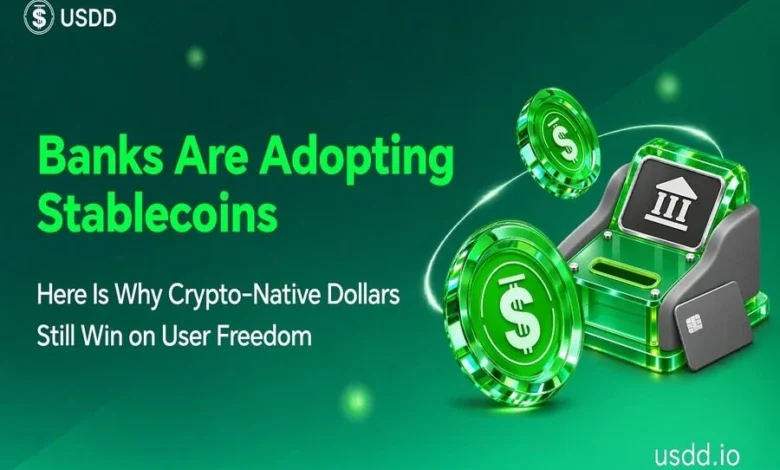
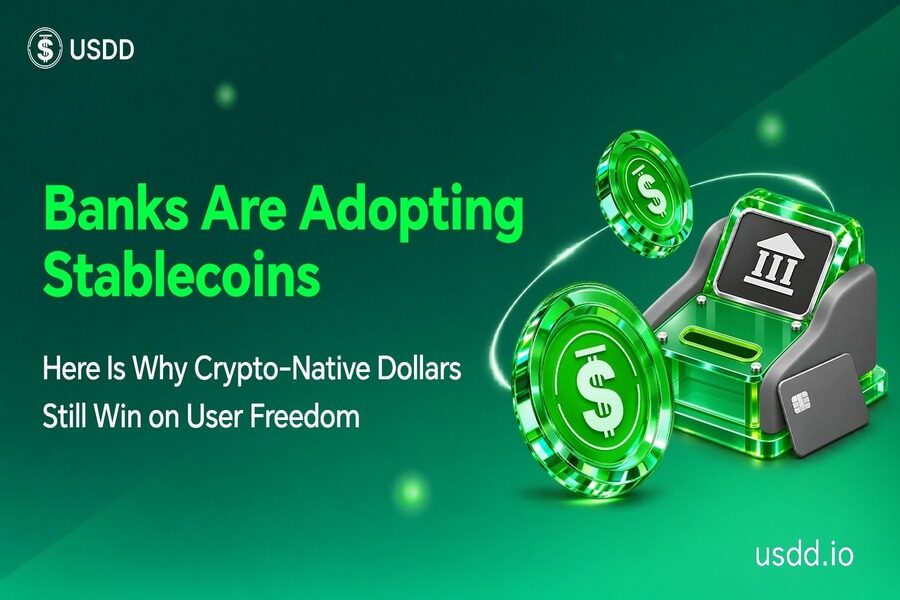
The modern financial landscape is undergoing a profound paradigm shift as legacy banking institutions rush to integrate digital currencies into their aging operational infrastructure. For decades, commercial banks have held a near-monopoly on global settlement, payment processing, and deposit-based yield generation. However, the rapid ascent of decentralized finance (DeFi) and crypto-native stablecoins has challenged the traditional supremacy of centralized institutions. In a recent high-profile industry interview with instant exchange partner ChangeNOW, Yvonne Chia, Head of Communications for the decentralized stablecoin protocol USDD, articulated a compelling thesis: through 24/7 global access, absolute self-custody, and transparent onchain yield generation, decentralized digital dollars possess structural advantages that traditional banks simply cannot replicate.
As regulatory frameworks for digital assets evolve globally, the competition between bank-issued stablecoins and decentralized, algorithmic or over-collateralized alternatives has intensified. While traditional financial giants view stablecoin rails primarily as a backend modernization tool to cut overhead costs on legacy messaging systems like SWIFT, protocols like USDD are demonstrating that open, trustless networks offer a fundamentally superior financial experience for the end user. This analysis examines the core structural divergences between legacy banking and decentralized stablecoins, looking closely at accessibility, settlement speeds, yield distribution, transparency, and the multichain future of money.
The Genesis of Decentralized Stablecoins and Current Market Context
To understand the current friction between traditional banking and decentralized digital dollars, one must examine the macro-environmental backdrop of the past several years. Following a series of high-profile banking liquidity crises in early 2023, public trust in traditional depository institutions experienced notable fractures. Depositors increasingly questioned the safety of holding capital in closed-door fractional reserve systems where yields failed to match prevailing macroeconomic inflation rates. Concurrently, the total market capitalization of stablecoins expanded exponentially, solidifying their role as the indispensable liquidity bridge connecting fiat currencies to the digital asset economy.
Within this dynamic ecosystem, USDD has steadily positioned itself as a major multichain utility protocol. Originally launched on the TRON network, the protocol completed a strategic architectural upgrade in January 2025, expanding natively onto Ethereum and BNB Chain. This multichain integration allowed USDD to tap into diverse liquidity pools and integrate deeply with leading decentralized finance protocols such as Pendle and Morpho. By combining automated yield generation via the Smart Allocator system with innovative features like GasFree zero-TRX transfers, USDD has aggressively targeted the practical pain points that have historically hindered broader cryptocurrency adoption.
Permissionless Access Versus Gated Financial Gatekeeping
The most glaring structural difference between traditional bank accounts and decentralized stablecoins lies in accessibility. For billions of unbanked and underbanked individuals across emerging and developed economies alike, opening a conventional bank account remains a bureaucratic obstacle course. Prospective customers are routinely required to submit extensive physical documentation, maintain strict minimum balance thresholds, navigate geographic restrictions, and endure days or weeks of compliance reviews before approval is granted. Even when traditional financial institutions adopt stablecoin technology behind the scenes, those digital rails are typically enclosed within legacy compliance walls and intermediary control, ensuring that the consumer experience remains bottlenecked by institutional gatekeeping.
Crypto-native stablecoins invert this exclusive model entirely. As Yvonne Chia emphasized during her discussion with ChangeNOW: "Compare this to a stablecoin like USDD, where all you need is a phone, a working internet connection, you can immediately start a wallet and you have access to your funds right away."
This permissionless availability fundamentally redefines financial inclusion. Users are no longer beholden to the geographic operating hours, arbitrary account closures, or service restrictions of a single localized banking provider. Self-custody empowers individuals to retain absolute sovereignty over their financial lives. Rather than routing every transaction through a centralized intermediary that can freeze assets or impose sudden transaction limits, users can hold, manage, and transfer their USDD directly through self-hosted wallets. This decentralization of custody guarantees that an individual’s financial agency is preserved, allowing digital dollars to move frictionlessly across open blockchain borders on the user’s own terms.
Continuous Global Settlement Versus Restricted Banking Hours
The operational inefficiency of legacy payment rails is another critical vulnerability for traditional financial institutions. Despite decades of technological advancement, conventional wire transfers, ACH payments, and cross-border remittances continue to operate on archaic schedules dictated by weekend cutoffs, national bank holidays, and multi-day settlement windows. Furthermore, these sluggish transactions are frequently burdened by exorbitant intermediary fees, exchange rate markups, and hidden costs that disproportionately penalize everyday users and international businesses alike.
In stark contrast, public blockchain networks operate continuously, 365 days a year, without regard to time zones, weekends, or bank holidays. Whether a transfer is initiated on a Tuesday morning or a Sunday midnight, USDD settles globally within seconds.
"We are able to have transfers 24/7 and we’re not limited to any traditional banking hours," Chia noted during the interview. "So I think that in some ways, stablecoins are not just becoming banks, but exceeding what traditional banks can offer to users."
Recognizing that network transaction friction remains a psychological barrier for mainstream users, the USDD protocol introduced GasFree integration on the TRON network. This innovative feature enables eligible users of supported wallets to pay network fees directly in USDD, eliminating the traditional requirement to acquire and hold a separate native utility token—such as TRX—solely to cover gas costs. Under standard operating conditions, a GasFree USDD transaction costs approximately 0.5 USDD, offering a highly competitive alternative to traditional stablecoin transfers like standard USDT transactions on congested networks. By combining round-the-clock availability with minimal transaction friction, decentralized stablecoins prove that their utility extends far beyond theoretical concepts into practical, everyday financial utility.
Maximizing Value: Onchain Yield Versus Traditional Bank Spreads
Perhaps the most economically consequential divergence between legacy banking and decentralized finance is how generated yield is distributed to the end user. In the traditional banking model, commercial institutions collect customer deposits and deploy them into lucrative credit markets, sovereign debt instruments, and high-yield lending facilities. However, the vast majority of the profits generated from these deployments are retained by the institution to pad corporate balance sheets and executive bonuses. Everyday depositors are typically offered negligible interest rates on standard checking and savings accounts, while access to higher-yielding financial products is restricted to high-net-worth individuals or locked behind rigid, long-term maturity requirements.
Decentralized stablecoins disrupt this extractive model by democratizing access to institutional-grade yield opportunities. Instead of allowing banks to capture the spread on deposited capital, decentralized protocols enable users to engage directly with productive, onchain financial systems.
Through the USDD ecosystem, holders can deposit their digital dollars into USDD Earn to receive sUSDD. This mechanism provides automated, competitive yields powered by the protocol’s proprietary Smart Allocator system. Crucially, this yield generation operates without the rigid lock-up periods or prohibitive eligibility requirements typical of traditional fixed-term banking products. Users retain continuous flexibility over their capital, balancing the desire for passive income generation with the practical necessity of liquidity. This capability transforms stablecoins from static stores of value into active, productive financial instruments.
The Principle of Onchain Verification Versus Institutional Blind Trust
Trust in the traditional financial sector has historically been built on institutional reputation, closed-door balance sheets, and periodic regulatory filings. However, systemic financial collapses throughout history have repeatedly demonstrated that relying solely on the verbal assurances of centralized institutions—or auditing practices that occur behind closed doors—leaves consumers dangerously exposed to sudden insolvency.
Decentralized stablecoin protocols approach risk management through a completely different philosophical framework: "Don’t trust, verify." By anchoring protocol operations in public, immutable ledgers, decentralized finance offers an unprecedented level of transparency. Users do not need to rely blindly on corporate marketing or opaque balance sheets; instead, they can independently examine collateralization ratios, smart contract mechanics, and real-time transaction flows directly on the blockchain.
While radical onchain transparency does not entirely eliminate technical vulnerabilities or smart contract risk, it fundamentally alters how users evaluate and manage their exposure. Independent verification empowers communities and automated risk-assessment tools to monitor protocol health continuously, creating an environment where accountability is mathematically enforced rather than administratively promised.
Expanding Horizons: The Multichain Future of Decentralized Money
Financial freedom is ultimately constrained if an asset is confined to a single digital silo. A stablecoin that cannot bridge disparate blockchain networks or integrate with diverse applications cannot fulfill the vision of an open, borderless financial system. Recognizing this imperative, USDD’s strategic expansion across TRON, Ethereum, and BNB Chain represents a masterclass in multichain interoperability.
By establishing native footprints across multiple leading layer-1 networks, USDD ensures that its user base is not restricted by the throughput limitations or liquidity bottlenecks of any single ecosystem. Furthermore, the integration of sUSDD into established decentralized finance primitives—including yield-tokenization protocols like Pendle and liquidity markets like Morpho—demonstrates how decentralized stablecoins can weave themselves into the broader fabric of global DeFi. These integrations are not isolated functional upgrades; together, they construct a comprehensive financial infrastructure where users can seamlessly borrow, lend, trade, and deploy their digital dollars across an interconnected web of financial opportunities.
Strategic Implications and Market Outlook
As traditional financial institutions accelerate their experiments with tokenized deposits and consortium-backed stablecoins, industry analysts anticipate a fierce competitive battle for the future of global payments. Major banks will undoubtedly utilize stablecoin rails to modernize their archaic internal accounting and cross-border settlement procedures, attempting to capture the efficiency gains of blockchain technology while maintaining centralized oversight.
However, the core thesis articulated by USDD leadership remains resilient: true financial liberation cannot be achieved by merely wrapping legacy banking controls in digital tokens. The structural advantages demonstrated by decentralized protocols—absolute self-custody, uninterrupted 24/7 global access, transparent yield distribution, and permissionless multichain utility—represent an evolutionary leap beyond what centralized commercial banks are structurally designed to deliver.
As adoption metrics climb and regulatory clarity improves across major global jurisdictions, the boundary line between traditional finance and decentralized protocols will continue to blur. Yet, the foundational ethos of protocols like USDD suggests that the future of money will not be dictated from the boardroom of a traditional commercial bank, but forged within the open, transparent, and resilient architecture of decentralized networks.