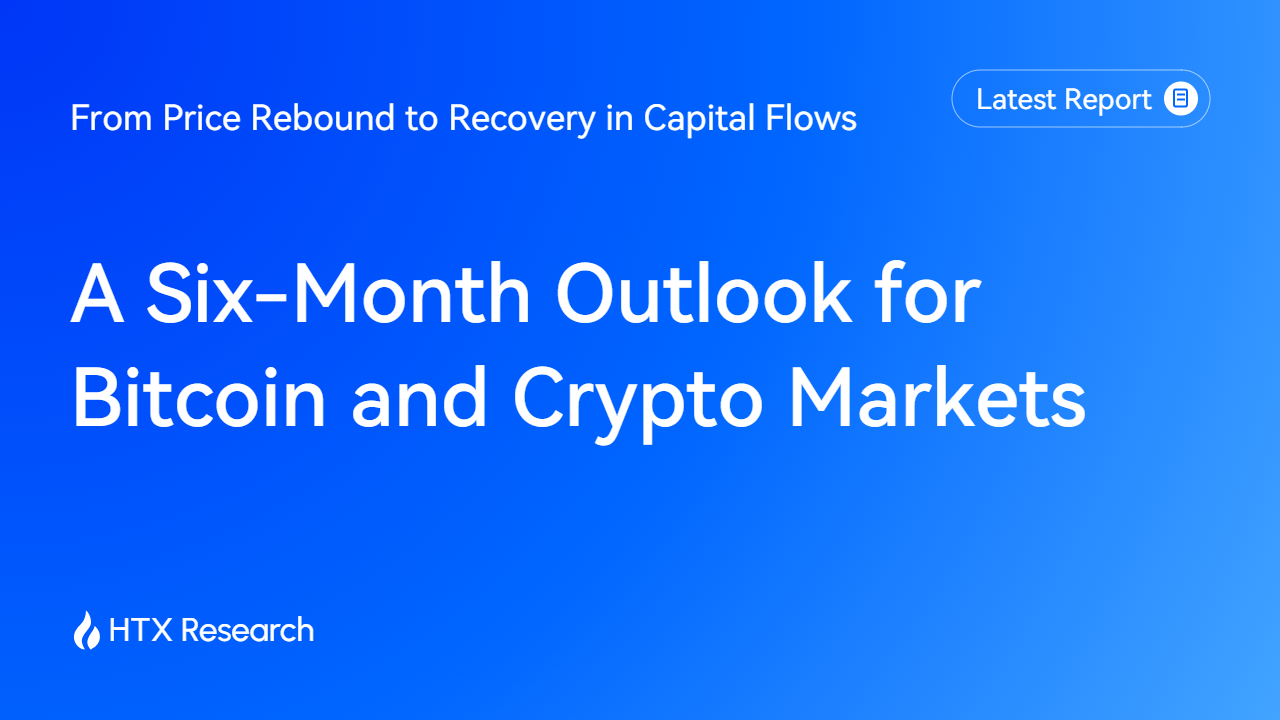
Published in Apia, Samoa, on November 20, 2026, the report serves as a strategic roadmap for institutional and retail investors navigating what many market participants describe as a period of significant structural volatility. By examining the mechanics of recent leverage liquidations and the subsequent vacuum in liquidity, the research provides a framework for understanding how Bitcoin (BTC) and the broader cryptocurrency market might transition from a mere price rebound to a sustainable recovery phase over the next six months.
The Mechanics of Market Cleansing and Capital Absorption
The core thesis of the HTX Research document centers on a fundamental inquiry: after the aggressive deleveraging events that have characterized the latter half of 2026, who possesses the necessary capital to absorb the remaining selling pressure?
Historically, cryptocurrency cycles have been defined by periods of extreme leverage followed by sharp corrections. The current cycle, however, has been complicated by shifting macroeconomic variables, including changing interest rate environments and evolving global liquidity mandates. The report suggests that the market is currently in a "stabilization phase." Its base-case scenario posits that as selling pressure wanes—partly due to the exhaustion of forced liquidations—Bitcoin will seek to establish a new support floor. However, the report cautions that the durability of any upward trajectory is strictly contingent upon the return of sustained, high-conviction capital inflows.
Comprehensive Analytical Scope
The HTX Research team has synthesized a vast array of metrics to construct this six-month outlook. The report is segmented into several critical analytical pillars:
- Macroeconomic and Dollar Liquidity Constraints: An evaluation of how central bank policies and the relative strength of the U.S. dollar continue to influence risk-on assets, specifically Bitcoin.
- ETF and Institutional Flows: A granular look at the performance of Bitcoin exchange-traded funds (ETFs) and the behavior of corporate treasury departments holding digital assets on their balance sheets.
- Stablecoin Market Dynamics: Analysis of stablecoin issuance and redemption patterns, which serve as a primary gauge for "on-ramp" liquidity and investor sentiment.
- On-Chain Cost Ranges: A study of historical transaction data to identify where the bulk of current holder cohorts acquired their assets, providing insight into potential resistance and support levels.
- Derivatives and Spot Market Liquidity: A review of the relationship between futures open interest, funding rates, and spot market depth, which collectively indicate the health of the current trading environment.
- Asset Divergence: A comparative analysis of how Bitcoin is performing relative to altcoins and the broader crypto ecosystem, identifying where capital is rotating.
Key Observation Windows: November 2026 – May 2027
To provide actionable intelligence, the report identifies specific observation windows. These intervals are designed to help investors monitor for catalysts that could trigger a shift in market momentum. The period from late November 2026 through May 2027 is highlighted as a critical window where seasonal adjustments, fiscal year-end rebalancing, and potential shifts in monetary policy could either accelerate a recovery or extend the consolidation phase.
The research team emphasizes that investors should look for "conditional triggers." These are specific markers—such as sustained net positive inflows into spot BTC ETFs over a 30-day period or a compression in stablecoin supply volatility—that would signal the transition from a speculative rebound to a fundamental recovery in capital flows.
Understanding the Role of HTX Research
HTX Research operates as the intellectual backbone of the HTX Group. By providing deep-dive technical and fundamental analysis, the division aims to bridge the gap between complex blockchain data and investor strategy. In an industry often characterized by noise and sentiment-driven trading, HTX Research focuses on data-driven methodologies. Their work is frequently cited as a reference point for understanding how macroeconomic events, such as the shifting of global fiscal policies, trickle down into the digital asset markets.
The publication of this report underscores a growing trend among major exchanges to provide educational and analytical value to their users, fostering a more informed trading community. By moving beyond simple price action, the report encourages stakeholders to consider the "plumbing" of the market—the liquidity providers, the custodial flows, and the on-chain velocity of assets.
Market Implications and Future Outlook
The implications of the report are twofold. First, it acknowledges that the market is still healing from the leverage-induced pain of recent months. Second, it offers a pragmatic view that recovery is not a guaranteed event but a process that requires the re-engagement of institutional capital.
Market analysts reviewing the findings suggest that the focus on "capital flows" rather than "price targets" is a sophisticated shift in narrative. Price, in this context, is viewed as a lagging indicator, while the movement of capital—tracked via ETFs, stablecoin minting, and on-chain whale activity—is viewed as the leading indicator.
For the retail investor, the takeaway is one of caution mixed with long-term optimism. If the "base case" scenario holds, the stabilization of Bitcoin prices will be the prerequisite for a broader "alt-season" or a sustained bull run. However, should capital inflows remain stagnant, the market may face a prolonged period of range-bound trading, necessitating a more defensive portfolio strategy.
Institutional Perspective on Digital Assets
The report also touches upon the institutionalization of crypto. With the integration of digital assets into corporate balance sheets and the maturity of ETF-based investment vehicles, the correlation between crypto and traditional equities has become more pronounced. The HTX Research report argues that understanding this correlation is no longer optional for professional traders. As the regulatory landscape continues to evolve, the ability to anticipate how institutional players will move capital—whether into or out of the space—has become the primary driver of market volatility.
Methodology and Transparency
HTX Research maintains a rigorous editorial and analytical policy, emphasizing objectivity and the use of verifiable, on-chain data. The report utilizes proprietary data sets from the HTX exchange, supplemented by public ledger analysis and macroeconomic datasets from global financial institutions. This multidimensional approach is designed to mitigate bias and provide a clear-eyed view of the risks inherent in the digital asset market.
The full report, From a Price Rebound to a Recovery in Capital Flows: A Six-Month Outlook for Bitcoin and Crypto Markets, is available for public review through the official HTX Research portal. As the industry moves into the final month of 2026, this document is expected to serve as a key reference for market participants looking to align their strategies with the prevailing data-driven outlook.

Concluding Remarks on Market Resilience
Despite the challenges outlined in the report, the overarching tone is one of resilience. The crypto market has demonstrated an ability to withstand massive deleveraging events and regulatory scrutiny while continuing to innovate. By framing the next six months as a period of transition, HTX Research provides a necessary reality check for those caught in the cycle of short-term volatility. The message is clear: the market is not just waiting for prices to go up; it is waiting for the fundamental infrastructure of capital flow to recalibrate, setting the stage for the next cycle of growth.
For those tracking the intersection of finance and technology, the insights provided by HTX Research offer a window into the professionalization of the digital asset sector. As the industry matures, the focus on liquidity, capital efficiency, and macro-alignment will likely become the standard for all market analysis, moving the industry further away from its speculative origins and toward a sustainable, mature financial ecosystem.
Disclaimer: The information provided in this article and the associated report from HTX Research is for educational and informational purposes only. It does not constitute financial, investment, or legal advice. Digital asset investments are subject to high volatility and risk. Readers are strongly encouraged to conduct their own independent research and consult with a qualified financial advisor before making any investment decisions. The views expressed in the research report are those of the authors and do not necessarily reflect the official stance of any specific exchange or platform.
Related posts: