Build Alpha Unveils LLM-Driven Orchestrator to Revolutionize Quantitative Trading Strategy Generation and Hyperparameter Tuning

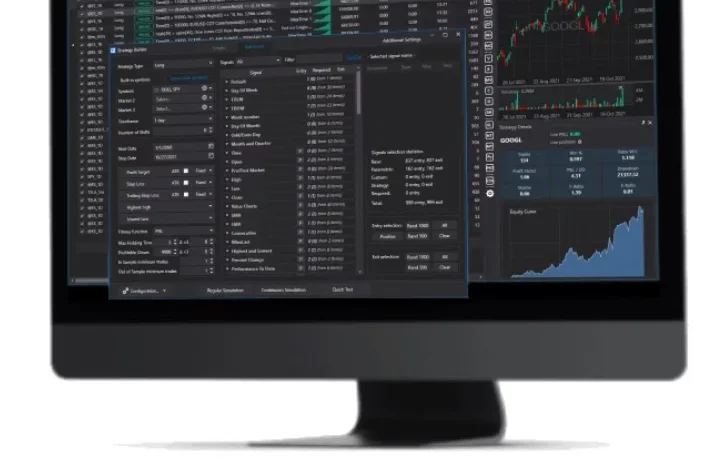
Quantitative finance has long operated at the intersection of computational power and human ingenuity. For decades, algorithmic traders have relied on deterministic models, genetic algorithms, and brute-force computational simulations to discover viable market strategies. However, these traditional methods have faced a persistent bottleneck: the reliance on human intervention to evaluate search plateaus, adjust hyperparameters, and reconfigure search boundaries. Addressing this structural limitation, quantitative software platform Build Alpha has officially launched an advanced Large Language Model (LLM) orchestrator designed to operate in tandem with its automated strategy generation engine.
The newly introduced optional feature, branded as AutoTune, represents a paradigm shift in how algorithmic strategies are discovered, validated, and refined. Rather than replacing the foundational genetic algorithms that have powered Build Alpha, the LLM orchestrator sits directly above the core generation engine. While the genetic algorithm explores specific parameters within a predefined boundary, the LLM orchestrator dynamically selects, expands, and adjusts those boundaries in real time.
The Evolution of Algorithmic Search: Inside the Box Versus Picking the Box
To understand the operational significance of the LLM orchestrator, industry analysts point to the fundamental distinction between parameters and hyperparameters in quantitative research. Parameters represent variables internal to an individual trading strategy, such as the lookback period for a relative strength index (RSI), moving average lengths, or stop-loss distances. Hyperparameters, conversely, define the overarching parameters of the search space itself: which asset classes are evaluated, what quantitative signals are made available, which regime filters remain active, and what fitness functions are prioritized.
Historically, genetic algorithms excelled at optimizing parameters inside a fixed search space—colloquially referred to by quantitative developers as "searching inside the box." Yet, if a truly productive market regime or signal combination lay outside that initial box, hours or even days of computational simulations would yield suboptimal results dictated entirely by human preconceptions.
The LLM orchestrator automates the macro-level decisions, effectively allowing the model to "pick the box." When a genetic algorithm converges and hits a performance plateau, the orchestrator intervenes autonomously. Instead of requiring a human researcher to manually analyze the stagnation, alter the signal pool, and restart the simulation, the LLM interprets the diagnostic output, modifies the search hyperparameters, and redirects the engine toward more productive territories at machine speed.
Expanding the Signal Universe and Autonomous Signal Generation
A core component of Build Alpha’s infrastructure is its extensive signal library, which encompasses over 7,000 distinct data points spanning price action, technical indicators, volume profiles, volatility metrics, seasonality, market breadth, sentiment analysis, macroeconomic indicators, yield curves, intermarket spreads, Commitment of Traders (COT) reports, news sentiment, option flows, fundamental data, and alternative metrics such as weather patterns and Google Trends.
The integration of advanced reasoning models—including architectures from OpenAI, Anthropic, Google, and xAI—takes this signal universe a step further. Beyond merely selecting which existing categories to emphasize or exclude, the LLM orchestrator possesses the capacity to invent novel trading signals mid-session. For instance, if the model deduces that a specialized volatility-adjusted breadth indicator could exploit a specific market regime, it can write the custom signal definition on the fly.
This custom-generated logic is subsequently injected into the genetic algorithm and evaluated alongside Build Alpha’s native library. Crucially, these AI-invented signals do not bypass the platform’s rigorous validation protocols. Every generated signal must withstand the exact same institutional-grade testing pipeline, including noise tests, walk-forward analysis, and out-of-sample benchmarking. Once validated, these signals become fully integrated into the export layer, generating native, deployable source code for major retail and institutional trading platforms such as TradeStation, NinjaTrader, MultiCharts, MetaTrader 4 and 5, TradingView, Interactive Brokers, and Python environments.

Closing the Loop: The Self-Improving Research Workflow
The quantitative development sector has witnessed a proliferation of artificial intelligence tooling in recent years, yet much of the existing software suffers from a critical workflow disconnect. Typically, standard AI tools analyze market data or strategy performance and output static "insights" or textual recommendations. This leaves the burden of execution entirely on the human user, who must manually interpret the findings, reconfigure their software, and initiate new simulations—a process characterized by friction and latency.
Build Alpha’s AutoTune feature introduces a closed-loop architecture that eliminates this human bottleneck. The operational workflow functions continuously without manual interruption:
- Settings Initialization: The user configures initial search parameters, robustness gates, and risk management profiles.
- Engine Execution: The C++ optimized genetic algorithm generates initial strategy candidates.
- LLM Analysis and Decision: The orchestrator reads the intermediate output, identifies performance trends or plateaus, and formulates strategic adjustments.
- Automated Application: Build Alpha instantly loads the new search settings, restarts the evolution process, and evaluates fresh territory.
This continuous feedback loop compresses research timelines dramatically. Quantitative simulations that traditionally required a week of active human oversight can now be executed overnight or within minutes. Furthermore, the system incorporates a persistent memory architecture across sessions. When a simulation concludes, the LLM summarizes its findings—documenting successful hyperparameter shifts, failed trajectories, and regime-specific lessons—and writes these insights to a local, tagged memory store. Subsequent research sessions query this repository, ensuring that the software compounds its institutional knowledge over time rather than resetting to a blank slate.
Industry Implications and Risk Management Frameworks
The deployment of autonomous LLM orchestrators within commercial trading software reflects a broader industry trend toward agentic artificial intelligence in financial engineering. By delegating hyperparameter tuning and feature engineering to language models, quantitative developers can allocate more time to macro-strategy design and portfolio allocation.
Despite the advanced automation, industry veterans emphasize that the orchestrator remains strictly bound by user-defined risk parameters and compliance rules. The system is fully compatible with proprietary trading firm ("prop firm") evaluation criteria. Traders can enforce strict daily loss limits, maximum drawdown thresholds, profit targets, and consistency rules, ensuring that any strategy produced by the AI-driven engine complies with institutional capital allocation standards. Furthermore, the orchestrator does not manufacture edge out of a vacuum; if market conditions or underlying constraints lack structural alpha, the system cannot bypass economic reality.
To maintain transparency and eliminate the "black box" critique often leveled against AI applications, Build Alpha logs every decision made by the orchestrator. Traders can access a granular message history detailing why a plateau was declared, why specific hyperparameters were altered, and what the model anticipated from the adjustment. This dual-purpose log functions simultaneously as an audit trail and an automated research notebook.
Setup, Security, and Future Outlook
In response to data privacy and security concerns prevalent among institutional desks and proprietary traders, Build Alpha utilizes a "Bring Your Own Key" (BYOK) framework. The software does not proxy LLM traffic through proprietary intermediary servers; instead, users input their own API credentials, which are stored securely and locally on their machines. Communication occurs directly between the user’s local instance of Build Alpha and the chosen AI provider, with token consumption remaining minimal due to the transmission of compact structural summaries rather than raw, bandwidth-heavy tick data.
As quantitative firms increasingly adopt hybrid computational models that merge traditional optimization algorithms with cognitive machine learning, platforms like Build Alpha signal a definitive shift in software design. By bridging the gap between raw computing power and adaptive artificial intelligence, the industry moves closer to fully autonomous, auditable, and self-improving systematic research ecosystems.