Building, Tracking, Comparing, and Registering Scikit-Learn Pipelines with Scikit-LLM and MLflow

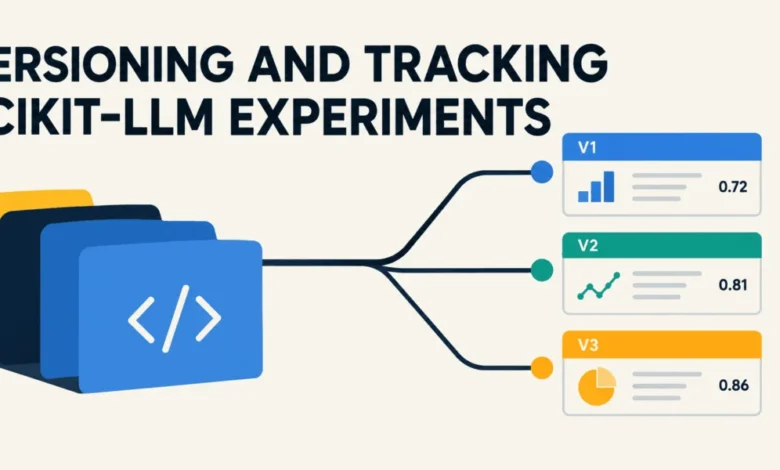
The integration of Large Language Models (LLMs) into traditional machine learning workflows has shifted from an experimental niche to a fundamental requirement for modern enterprise software development. As developers increasingly leverage Scikit-Learn pipelines to standardize data preprocessing and inference, the necessity for robust versioning, auditability, and reproducibility has become paramount. By combining the Scikit-LLM library—which allows LLMs to function as drop-in estimators within Scikit-Learn—with MLflow, an industry-standard lifecycle management tool, engineering teams can now bridge the gap between rapid prototyping and production-grade deployment. This systematic approach ensures that as LLM backends evolve, the underlying pipelines remain stable, traceable, and easily swappable, mitigating the risks inherent in the fast-moving AI landscape.
The Evolution of LLM-Driven ML Pipelines
For years, the Scikit-Learn ecosystem has served as the bedrock for classical machine learning, prized for its "fit-predict" consistency. However, the emergence of LLMs introduced a new paradigm where models are often treated as black boxes with varying parameters and external dependencies. This shift created a fragmentation problem: developers could easily prototype a model but struggled to maintain a coherent history of which version of a model, combined with which specific LLM backend, produced a particular result.
The convergence of Scikit-LLM and MLflow addresses this by providing a unified interface for the entire lifecycle. Scikit-LLM abstracts the complexity of interacting with various LLM providers, while MLflow acts as a centralized registry. This dual-layer architecture allows for "model swapping"—the ability to switch from a lightweight, local model like Orca Mini to a more robust, resource-intensive model like Falcon—without rewriting the core infrastructure. In high-stakes environments, such as financial sentiment analysis or automated customer support routing, this level of control is no longer optional.
Establishing the Technical Foundation
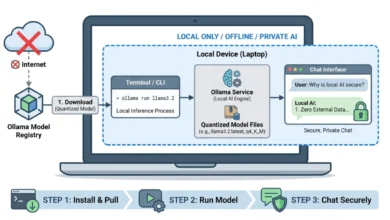
To initiate a robust tracking environment, developers must first establish a consistent development footprint. The installation process is straightforward but requires precise configuration to ensure local model compatibility. By utilizing the pip install "scikit-llm[gpt4all]" mlflow command, developers gain access to the GPT4All ecosystem, which enables the execution of quantized LLMs locally on hardware, reducing latency and cloud costs.
The configuration phase is critical for reproducibility. By setting dummy credentials for local execution, developers can bypass external API dependencies, ensuring that the pipeline remains functional offline or within air-gapped secure environments. The integration of a SQLite database backend for MLflow creates a permanent audit trail, allowing teams to query previous runs, inspect parameters, and recover the exact state of a pipeline from weeks or even months prior. This granular tracking is what separates a successful project from one plagued by "dependency drift," where code that worked in a notebook fails in production due to subtle changes in model file versions or environment settings.
Implementing and Versioning Pipelines
The process of logging a pipeline involves wrapping the model definition within an MLflow tracking block. This block serves as the source of truth for the experiment. By explicitly logging parameters such as the llm_backend and the specific llm_model_file (e.g., .gguf or .bin files), engineers can perform retroactive performance analysis.
When initializing the baseline pipeline, developers often opt for lightweight models to establish a performance floor. For example, using the Orca-Mini model provides a high-speed, low-footprint solution for zero-shot classification. As the project requirements grow, the developer might upgrade to the Falcon model. MLflow facilitates this transition by allowing the user to create distinct runs for each iteration. The use of cloudpickle as a serialization format is a crucial technical choice here; because LLM-integrated pipelines often involve complex object hierarchies that standard pickle may struggle to serialize, cloudpickle ensures that the entire pipeline object, including the LLM wrapper, is captured accurately.
The Role of Auditing in Model Selection
Once multiple iterations of a pipeline exist, the challenge shifts from creation to selection. This is where the MLflow Model Registry provides substantial value. Rather than relying on manual file naming conventions or disparate notebook logs, the Registry acts as a central repository for "blessed" models.
The audit phase involves querying the MLflow search API to generate a structured DataFrame of all experimental runs. This allows for an objective comparison of different backend configurations. If, for instance, a project manager needs to determine if the increased accuracy of the Falcon model justifies its higher latency compared to the Orca-Mini baseline, they can pull the metrics directly from the experiment logs. This fact-based analysis removes guesswork from the decision-making process.
Operationalizing Through Registration
The final stage of the lifecycle is the promotion of a model to the registry. Registering a model is an intentional act that signals a transition from "experimental" to "production-ready." By assigning a version number—such as Version 1 for the first deployed iteration—the team establishes a lineage that can be traced back to the specific training data and parameters used during the development phase.
This registration step also serves as a gatekeeper. By implementing a selection logic based on performance metrics, such as ordering runs by accuracy before selecting the top performer, organizations can automate the promotion process. This ensures that only the highest-performing configurations are ever exposed to the production environment, effectively creating a "winner-take-all" pipeline for model deployment.
Broader Implications for AI Infrastructure
The combination of Scikit-LLM and MLflow represents a broader trend in machine learning operations (MLOps) toward standardization. As LLMs become integrated into standard business processes, the "black box" nature of these models is becoming a liability. Companies are increasingly demanding transparency, requiring that every prediction can be linked back to a specific version of a model.
The implications are significant:
- Compliance and Governance: In regulated industries, the ability to reproduce a specific decision made by an LLM is a legal requirement. By maintaining a registry of versions, companies can audit decisions and provide documentation on model provenance.
- Resource Optimization: By monitoring the performance of various LLMs in a single dashboard, companies can make data-driven decisions about which models to host, optimizing cloud spend and hardware usage.
- Collaboration: In distributed teams, having a centralized registry eliminates the "it worked on my machine" syndrome. Every data scientist on the team has access to the same registered models and tracking history.
Conclusion and Future Outlook
The methodology outlined here serves as a template for organizations looking to scale their LLM initiatives. By treating LLMs as modular components within a broader, version-controlled Scikit-Learn ecosystem, teams can avoid the pitfalls of manual, disorganized model management. The transition from experimental notebook code to a structured, registered pipeline is the hallmark of a mature AI practice. As the library of available local LLMs continues to expand and the tools for tracking them grow in sophistication, this workflow will likely become the standard for any team serious about delivering reliable, performant, and reproducible AI-driven solutions in a professional environment. Through rigorous tracking and systematic registration, developers can ensure that their AI models remain not just powerful, but manageable and accountable in the long term.