How AI Is Reshaping Service Operations in Mission Critical Infrastructure and the Strategic Shift to Prescriptive Maintenance Guidance

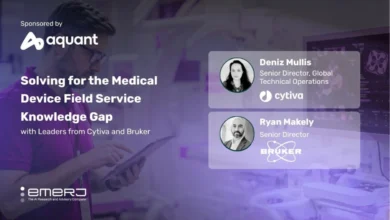
The global industrial landscape is currently grappling with a profound structural mismatch that threatens the stability of energy, infrastructure, and data-center assets. As the digital economy accelerates, uptime requirements for mission-critical systems are being tightened to near-zero, yet the maintenance models and technician capacities required to support these assets have failed to keep pace. This widening gap has created an urgent need for a technological overhaul in field service operations, a topic explored in depth by Joe Lang, Vice President of Service Technology and Innovation at Comfort Systems USA, during a recent industry analysis sponsored by Aquant.
The crisis is most visible at the "grid edge," where demand for power and cooling is accelerating at an unprecedented rate. According to the U.S. Department of Energy, citing analysis from the Electric Power Research Institute (EPRI), data centers could consume as much as 9 percent of total U.S. electricity generation by 2030. This represents more than a doubling of their 2023 share, driven largely by the massive computational requirements of generative artificial intelligence and high-performance computing. As these facilities become the backbone of the global economy, the cost of failure has reached astronomical levels. The Institute for Supply Management (ISM) recently reported that unscheduled downtime now costs the world’s 500 largest companies an estimated $1.4 trillion annually—a figure representing roughly 11 percent of their total revenue.
The Converging Crises of Labor and Data Fragmentation
While the demand for uptime reaches an all-time high, the human capital required to maintain these systems is in a state of precipitous decline. The U.S. Bureau of Labor Statistics (BLS) projects approximately 81,000 openings for electricians annually through 2034. Critically, this demand is not being driven by industry growth alone but by a "Silver Tsunami" of retirements. As experienced technicians exit the workforce, they take decades of institutional knowledge with them, leaving a younger, less experienced workforce to manage increasingly complex systems.
Compounding this labor shortage is the persistent issue of fragmented equipment data. A study by the National Institute of Standards and Technology (NIST) found that inadequate interoperability—the inability of different software systems and hardware components to share data effectively—costs U.S. capital-facilities owners and operators $10.6 billion annually during the operations and maintenance phase alone. This fragmentation manifests as a "knowledge silo" where technicians arrive at a job site without access to asset history, digital manuals, or real-time performance data. Without this context, delivering a "first-time fix" becomes nearly impossible, leading to repeat visits, increased costs, and prolonged asset downtime.
In this environment, traditional maintenance models—which rely on fixed calendar intervals or reactive "break-fix" mentalities—are no longer viable. Joe Lang argues that the only path forward involves the integration of AI-driven anomaly detection and prescriptive guidance to close the gap between technician capacity and infrastructure requirements.
Anomaly Detection: Redefining the Source of Truth
The traditional approach to maintenance assumes that equipment degrades at a predictable, linear rate. However, real-world equipment behavior is often erratic, with anomalies occurring in the unmonitored gaps between scheduled inspections. Lang posits that organizations must move away from scheduled assumptions and treat real-time behavioral data as their primary "source of truth."
Anomaly detection, in this context, is not merely an advanced feature of AI but a fundamental operational discipline. By utilizing the vast arrays of sensors already installed on modern HVAC, power, and industrial systems, AI can identify "behavioral drifts"—subtle deviations from normal operating parameters that precede a catastrophic failure.
"AI gives technicians a head start," Lang explained during his discussion. "When the system flags a deviation, it’s often the earliest sign that something is drifting out of normal behavior. Acting at that moment prevents failure rather than reacting to it." This shift changes the fundamental rhythm of service work. Instead of technicians "chasing emergencies" and operating in a state of constant crisis management, they can address emerging issues during planned windows, significantly reducing the stress on both the workforce and the infrastructure.
To successfully implement anomaly detection, Lang identifies several key operational requirements:
- The establishment of a "normalized" baseline for equipment behavior across diverse environmental conditions.
- The integration of high-frequency sensor data into a centralized monitoring platform.
- The creation of automated alerting systems that prioritize deviations based on their potential impact on mission-critical operations.
From Predictive to Prescriptive: The Evolution of Technician Support
While predictive maintenance focuses on forecasting when a failure might occur, Lang emphasizes the superior value of prescriptive guidance—the shift toward recommending the "next-best action" for the technician. This distinction is critical for stabilizing technician performance across a workforce with varying levels of experience.
Currently, maintenance tasks are often performed unnecessarily. For example, air filters are frequently replaced on a fixed schedule regardless of their condition. Prescriptive guidance, powered by AI, can analyze pressure-drop data to determine if a filter actually needs replacement, thereby saving material costs and labor time.
More importantly, prescriptive guidance addresses the "information issue" that causes variability in technician performance. When a technician faces an unfamiliar failure mode, they often spend the first hour of a service call diagnosing the problem through trial and error. AI can eliminate this uncertainty by consolidating service histories, Original Equipment Manufacturer (OEM) documentation, and past resolution patterns.
When this data is delivered in real-time, the system can suggest the most likely fault and the specific steps required to fix it before the technician even opens an equipment panel. "It’s about removing the first ten minutes of uncertainty that drive inconsistent outcomes," Lang noted. By providing an informed starting point, organizations can ensure that a novice technician performs with the accuracy of a veteran, narrowing the diagnostic swing and improving first-time-fix rates.
The evidence sources required to power this prescriptive engine include:
- Historical service records and "tribal knowledge" captured from veteran technicians.
- Real-time telemetry and sensor data from the asset.
- OEM technical manuals and schematics.
- Consolidated resolution patterns from across the entire service organization.
Overcoming the "Part-Time Initiative" Trap
Despite the clear benefits of AI integration, many modernization efforts in the service sector stall or fail. Lang identifies a common pitfall: treating the transition to AI-enabled maintenance as a "part-time initiative." Many organizations attempt to layer these complex technological changes onto existing staff who are already overwhelmed by daily operations.
"This is where you’ll modify the plane while you’re flying it," Lang warned. "You’ve got to modify it so it can continue to fly and land and take off again. You absolutely have to resource this correctly when you start down this path."
The transformation requires a dedicated commitment to data hygiene. Modernization begins with identifying, categorizing, and organizing assets into logical groups. Without structured asset data and centralized manuals, AI models cannot reason effectively or provide reliable guidance. Lang argues that under-resourcing this foundational work is the primary reason companies spend years building data infrastructure without seeing a measurable return on investment.
To avoid this, Lang recommends several strategic design choices:
- Dedicated Ownership: Assigning specific leaders to oversee the data transition, rather than making it a secondary task for IT or operations.
- Structured Workflows: Ensuring that data gathered in the field by technicians is fed back into the AI model in a structured format to create a continuous learning loop.
- Iterative Implementation: Starting with a high-impact asset group to demonstrate value before scaling the solution across the entire enterprise.
Implications for the Future of Infrastructure
The implications of this shift extend far beyond the balance sheets of service organizations. As the world becomes increasingly dependent on data centers and a stable power grid, the ability to maintain these assets with high precision is a matter of economic and national security. The NIST’s finding of a $10.6 billion loss due to data fragmentation highlights a massive inefficiency that, if solved, could free up capital for further infrastructure investment.
Furthermore, the adoption of AI in field service may help solve the recruitment crisis. By equipping technicians with advanced digital tools and reducing the "guesswork" associated with the job, the profession becomes more attractive to a tech-savvy younger generation. The role of the technician is evolving from a purely mechanical trade into a sophisticated "knowledge worker" position, where human judgment is augmented by machine intelligence.
In conclusion, the transition to AI-enabled service operations is no longer an optional upgrade; it is a strategic necessity. As Joe Lang and the leadership at Comfort Systems USA have demonstrated, the combination of real-time anomaly detection and prescriptive guidance offers a viable solution to the structural mismatch facing the industry. By treating maintenance as a data-driven discipline rather than a reactive chore, organizations can protect their revenue, support their workforce, and ensure the resilience of the critical infrastructure that powers modern life.