Cambodia Emerges as a Regional Fintech Hub Amid Landmark UK Security Partnerships and Major Banking Milestones


The Kingdom of Cambodia has rapidly ascended to the forefront of Southeast Asia’s digital and financial transformation, highlighted by a convergence of international law enforcement cooperation, groundbreaking cross-border payment integration, and global recognition for its premier financial institutions. As global financial systems become increasingly digitized, Cambodia is simultaneously addressing the darker sides of technological proliferation through strategic global partnerships while expanding seamless, interoperable financial corridors that bridge emerging Asian economies. These developments reflect a multifaceted maturation of the country’s banking sector, regulatory frameworks, and international economic standing.
United Kingdom and Cambodia Join Forces to Combat Transnational Financial Crime and Cyber Scams
In a landmark security agreement, the governments of the United Kingdom and Cambodia have officially signed a Memorandum of Understanding (MoU) designed to dismantle transnational organized crime syndicates operating illicit online scam centers. This bilateral pact represents the first formal framework established between the two nations specifically targeted at addressing the multi-billion-dollar global menace of cyber fraud networks.
The proliferation of industrial-scale scam centers across Southeast Asia has emerged as a critical international security crisis. Operating with sophisticated deception tactics—ranging from high-yield cryptocurrency investment schemes to emotionally manipulative romance scams—these criminal syndicates defraud victims globally, simultaneously exploiting vulnerable individuals through human trafficking. Many workers trapped within these compound facilities are lured under false pretenses of legitimate employment, only to be subjected to forced labor and coercion under the constant threat of violence to meet daily financial fraud quotas.
Under the terms of the newly established MoU, London and Phnom Penh will significantly enhance bilateral intelligence sharing, operational data coordination, and joint investigative protocols. The collaborative effort is engineered to trace, freeze, and disrupt the illicit financial flows that sustain these criminal operations, ultimately bringing the architects of these syndicates to justice. Furthermore, the initiative places a paramount emphasis on humanitarian rescue and support, ensuring that victims of human trafficking identified during law enforcement raids receive comprehensive protection and repatriation assistance.
UK Minister for Fraud, Lord Hanson, emphasized the borderless nature of modern financial crime during the announcement, noting that over two-thirds of fraud impacting British citizens originates overseas. Consequently, international partnerships of this nature are deemed vital to safeguarding the public at home. To bolster Cambodia’s domestic capabilities, the United Kingdom has committed to providing specialized technical assistance, including advanced training programs in cybercrime investigations, digital forensics, and rigorous evidentiary procedures.

This cooperative framework will also integrate closely with the Global Fraud Taskforce—an international alliance jointly developed by the UK and INTERPOL. By synchronizing efforts through this global network, law enforcement agencies can more effectively identify high-level suspects, execute coordinated raids to dismantle physical scam compounds, and intercept the complex laundering networks utilized by these criminal cartels.
Cross-Border Payment Innovation: UPI Acceptance Goes Live via Cambodia’s KHQR
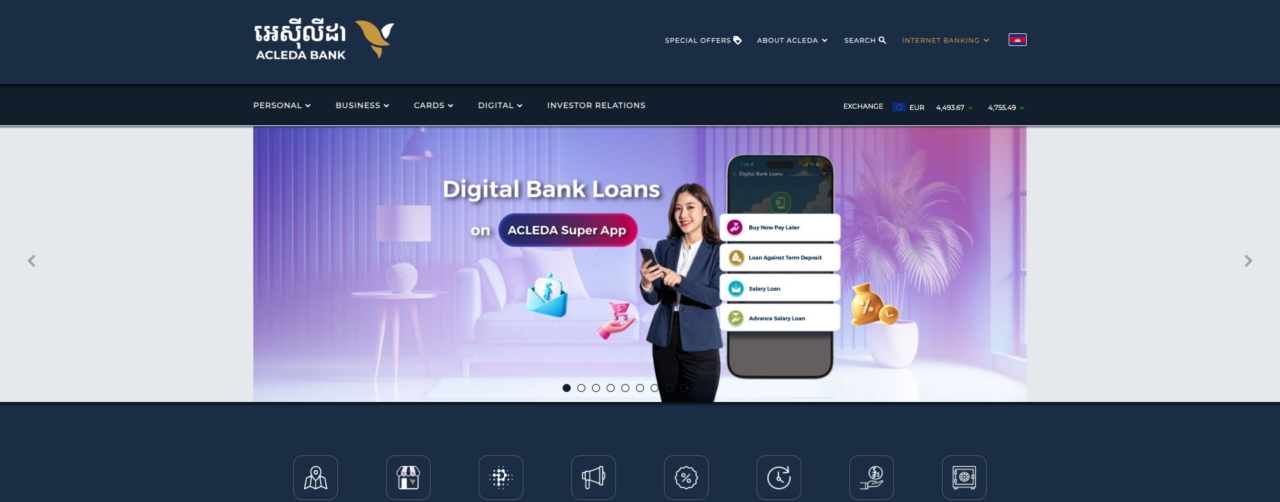
Shifting from cybersecurity challenges to commercial financial innovation, Cambodia has achieved a major milestone in digital payments through a strategic partnership between NPCI International Payments Limited (NIPL)—the international arm of the National Payments Corporation of India—and ACLEDA Bank Plc. This collaboration has successfully brought Unified Payments Interface (UPI) acceptance live across Cambodia, leveraging the nation’s standardized national QR code infrastructure, KHQR.
The rollout is structured in strategic phases. Phase 1 enables Indian tourists, business travelers, and expatriates visiting Cambodia to execute secure, real-time digital transactions by scanning KHQR codes using their native UPI-powered mobile applications. This capability is instantly operational across an expansive merchant network comprising approximately 4.5 million retail outlets, tourist destinations, dining establishments, and service providers throughout the country. Phase 2 of the initiative will reciprocally empower Cambodian travelers visiting India to utilize their domestic banking and payment applications at millions of UPI-enabled merchant locations across the Indian subcontinent, thereby forging a robust, bilateral, and fully interoperable payment corridor.
The foundation of this technological bridge rests upon Cambodia’s advanced national payment architecture. Introduced in July 2022 by the National Bank of Cambodia, KHQR positioned the country as an early regional pioneer in standardized QR code systems. Integrated directly with Bakong—Cambodia’s revolutionary national payment and clearing system launched in October 2020—KHQR has achieved widespread societal adoption, fundamentally transforming consumer and merchant behavior by virtually eliminating cash dependency for millions of daily transactions.
ACLEDA Bank President and Group Managing Director In Channy highlighted the systemic economic advantages of the integration during the official launch. By seamlessly linking the payment gateways of Cambodia and India, the initiative successfully removes traditional transactional friction, eliminates foreign exchange volatility for travelers, and grants local Cambodian merchants direct access to a high-velocity digital consumer market. This synergy optimizes liquidity management, enhances operational throughput through secure real-time settlement protocols, and reinforces broader national financial inclusion mandates.
Founded in 1993 as a non-governmental organization providing microfinance services to underserved populations, ACLEDA Bank transitioned into a specialized bank in 2000 and achieved full commercial banking status in 2003. Today, it stands as one of Cambodia’s largest financial institutions by assets—surpassing $10 billion—and was recognized as Cambodia’s leading bank for trade finance by Global Finance in 2025, maintaining an exceptionally strong footprint across rural communities and small-to-medium enterprises.
ABA Bank Claims Top Tier Status in Global Forbes Rankings
Complementing ACLEDA Bank’s technological advancements, ABA Bank—another pillar of Cambodia’s major financial institutions alongside Canadia Bank and KB Prasac Bank—has achieved unprecedented international acclaim. ABA Bank was officially named Cambodia’s number one bank in the prestigious Forbes World’s Top Performing Banks 2026 ranking. On a global scale, the institution secured the 31st position worldwide within the Lower Mid-Size Banks category, marking a historic benchmark for the Cambodian banking sector.
Established in 1996 as the Advanced Bank of Asia Limited to serve a niche corporate clientele, ABA Bank has evolved over three decades into the nation’s largest commercial bank and an undisputed pioneer in digital banking innovation. Amassing total assets exceeding $16 billion, the bank serves a massive demographic of over five million mobile banking customers. Its physical and digital infrastructure includes 106 brick-and-mortar branches, 45 automated self-service banking locations, and a comprehensive fleet of more than 2,000 advanced self-service banking machines deployed nationwide.
Reflecting on the global recognition, ABA Bank Chief Executive Officer Askhat Azhikhanov attributed the success to unwavering institutional resilience, robust business fundamentals, and continuous customer trust. Azhikhanov noted that being featured prominently on a global stage validates the bank’s long-term strategy of prioritizing customer-centric digital solutions and reinforces its commitment to continually raising performance standards within the region’s competitive financial ecosystem.
Broader Economic Implications and Regional Outlook
The concurrent advancement of international security cooperation and cutting-edge financial infrastructure illustrates Cambodia’s dynamic trajectory in the global arena. On one hand, proactive diplomatic and law enforcement engagements with international partners like the United Kingdom demonstrate a firm governmental resolve to eradicate illicit financial networks, protect human rights, and sanitize the regional digital economy. Conversely, the rapid deployment of cross-border interoperable payment systems like UPI-KHQR and the global recognition of tier-one institutions such as ACLEDA and ABA Bank underscore a thriving, stable, and highly investable domestic financial market.
As Cambodia continues to modernize its regulatory enforcement, deepen regional and international alliances, and expand its digital payment corridors, the nation is solidifying its reputation not merely as a participant in the global digital economy, but as a progressive catalyst for secure, inclusive, and technologically advanced financial development across Southeast Asia.
Related posts: