Citizens Bank Pivots Branch Strategy, Shuttering Supermarket Locations for Advisory-Focused Stand-Alone Centers

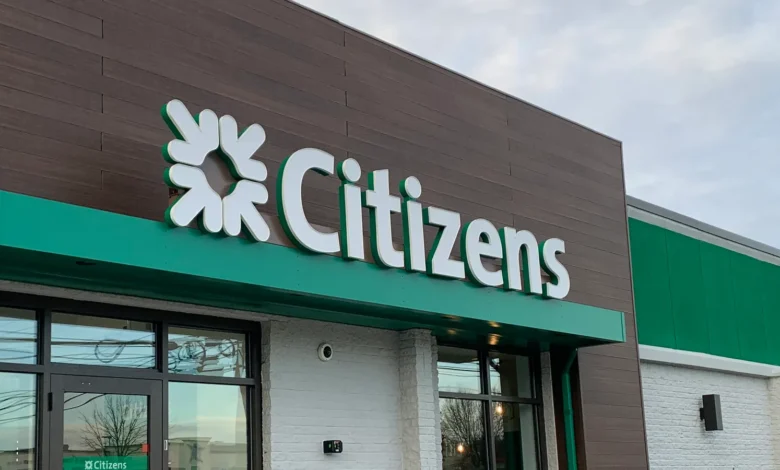
Citizens Bank is embarking on a significant strategic realignment of its physical footprint, announcing plans to close between 100 and 120 supermarket-based branch locations. This move, detailed in the bank’s second-quarter earnings presentation on Thursday, signals a clear shift towards a more consultative and specialized banking model. In parallel with these closures, Citizens intends to launch 50 to 60 new stand-alone branches in proximate locations, designed with a pronounced emphasis on personalized advice, private banking, wealth management services, and dedicated support for small businesses.
Redefining the Branch Experience for a Digital Age
The decision reflects a broader industry trend where traditional transactional banking is increasingly migrating to digital channels, while physical branches are being repurposed for more complex financial interactions. Citizens’ CEO Bruce Van Saun articulated the rationale behind this targeted investment during a recent conference call, stating, "This type of careful investment in physical locations and in people, if executed well, should create a nice lift in the deposit trajectory without taking on the risk and significant capital expenditure of opening a whole bunch of de novos outside of the footprint." This statement underscores a strategy focused on deepening relationships within existing markets rather than aggressively expanding into new geographies.
This strategic pivot has been consistently articulated by top Citizens executives in recent months, highlighting a concerted effort to optimize their service delivery model. Matt Boss, head of Citizens’ consumer bank, emphasized in May that "The 14 states we operate in today offer more than enough opportunity when it comes to the consumer bank." This internal focus stands in stark contrast to the inorganic growth strategies pursued by some other regional banks, such as Ohio-based Huntington and Fifth Third, which expanded their footprints last year through acquisitions of Texas-headquartered lenders.
A Phased Transformation: From Transactional to Consultative Hubs
The transformation of Citizens’ branch network is not an overnight initiative but a carefully planned evolution. As early as April 2025, Nuno Dos Santos, Citizens’ head of branch distribution, highlighted the bank’s "aggressive" position on reinvesting in a comprehensive overhaul of its existing locations. This reinvestment manifests in a dramatic redesign of the physical space. Whereas older Citizens branches might have spanned close to 7,000 square feet, the new or renovated branches are significantly more compact, typically encompassing just 2,000 to 3,000 square feet. This reduced footprint is a direct reflection of a decreased emphasis on routine transactions, which are now largely handled digitally, and a heightened focus on creating dedicated spaces for in-depth banker-client conversations.
Brendan Coughlin, President of Citizens, further elaborated on this vision in March, noting that the bank plans to undertake "a lot of surgery around some of our legacy markets," particularly in New England. This "surgery" involves a deliberate recalibration of the bank’s offerings towards mass-affluent customers and above. The goal is to create branches that are "more impressive, [on] the right corner, [with] the right staffing," signaling an elevated experience tailored to clients with more sophisticated financial needs. These modern branches are expected to feature private consultation rooms, advanced digital tools for financial planning, and a highly trained staff equipped to provide expert guidance across a spectrum of financial services.
Industry Trends and Competitive Landscape
Citizens is by no means an outlier in this strategic pivot towards the mass-affluent segment and away from high-volume, low-value transactional banking in less optimal locations. This trend reflects a broader industry response to shifting consumer preferences and the economic realities of maintaining expansive physical networks. Financial institutions like Truist and Regions have also embarked on similar strategic transformations, recognizing the immense value in cultivating relationships with clients who require comprehensive wealth management, private banking, and specialized lending solutions. The mass-affluent market, typically defined as households with investable assets ranging from $100,000 to $1 million, represents a lucrative demographic for banks due to their higher average balances, greater product penetration, and propensity for seeking financial advice.
The move away from in-store branches, particularly those situated within grocery stores, is another well-established industry trend. Historically, supermarket branches offered convenience and exposure to high foot traffic. However, their operational model often presented challenges, including limited branding opportunities, sometimes less secure environments, and a transactional focus that no longer aligns with the evolving purpose of a physical branch. Several major regional banks have already undertaken similar consolidations. When Huntington acquired TCF in 2021, it subsequently closed nearly 100 Michigan-based branches that were couched inside Meijer grocery stores. Similarly, People’s United closed 140 branches located inside various Stop & Shops just prior to its acquisition by M&T Bank. More recently, U.S. Bank and PNC have also executed comparable strategies, significantly reducing their grocery store branch presence in favor of optimizing their stand-alone networks. These precedents demonstrate a collective understanding among banking leaders that the future of physical banking lies in quality over sheer quantity, and in specialized advisory services over ubiquitous transactional access.
Background and Evolution of Banking Channels
The current transformation at Citizens Bank is best understood within the broader historical context of how banking channels have evolved. For decades, physical branches were the sole interface between banks and their customers, serving as essential hubs for deposits, withdrawals, loan applications, and customer service. The late 20th century saw an expansion of branch networks, often into suburban areas and eventually into retail environments like supermarkets, driven by the desire for convenience and market penetration.
However, the advent of the internet and subsequently mobile technology initiated a profound shift. Online banking platforms, introduced in the 1990s, allowed customers to manage accounts, pay bills, and transfer funds from their homes. The proliferation of smartphones in the 2000s supercharged this digital transformation, making banking services accessible 24/7 from anywhere. Today, most routine transactions, from checking balances to depositing checks via mobile apps, can be completed without ever stepping into a branch.
This seismic shift has fundamentally altered the role of the physical branch. Rather than becoming obsolete, branches are being reimagined as centers for complex financial planning, problem-solving, and relationship building – functions that still benefit significantly from face-to-face interaction. The advisory-focused model embraced by Citizens Bank recognizes that while digital channels excel at efficiency for simple tasks, human expertise and personal trust remain paramount for significant financial decisions like wealth management, complex lending, or business growth strategies.
Financial Performance and Strategic Outlook
The aggressive retooling of its branch network is projected by Citizens to align with its ambitious financial targets. The bank aims to achieve a 16% to 18% return on tangible common equity (ROTCE) by the end of 2027. This metric is a key indicator for investors, reflecting how efficiently a bank generates profit from the capital invested by its shareholders, excluding intangible assets. The strategic shift is designed to contribute to this goal by enhancing operational efficiency, attracting higher-value customer segments, and ultimately boosting core deposit growth and fee income.
In its second-quarter earnings statement, also delivered on Thursday, Citizens reported a ROTCE of 13.9%, an encouraging increase from 12.2% three months earlier. This upward trajectory suggests that ongoing strategic initiatives are already yielding positive results. Furthermore, the bank showcased robust financial health, reporting a significant 35% jump in profit year-over-year in the second quarter, reaching $587 million. Revenue also saw a healthy increase, rising 12% year-over-year to $2.3 billion. These strong financial results provide a solid foundation for Citizens to execute its ambitious branch transformation, indicating that the bank has the capital and operational momentum to invest in its future model. The profit growth underscores the effectiveness of its current strategies, which are now being refined and intensified through the branch optimization program.
Implications and Broader Impact
The implications of Citizens Bank’s strategy are multifaceted, extending to customers, employees, and the broader banking landscape. For customers, the change means a potentially different banking experience. Those accustomed to the convenience of supermarket branches for quick transactions will need to adapt to utilizing digital channels or visiting the new stand-alone locations. However, mass-affluent and small business clients can expect a more specialized, personalized, and enhanced service experience, with dedicated professionals and more conducive environments for in-depth discussions.
For employees, this shift will likely entail retraining and a reorientation of roles. The demand for traditional tellers may decrease, while the need for skilled financial advisors, wealth managers, and small business specialists will grow. This represents an investment in human capital, transforming branch staff into higher-value consultants.
From an industry perspective, Citizens’ move reinforces the idea that the physical branch is not disappearing but rather evolving into a crucial component of a hybrid banking model. This model seamlessly integrates robust digital platforms for everyday banking with strategically located, advisory-focused branches for complex needs. It also highlights the intensifying competition for high-value customer segments, prompting banks to continually refine their offerings and delivery channels to remain relevant and competitive. The focus on deposit trajectory through careful investment, as highlighted by CEO Van Saun, reflects the enduring importance of stable funding sources in a dynamic interest rate environment.
In conclusion, Citizens Bank’s strategic decision to divest from supermarket branches and invest in smaller, advisory-centric stand-alone locations is a calculated move to align its physical footprint with modern consumer behaviors and its long-term growth objectives. This transformation, rooted in a desire to deepen customer relationships, enhance operational efficiency, and capitalize on high-value segments, positions Citizens Bank to thrive in an increasingly digital yet relationship-driven financial services industry. It is a testament to the ongoing reinvention of banking, where convenience meets specialized expertise in a redesigned physical space.