The United States at 250 Assessing the Semiquincentennial Legacy of a Global Superpower and Its Complex Relationship with the Global South

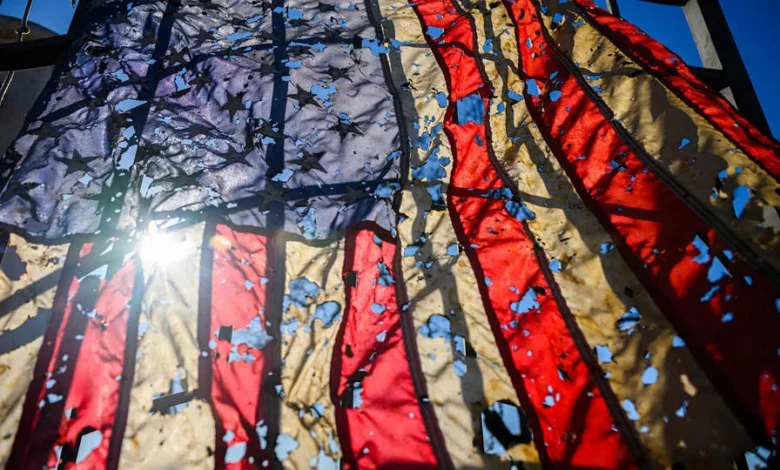
As the United States approaches the 250th anniversary of its founding on July 4, 2026, the milestone serves as a moment of profound national reflection and international scrutiny. This semiquincentennial occurs at a juncture where the nation’s historical trajectory—from a collection of thirteen colonies to a global hegemon—is being re-examined through a lens that balances its democratic ideals against its complicated history of systemic inequality and overseas expansion. For many observers, particularly across the Global South, the commemoration is not merely a celebration of longevity but a critical assessment of whether the American experiment has fulfilled its promise of liberty or if its legacy remains inextricably tied to imperialism and racial hierarchy.
The historical arc of the United States is one of unprecedented rapid ascent. By the dawn of the 20th century, the nation had transformed from a peripheral agrarian society into the world’s leading industrial power. This growth was fueled by a combination of vast natural resources, a burgeoning immigrant labor force, and the aggressive territorial expansion of the 19th century. However, the consolidation of this power on the global stage was finalized in the crucible of the 20th century’s two World Wars. Following the collapse of the old European empires in 1945, the United States emerged as the primary architect of the modern international order, establishing a framework of global governance that continues to define international relations today.
The Architecture of Global Governance and the Post-1945 Order
The conclusion of World War II marked the beginning of the "American Century," characterized by the creation of the Bretton Woods system and the United Nations. These institutions were designed to prevent a return to the catastrophic economic instability of the 1930s and the total warfare of the 1940s. The establishment of the International Monetary Fund (IMF) and the World Bank provided a financial backbone for global reconstruction, while the General Agreement on Tariffs and Trade (GATT)—the precursor to the World Trade Organization (WTO)—sought to liberalize global commerce.
From a geopolitical perspective, the United States played a pivotal role in the decolonization movements that swept across Africa and Asia in the mid-20th century. While often motivated by a desire to limit Soviet influence during the Cold War, American rhetoric regarding self-determination provided a diplomatic framework for emerging nations to seek independence from European colonial powers. This period saw the U.S. positioning itself as a "beacon of democracy," a narrative that was instrumental in winning the ideological battle against communism.
Despite these contributions to global stability, the implementation of this "rules-based order" has frequently been criticized for its inherent biases. Critics in the Global South point out that while the U.S. promoted democracy abroad, it often supported autocratic regimes that aligned with its strategic interests. The dual nature of American foreign policy—promoting universal rights while engaging in clandestine interventions—has left a lasting mark on its international reputation.
A Chronology of American Global Influence (1776–2026)
To understand the weight of the 250th anniversary, it is essential to trace the key milestones that defined the American trajectory:
- 1776–1783: The American Revolution establishes a republic based on Enlightenment principles, though these rights were initially restricted to white, male property owners.
- 1823: The Monroe Doctrine is announced, asserting U.S. influence over the Western Hemisphere and laying the groundwork for future regional hegemony.
- 1861–1865: The Civil War ends slavery but leaves a legacy of racial division and systemic inequality that would persist for over a century.
- 1890s–1900s: The U.S. emerges as an industrial titan and begins overseas expansion, acquiring territories such as Puerto Rico, Guam, and the Philippines following the Spanish-American War.
- 1917–1918: Entry into World War I marks the nation’s first major foray into European power politics.
- 1944–1945: The Bretton Woods Conference and the founding of the United Nations establish the U.S. as the leader of the new international order.
- 1947–1991: The Cold War defines global politics, leading to American interventionism in Korea, Vietnam, and various Latin American and African nations.
- 2001–2021: The "War on Terror" reshapes American foreign policy, leading to prolonged conflicts in the Middle East and a shift in how the world perceives American military power.
- 2026: The Semiquincentennial serves as a point of reckoning for the nation’s role in a rapidly shifting, multipolar world.
Supporting Data: Economic Primacy and Military Footprint
The scale of American influence can be quantified through its economic and military reach. At the end of World War II, the United States accounted for nearly 50% of the world’s total GDP. While this share has naturally declined as other nations developed—standing at approximately 24% in the mid-2020s—the U.S. dollar remains the world’s primary reserve currency, involved in nearly 90% of all foreign exchange transactions.
In terms of military presence, the United States maintains an estimated 750 to 800 military bases in more than 80 countries. This global footprint is unparalleled in human history and is a primary source of both security for allies and resentment for critics. U.S. military spending, which exceeded $900 billion annually by the mid-2020s, outpaces the next ten countries combined, ensuring that American hard power remains a central pillar of global affairs.
However, data also highlights the internal challenges that complicate the U.S. image. The United States continues to grapple with the highest level of income inequality among G7 nations. Furthermore, the legacy of racial disparity is reflected in wealth gaps, where the median white household holds significantly more assets than the median Black or Hispanic household. These domestic realities are often cited by leaders in the Global South as evidence of the "hypocrisy" in American lecturing on human rights and social justice.
Perspectives from the Global South: Cynicism and Expectations
The 250th anniversary is viewed with a mixture of respect and deep-seated cynicism in Johannesburg, Nairobi, New Delhi, and Brasilia. For many in these regions, the United States is seen as a "flawed hegemon." While the U.S. provides significant development aid and remains a primary destination for global talent, its history of "regime change" and economic sanctions has created a legacy of distrust.
Diplomats and scholars from the African Union and other regional bodies have frequently noted the "double standards" in American foreign policy. The invasion of Iraq in 2003, conducted without UN Security Council authorization, is often cited as a turning point that undermined the very international institutions the U.S. helped create. More recently, the perceived disparity in the American response to various global conflicts has reinforced the idea that the "rules-based order" is applied selectively to suit Washington’s interests.
Adekeye Adebajo, a prominent academic and columnist based in Johannesburg, argues that an honest appraisal of the U.S. at 250 must include its "racist and imperialist legacy." This perspective suggests that the U.S. cannot lead effectively in the 21st century without acknowledging how its past actions—from the displacement of indigenous populations to its support for Cold War-era dictators—continue to resonate in the Global South.
Fact-Based Analysis of Implications and Future Challenges
As the United States enters its next quarter-millennium, it faces a world that is increasingly multipolar. The rise of the BRICS+ bloc (Brazil, Russia, India, China, South Africa, and new members) represents a direct challenge to the Western-centric financial and political order. Many nations are now seeking "strategic autonomy," attempting to balance relations between Washington and Beijing rather than picking sides in a new Cold War.
Internal political polarization also poses a significant threat to American global standing. The stability of American democracy, once taken for granted by its allies, has been questioned following the political upheavals of the 2020s. For the Global South, a distracted or isolationist United States creates a power vacuum that could lead to regional instability, but it also provides an opportunity for these nations to assert more influence in global decision-making.
The 250th anniversary provides a unique opportunity for the United States to recalibrate its relationship with the world. To move beyond the cynicism of the Global South, analysts suggest that the U.S. must transition from a posture of dominance to one of genuine partnership. This would involve reforming international institutions to give developing nations a greater voice and addressing the historical grievances that continue to color international relations.
Conclusion: The Path Forward at 250
The semiquincentennial of the United States is more than a birthday; it is a global event that forces a confrontation between the "shining city on a hill" rhetoric and the grit of historical reality. The nation’s achievements in industry, technology, and global stabilization are undeniable. Yet, the shadows of its imperialist past and its internal social fractures remain prominent.
As the celebrations of 2026 unfold, the world will be watching to see if the United States can reconcile its founding principles of equality and liberty with its historical actions. For the Global South, the hope is not for the decline of America, but for the emergence of a more consistent, humble, and inclusive superpower—one that recognizes that the next 250 years will require a global order based on mutual respect rather than unilateral might. The success of the American experiment in its third century may well depend on its ability to listen to the voices of those it has previously overlooked.