Europe Must Invest in Grid Expansion and Address Public Opposition to Data Centers

The pursuit of artificial intelligence dominance has become a central policy objective for governments worldwide, with European leaders frequently touting the continent’s ambitions for digital independence and technological sovereignty. However, a stark physical reality threatens to derail these grand political visions. Beneath the rhetoric of innovation lies an aging and structurally overburdened electrical grid that is fundamentally unprepared for the astronomical energy demands of modern AI data centers. Furthermore, a rising tide of local community pushback against new infrastructure developments is creating a complex bottleneck. Experts warn that unless European policymakers pivot from lofty political declarations to pragmatic engineering and infrastructural solutions, the continent risks falling irretrievably behind in the global AI race.
The Anatomy of the European Power Crisis
At the heart of the crisis is an intrinsic mismatch between the rapid scaling requirements of generative artificial intelligence and the sluggish pace of traditional energy infrastructure development. Modern AI workloads require unprecedented computational power, housed within massive data centers that operate continuously and draw staggering amounts of electricity. To put the scale into perspective, a single large-scale AI data center can consume as much electricity as a medium-sized European town.
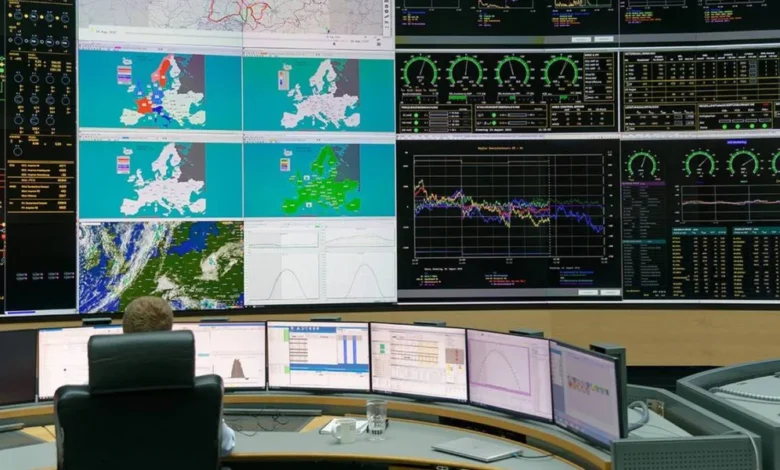
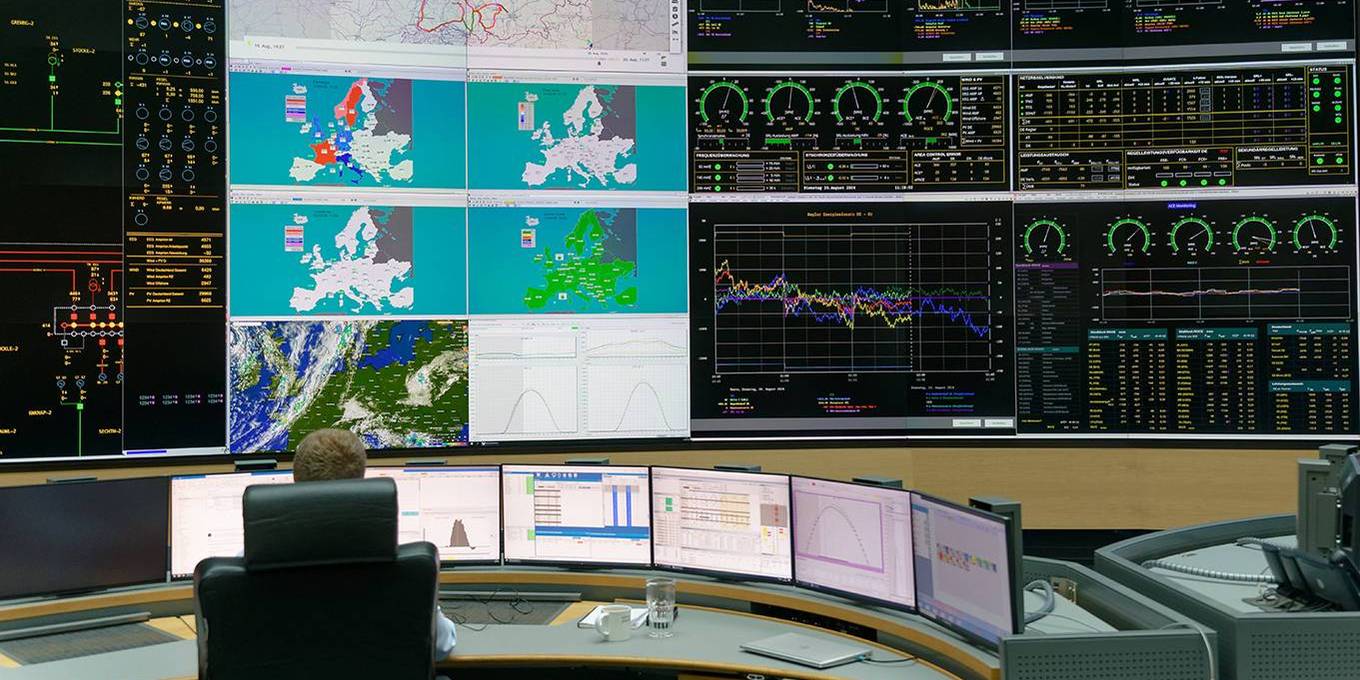
Europe’s transmission and distribution systems, many of which were built decades ago to support traditional, centralized fossil-fuel generation, are ill-equipped to handle these localized spikes in demand. Transmission system operators (TSOs) across the continent—from Amprion in Germany to equivalents in France, the Netherlands, and Ireland—have increasingly reported congestion on their networks. The integration of intermittent renewable energy sources, while vital for meeting climate targets, has added layers of complexity to grid management, leaving little reserve capacity for heavy industrial digital loads.
Compounding the technical hurdles is fierce public opposition. Local communities situated near proposed data-center sites are routinely organizing against construction projects. Citizens and local governments cite concerns over excessive water consumption for cooling, noise pollution from high-capacity cooling fans, and the diversion of green energy away from residential heating and public use to feed private corporate data servers. In regions where land is scarce and environmental regulations are stringent, obtaining permits for new substations and high-voltage transmission lines has turned into a protracted legal and political battleground.
A Chronology of Ambition and Obstruction
The collision between Europe’s digital aspirations and its physical limitations has evolved rapidly over the past several years, tracing a clear timeline from optimistic policy formulation to operational grid strain.
Between 2020 and 2022, as generative AI models captured global attention, European policymakers accelerated their legislative push for digital sovereignty. Initiatives such as the European Chips Act and various digital single-market strategies aimed to reduce the continent’s reliance on foreign technology from the United States and China. Governments rolled out attractive tax incentives and streamlined regulatory pathways to lure tech giants into building domestic digital infrastructure.
By 2023, the localized impact of these policies began to materialize. Major cloud and AI providers announced multi-billion-euro investments in hubs located primarily in Ireland, the Netherlands, Germany, and the Nordic countries. However, warning bells were sounded by energy regulators. In late 2023 and early 2024, utility companies in Dublin and Amsterdam effectively implemented informal moratoriums or connection restrictions, warning that the local electrical grids could no longer guarantee power without risking widespread blackouts for residential consumers.
Entering 2025 and looking toward 2026, the friction shifted from quiet warnings to vocal public pushback. Citizens’ groups, empowered by stringent European environmental protection laws, began successfully challenging zoning permits and environmental impact assessments for new data hubs. Consequently, European policymakers are now forced to confront the reality that software innovation cannot outpace hardware and energy constraints.
Supporting Data and Infrastructure Metrics
The scale of the infrastructural challenge is underscored by recent data from energy agencies and industry analysts. According to estimates by the International Energy Agency (IEA), global electricity consumption from data centers, artificial intelligence, and cryptocurrency mining could double by 2026, reaching levels roughly equivalent to the total electricity consumption of a country like Japan.
Within Europe, the concentration of data centers has historically been skewed toward the so-called FLAPD markets: Frankfurt, London, Amsterdam, Paris, and Dublin. In these regions, grid capacity has already approached critical saturation points. For instance, grid operators in Ireland have noted that data centers accounted for over 20 percent of the country’s total metered electricity consumption in recent years, a figure projected to rise toward nearly 30 percent before the end of the decade.
Simultaneously, the financial investment required to modernize European grids is astronomical. Industry associations estimate that hundreds of billions of euros must be funneled into cross-border interconnectors, smart grid technologies, and local substation upgrades over the next ten years. Without this capital injection, the physical infrastructure will remain a permanent ceiling on digital economic growth.
Official Responses and Stakeholder Reactions
The growing friction between digital expansion and physical limits has triggered intense debates among industry leaders, policymakers, and civil society representatives.
Technology sector representatives argue that without immediate government intervention to secure grid connections, Europe’s ambitions to regulate and compete in the global AI landscape will ring hollow. Tech executives have increasingly called for public-private partnerships that allow private firms to co-finance dedicated renewable energy generation and storage facilities, thereby bypassing traditional bureaucratic delays in grid expansion.
Conversely, energy regulators and transmission system operators emphasize the need for rigorous prioritization. Officials from various European TSOs have maintained that grid stability must take precedence over commercial data-center expansion. They argue that unmanaged spikes in energy demand could destabilize entire national grids, leading to catastrophic power outages that would harm both industrial productivity and public welfare.
Civil society and local municipal leaders have adopted a defensive stance, demanding greater transparency from tech conglomerates and national governments. Community representatives argue that the economic benefits of AI data centers—often measured in temporary construction jobs and corporate tax revenues—rarely outweigh the long-term environmental degradation and strain on local resources. They are increasingly demanding binding community benefit agreements and strict caps on resource usage before any zoning approval is granted.
Broader Economic and Geopolitical Implications
The failure to resolve Europe’s energy and infrastructure bottlenecks carries profound implications for the continent’s geopolitical standing. In the global race for technological supremacy, speed is of the essence. While the United States benefits from vast domestic energy reserves and flexible regional power markets, and China relies on state-directed infrastructure scaling, Europe is constrained by its decentralized governance model and strict regulatory frameworks.
If European nations cannot provide a reliable, scalable, and green power supply for AI workloads, domestic startups and major tech enterprises will inevitably look elsewhere for expansion. This flight of capital and computational power would reinforce Europe’s status as a regulatory superpower rather than an innovation powerhouse, forcing the continent to import AI solutions developed under different regulatory frameworks and ethical standards.
Furthermore, the green transition itself hangs in the balance. If data centers are allowed to consume vast quantities of electricity without a corresponding expansion in clean energy generation, utilities may be forced to rely on fossil-fuel backups to maintain grid stability, directly undermining Europe’s net-zero carbon targets.
Pathways to Practical Sovereignty
Addressing this multidimensional crisis requires a fundamental shift in strategy. Analysts suggest that achieving true technological sovereignty demands less political grandstanding and a much greater focus on practical engineering solutions.
First, European regulatory bodies must streamline the permitting processes specifically for critical grid infrastructure, treating transmission lines and substations with the same urgency as renewable energy projects. Second, policymakers must incentivize energy efficiency in AI development, encouraging the adoption of smaller, highly optimized models that require fewer computational resources rather than endlessly scaling raw power consumption.
Finally, bridging the gap with local communities is non-negotiable. Governments and corporations must engage in transparent dialogue, offering tangible local benefits, such as district heating projects that repurpose the massive amounts of waste heat generated by data centers to warm nearby homes and public buildings.
Ultimately, Europe’s digital future will not be decided in legislative chambers in Brussels or corporate boardrooms in Silicon Valley, but at the local substations and power plants across the continent. Unless policymakers address the mundane yet critical realities of wires, volts, and community consent, the dream of European AI sovereignty will remain just that—a digital hallucination.
Related posts: