Federal Reserve Delivers First Rate Hike Since 2023, Lifting Funds Rate to 3.75%-4.00% Amid Bond Market Pressure

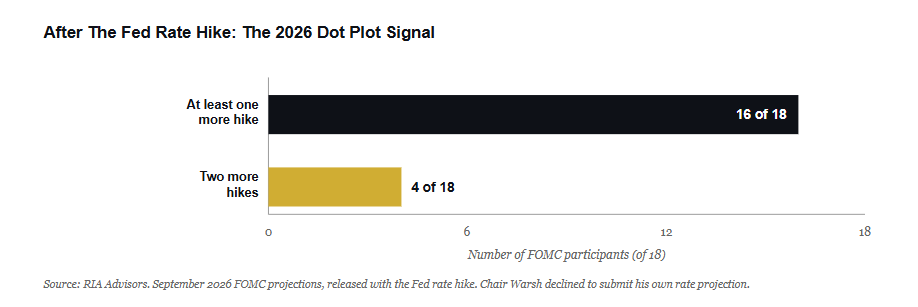
The financial markets experienced a transformative week dominated by central bank policy, cross-asset volatility, and shifting macroeconomic indicators. In a unanimous 12-0 vote, the Federal Open Market Committee (FOMC) raised the benchmark federal funds rate by 25 basis points to a target range of 3.75% to 4.00%. This adjustment marks the first official rate hike by the central bank since 2023, signaling a decisive shift in monetary policy. While the quarter-point increase had been largely priced in by market participants, the unanimous nature of the vote and the omission of scheduled rate cuts for 2027 surprised traders. Commentary from officials, including Kevin Warsh, further underscored that additional tightening measures remain firmly on the table should inflationary pressures persist.

The policy decision immediately triggered turbulence across major asset classes, testing the resilience of equity benchmarks and sovereign debt markets alike.
Market Reaction and Weekly Volatility
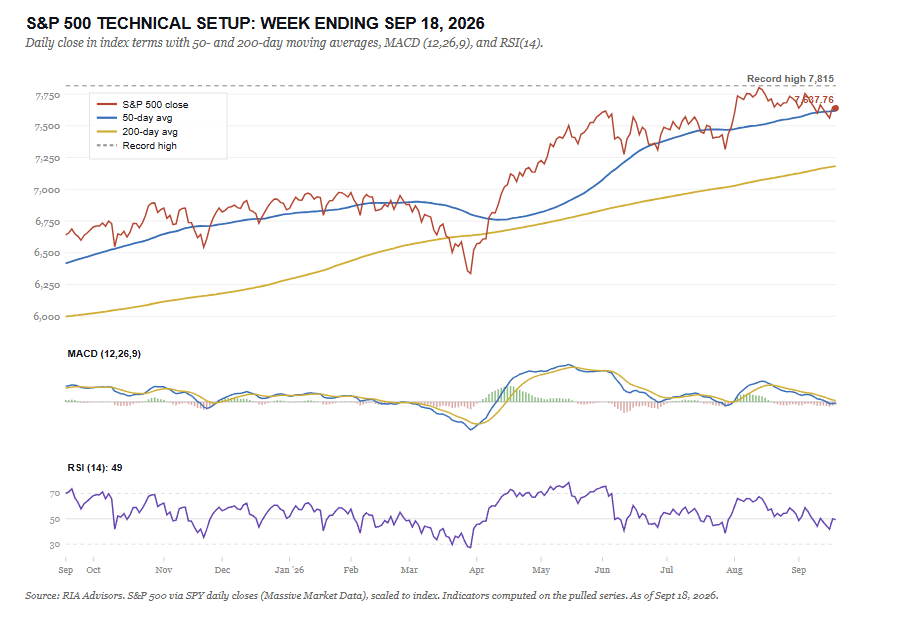
The immediate aftermath of the FOMC announcement saw equities retreat midweek, with the S&P 500 dipping toward the 7,585 level. However, the sell-off proved short-lived as a sharp rebound on Thursday and a resilient, albeit volatile, recovery on Friday brought indices back to near-even levels for the week.

Option expiration pressures generated early selling activity on Friday, yet buying interest emerged by the closing bell. The S&P 500 concluded the week at 7,637.76, maintaining its position above both its 50-day and 200-day moving averages. Similarly, the Dow Jones Industrial Average finished at 51,778, the Nasdaq Composite settled at 26,418, and the Russell 2000 small-cap index closed at 2,874. Despite the lack of net movement over the five-day period, the underlying market structure revealed deep internal divergences.
Sector performance exposed the asymmetric impact of higher interest rates. Financial institutions bore the brunt of the selling pressure, as the flattening yield curve and rising borrowing costs weighed heavily on major banking institutions. Goldman Sachs and Bank of America each experienced weekly declines of approximately 8%, marking the sector’s worst weekly performance since March. Meanwhile, the energy sector softened alongside crude oil prices, which pulled back below the $100 per barrel threshold to settle near $95.46 for West Texas Intermediate (WTI).
Cross-asset indicators reflected mounting stress in the fixed-income market. The benchmark 10-year Treasury yield hovered around the psychologically significant 5% threshold—a level unseen in 19 years—while the 30-year bond yield held firm near 5.34%. Safe-haven demand supported gold near $4,420 an ounce, and Bitcoin advanced to $81,190, demonstrating that broader speculative liquidity channels remained intact despite tighter monetary conditions.

Investor Sentiment and Institutional Positioning
Beneath the stable headline index levels, market breadth deteriorated significantly. The recent advance has been heavily concentrated in a handful of megacap technology and artificial intelligence-adjacent leaders, while average equities, particularly debt-dependent industries, lagged substantially.
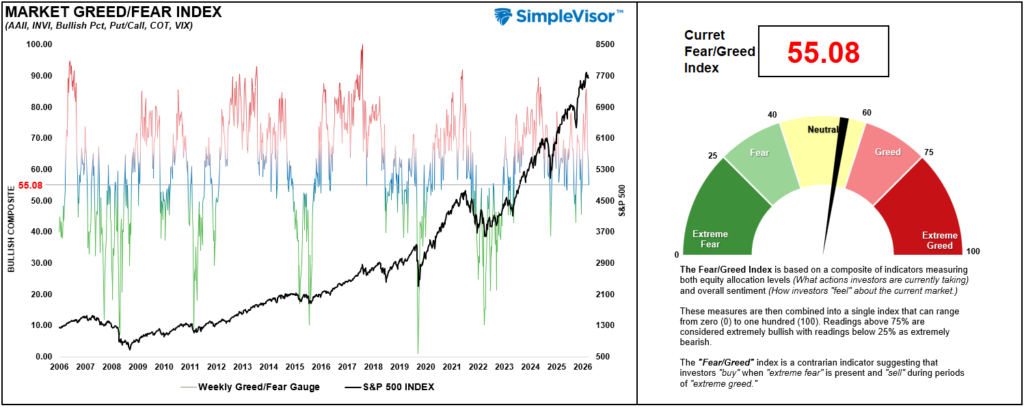
Investor sentiment experienced a notable contraction following the Fed’s announcement. According to the American Association of Individual Investors (AAII) sentiment survey, bullish outlooks eroded as bearish sentiment surged by 14 percentage points to 53%. This reading represents the highest level of pessimism observed since the spring, signaling a pervasive climate of caution among retail participants. Historically, elevated fear often precedes cyclical buying opportunities, though analysts caution that persistent macroeconomic headwinds warrant disciplined risk management.
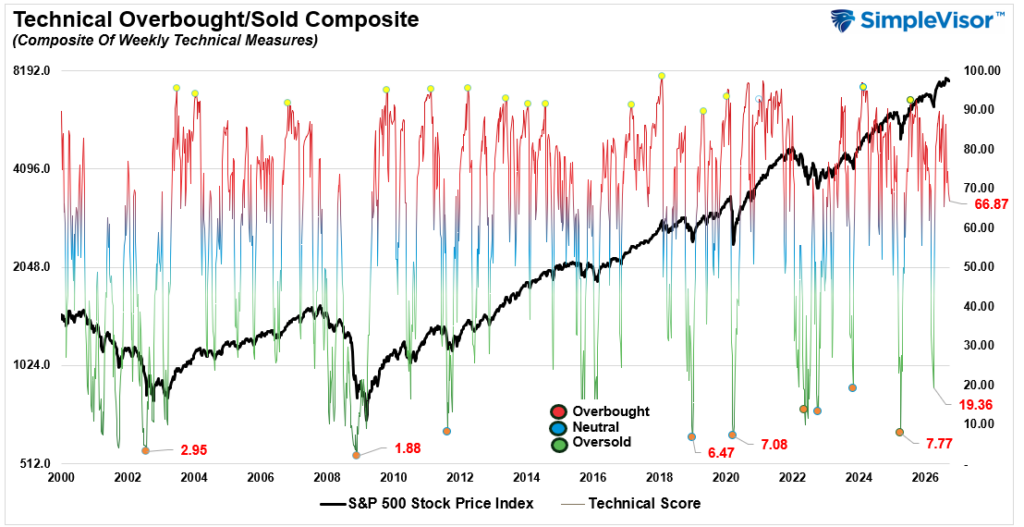
Quantitative models, such as the Money Flow Breadth Ratio (MFBR), registered a decline from recent peaks, settling at 65% compared to 80% five weeks prior. While this reading places the indicator in a neutral-to-buy zone, it reflects a structural cooling in institutional capital flows rather than aggressive accumulation. Market strategists advise maintaining target equity weights while utilizing strict stop-losses beneath key technical support levels.
The Mechanics of the Rate Hike and Supply-Side Realities
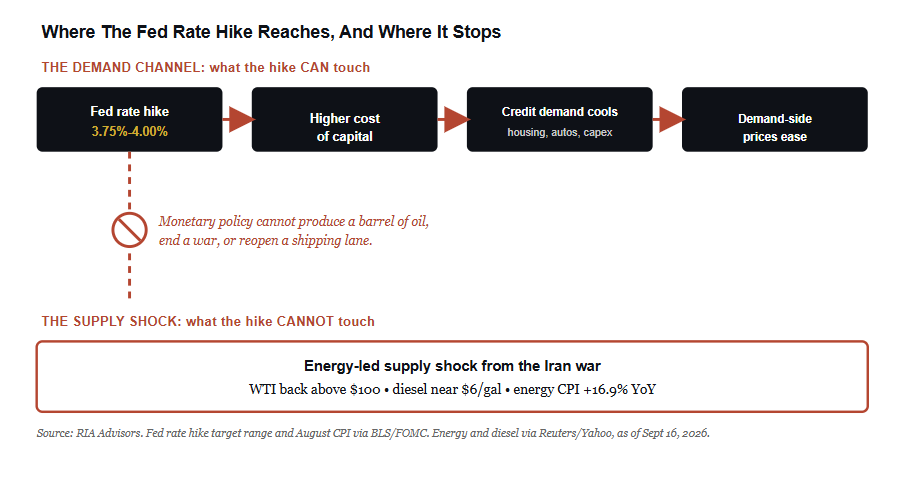
The central justification provided by the FOMC for the tightening cycle is the preservation of price stability. However, economic analysts have raised fundamental questions regarding the efficacy of utilizing a demand-side tool to combat supply-driven inflation.

Traditional monetary policy operates by adjusting the cost of credit across the broader economy, subsequently cooling interest-sensitive sectors such as housing, automotive financing, and corporate capital expenditures. By dampening aggregate demand, the central bank aims to anchor inflation expectations. Nevertheless, structural price pressures originating from geopolitical conflicts, supply chain disruptions, or commodity bottlenecks remain largely insulated from domestic interest rate adjustments.
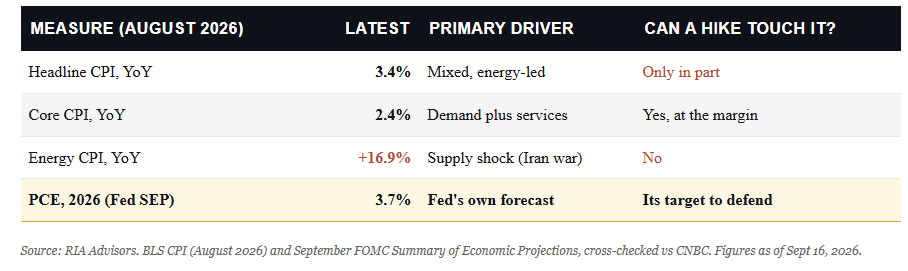
Data from recent inflation reports illustrate this dynamic. While headline inflation has moderated, specific components—such as energy, which recorded a 16.9% annualized increase—are driven by supply constraints rather than excessive domestic consumer demand. Consequently, implementing a restrictive monetary policy in response to a supply shock risks compounding economic deceleration without directly resolving the underlying physical shortages.

Furthermore, the bond market effectively forced the central bank’s hand. With the 10-year Treasury yield approaching 5.01% and long-term borrowing costs climbing, fixed-income investors demanded higher compensation for holding duration amid persistent federal deficits and ongoing fiscal expansion.

Historical Precedents and Sector Implications
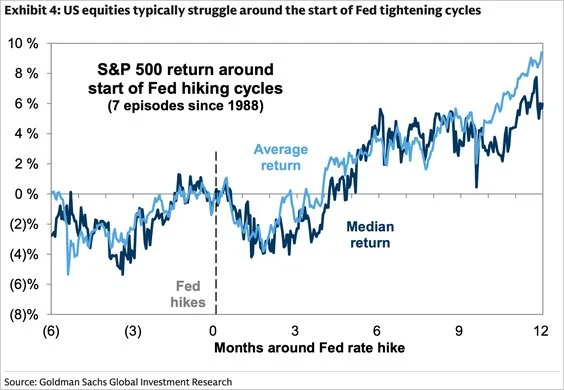
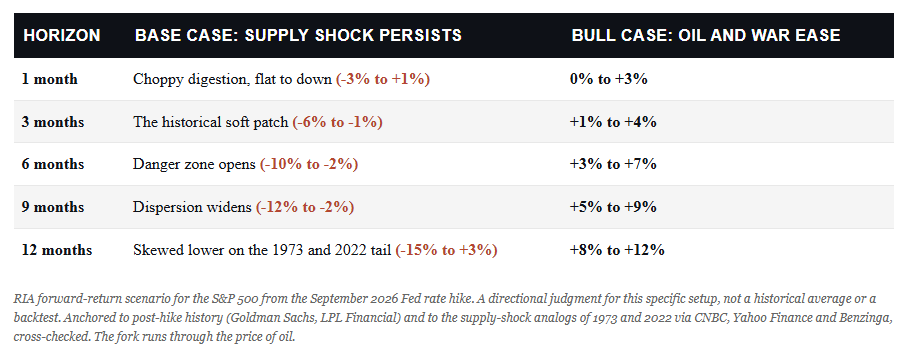
Market historians frequently point out that the S&P 500 has historically exhibited resilience following initial rate hikes, averaging modest initial pullbacks followed by positive returns over a 12-month horizon. However, analysts emphasize a crucial distinction: previous studies predominantly analyze tightening cycles initiated during robust, demand-led economic expansions.

Tightening campaigns launched during supply shocks or geopolitical crises present a markedly different historical template. Following the 1973 oil embargo and during the inflationary environment of 2022, equity markets faced prolonged drawdowns as energy costs compressed profit margins and higher discount rates challenged equity valuations.

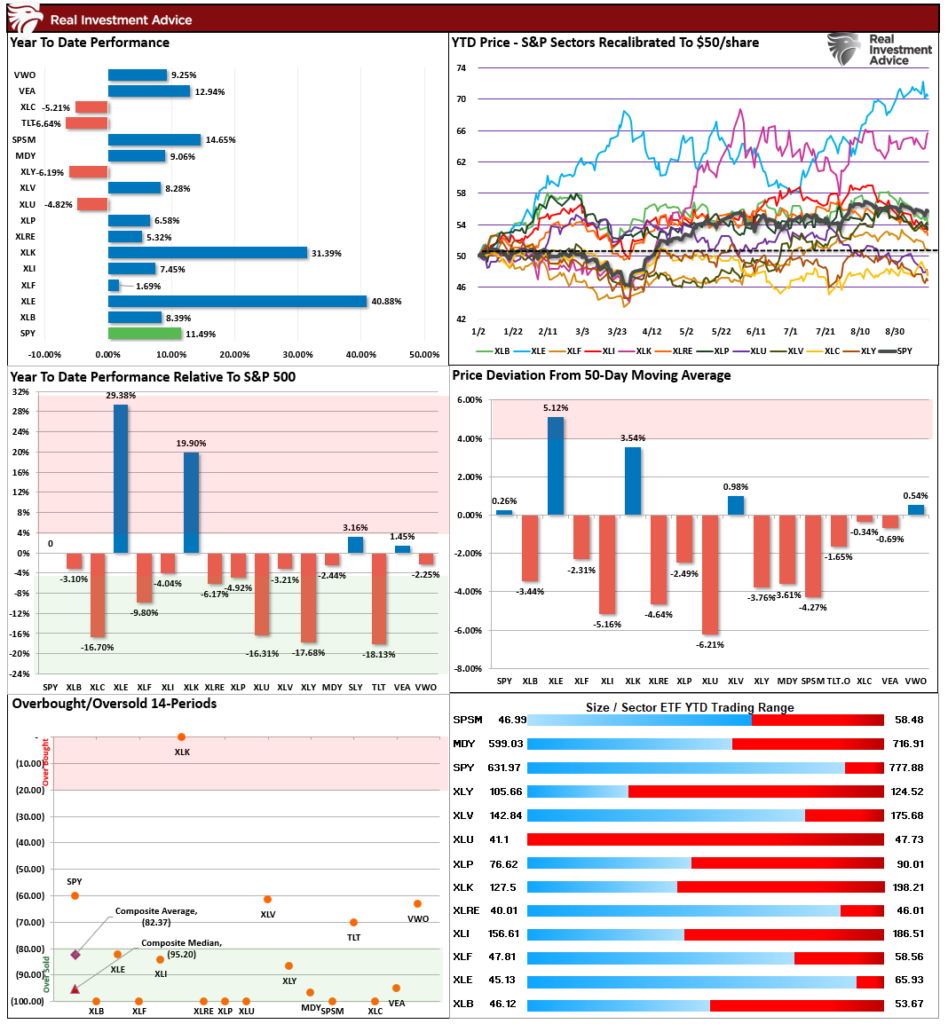
In light of these dynamics, sector leadership tends to pivot toward industries capable of navigating inflationary pressures. Historically, energy, materials, healthcare, and consumer staples have outperformed during periods of elevated commodity prices and restrictive monetary policy. Conversely, long-duration growth assets, speculative technology, and rate-sensitive consumer discretionary sectors face heightened headwinds as discount rates adjust upward.
Outlook and Economic Catalysts
As the market transitions toward the final stretch of the third quarter, attention turns to forthcoming economic data releases and central bank communications. With corporate earnings calendars entering a quiet period, market participants will closely parse statements from Federal Reserve officials for indications regarding the terminal rate and the potential for additional tightening before year-end.
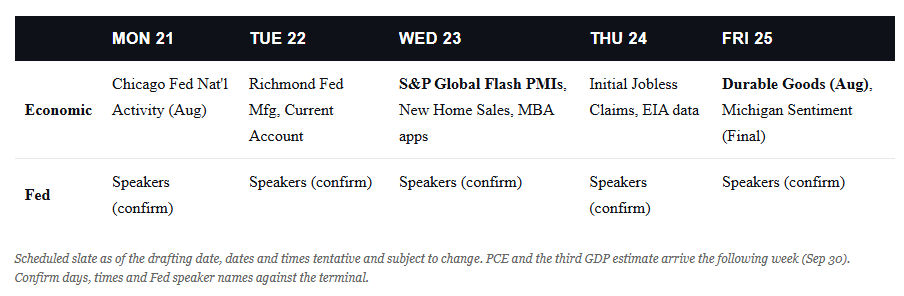
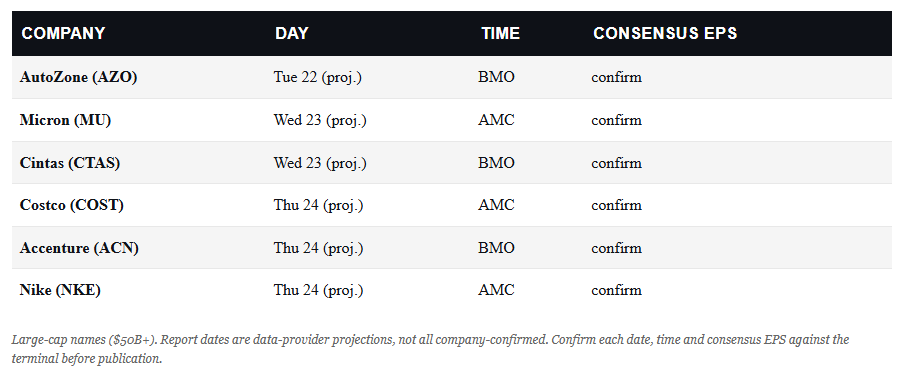
Key data releases scheduled for the coming week include S&P Global flash Purchasing Managers’ Indexes (PMIs), durable goods orders, and the University of Michigan consumer sentiment survey, which will provide vital insights into inflation expectations. Additionally, upcoming corporate earnings reports from key bellwethers—such as Micron in the semiconductor sector and Costco in retail—will offer critical visibility regarding enterprise capital spending and consumer resilience in an environment characterized by elevated energy costs.
Investors are advised to monitor critical technical thresholds closely. For the S&P 500, immediate support rests at the Wednesday reaction low of 7,585, with overhead resistance established at 7,650 and 7,700. Maintaining disciplined risk parameters and selective asset allocation will remain paramount as markets navigate an evolving monetary policy landscape.
Related posts: