Social Security Deficit Blows Out: Trust Fund, Income, Costs, Deficits, and Interest Rates in Fiscal 2026

The fiscal health of the United States Old-Age and Survivors Insurance (OASI) Trust Fund has reached a critical juncture, with recent data from the Social Security Administration (SSA) for the fiscal year ending September 30, 2026, painting an increasingly precarious picture. As the deficit continues to widen, the window for legislative intervention is narrowing, reminiscent of the atmospheric tension that preceded the landmark 1983 reforms.
A Growing Fiscal Imbalance
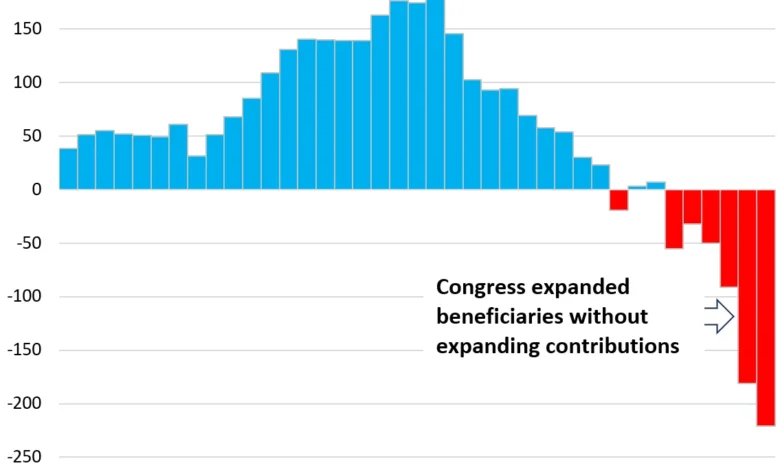
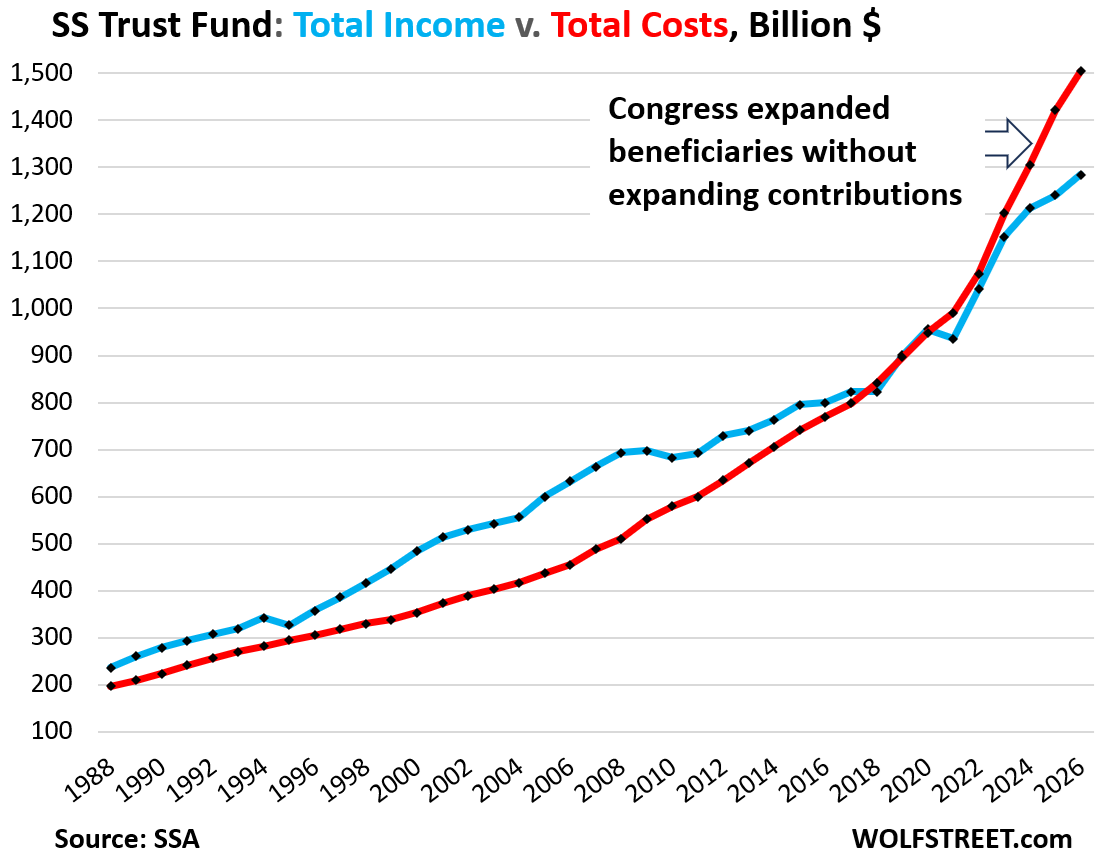
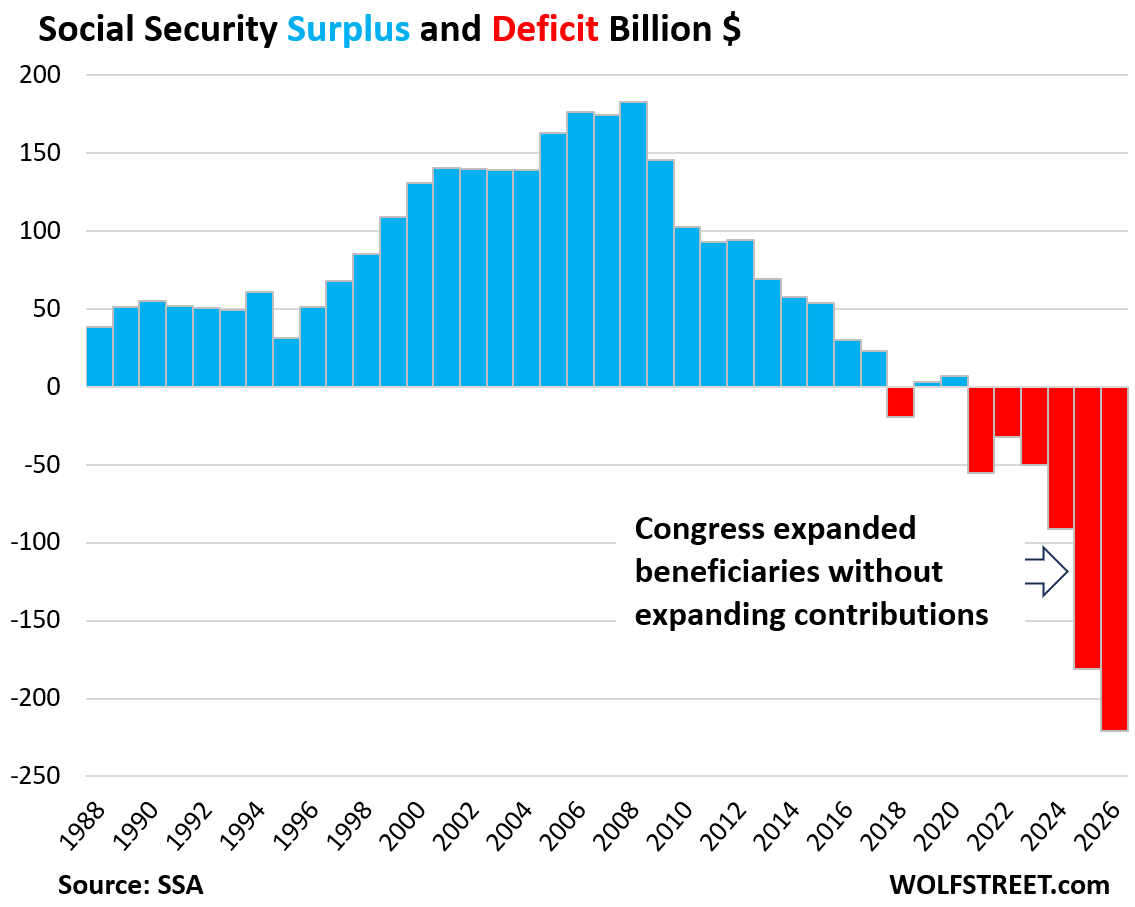
The structural integrity of the Social Security system relies on a delicate balance between incoming payroll contributions and outgoing benefit payments. However, the fiscal year 2026 results confirm a trend that has accelerated significantly over the past 24 months. The OASI Trust Fund reported a staggering deficit of $220 billion for the fiscal year, a marked increase from the $181 billion deficit recorded in fiscal 2025. When measured against the fiscal 2024 baseline, the deficit has expanded by 141%, placing unprecedented pressure on the remaining asset pool.
The current trajectory is a direct consequence of the Social Security Fairness Act, signed into law by President Biden on January 5, 2025. While intended to address perceived inequities, the legislation expanded eligibility to retirees with prior careers in government, education, and law enforcement—sectors previously covered by distinct public pension plans. Crucially, the Act mandated retroactive catch-up payments without a corresponding increase in the payroll tax revenue required to sustain these obligations. Consequently, total costs surged to a record $1.50 trillion in 2026, a 5.8% increase year-over-year.
Historical Context and the 1983 Precedent
To understand the urgency of the current situation, one must look back to the early 1980s. By early 1983, the Social Security system was effectively three months away from total insolvency. The looming crisis forced a bipartisan consensus, leading to the Social Security Amendments of 1983. This legislation, signed by President Ronald Reagan, was a comprehensive package that included gradual tax increases, the taxation of some benefits for high-income earners, and a phased increase in the retirement age.
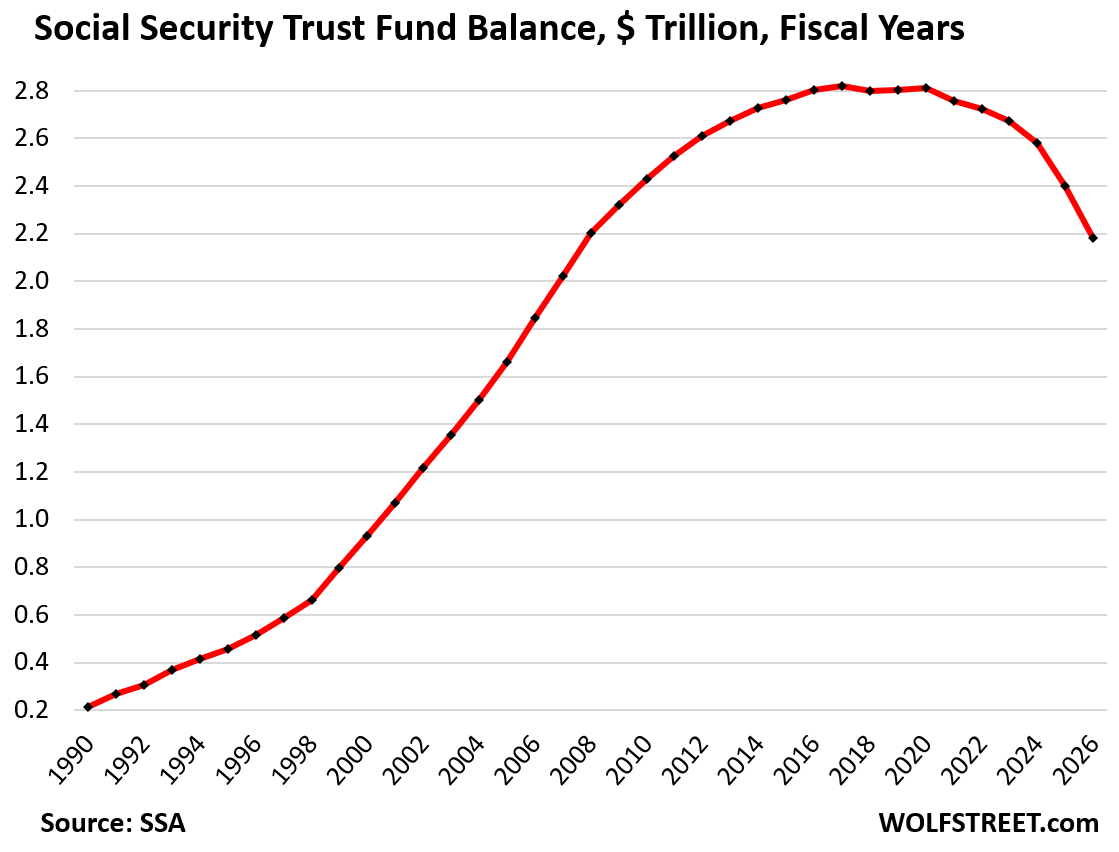
The success of the 1983 reforms was profound, enabling the Trust Fund to accumulate surpluses for over four decades. By 2017, the fund had reached a peak balance of $2.82 trillion. However, the demographic shifts—characterized by the retirement of the "Baby Boomer" generation—combined with legislative expansion, have reversed this progress. Since the 2017 peak, the Trust Fund balance has plummeted by $640 billion, or 22.7%, leaving a remaining balance of approximately $2.18 trillion as of September 30, 2026.
Revenue Dynamics and Interest Income
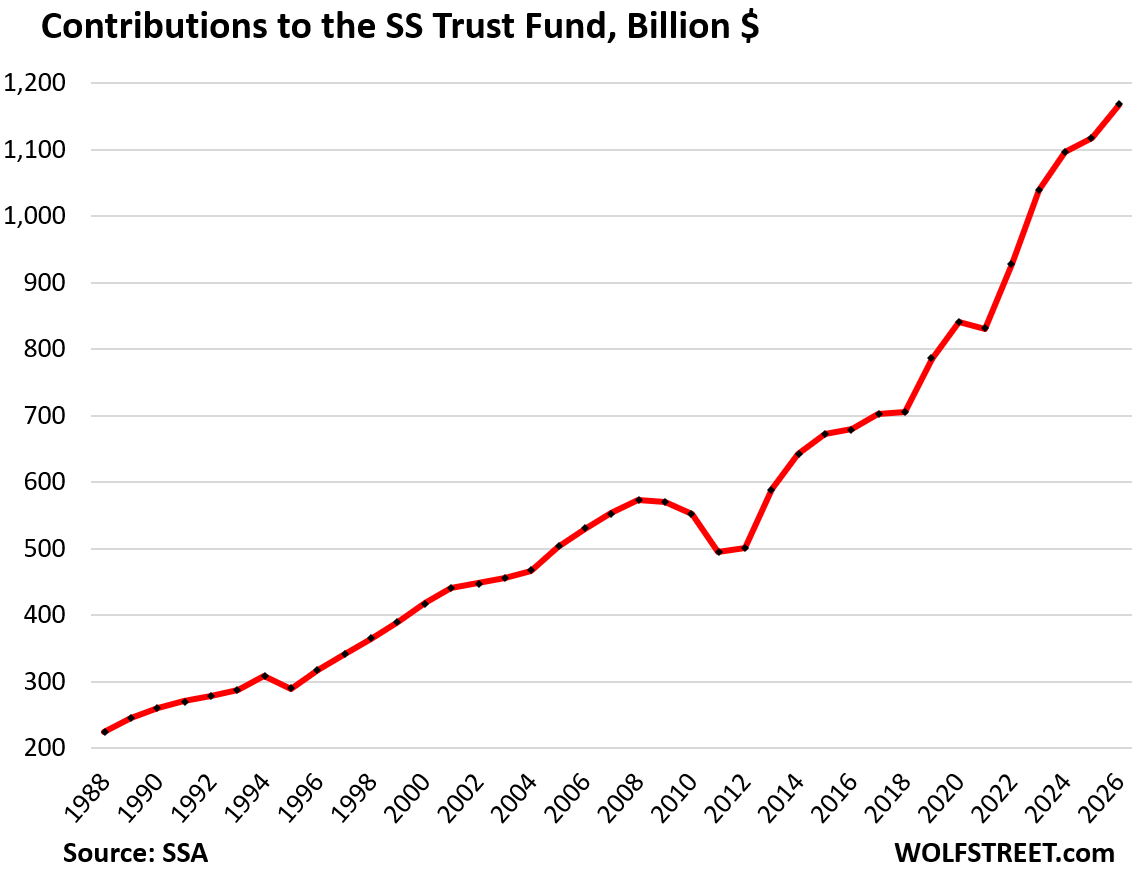
Total income for the OASI Trust Fund in fiscal 2026 reached $1.28 trillion, representing a 3.5% increase from the previous year. The primary driver of this growth was a $49.7 billion rise in contributions, fueled by a strengthening labor market and wage growth. While this reflects a healthy economy, the rate of revenue growth remains insufficient to cover the escalating payout obligations.
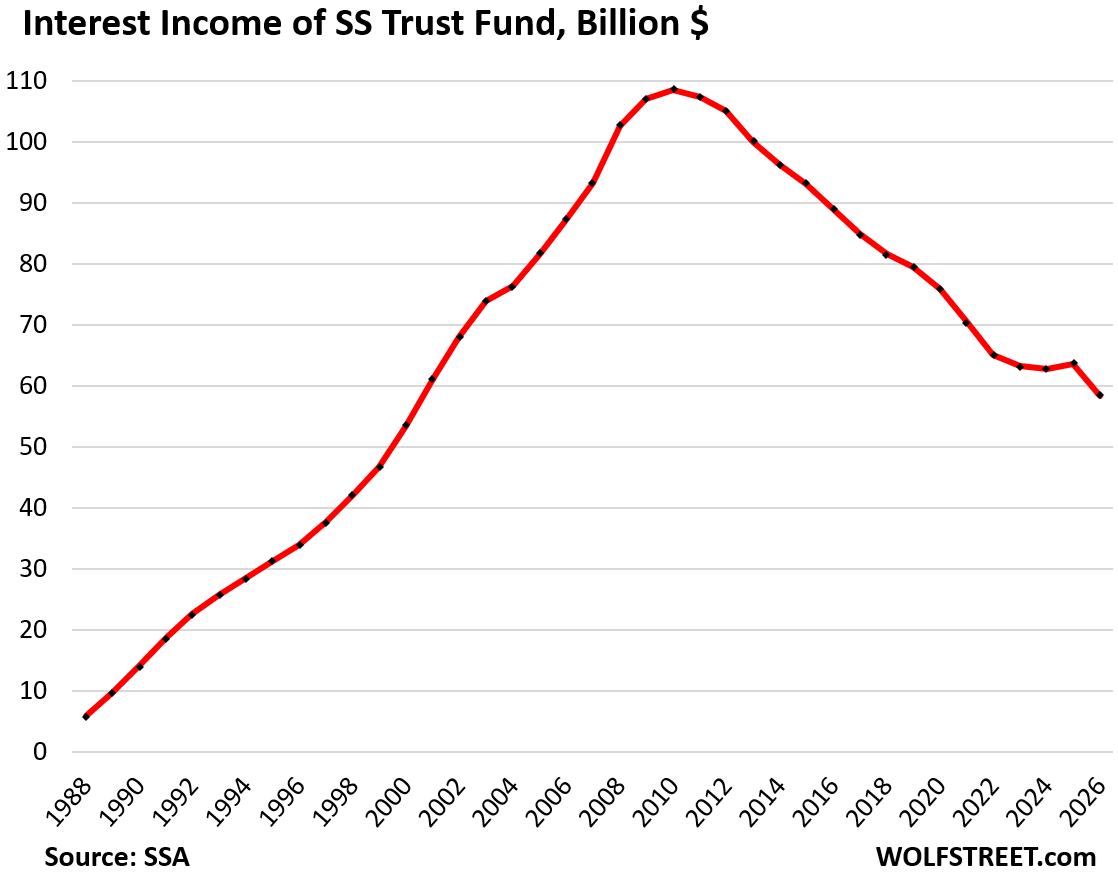
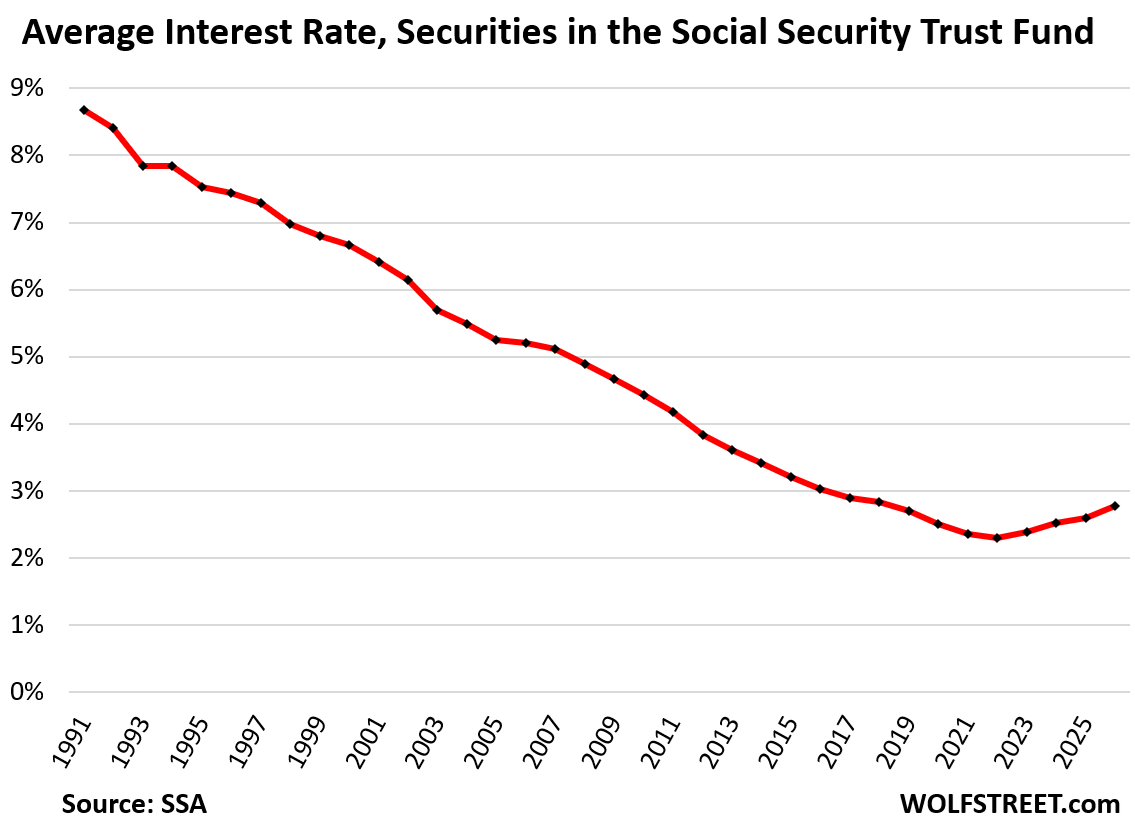
Compounding the problem is the decline in interest income. Historically, the Trust Fund earned interest on the special-issue Treasury securities held within its portfolio. However, the interest income has faced a double-edged sword: a shrinking principal balance and the long-term effects of the Federal Reserve’s previous monetary policies. During the era of Zero Interest Rate Policy (ZIRP) and Quantitative Easing (QE), the fund was forced to roll over maturing assets into lower-yielding securities. Although higher interest rates since 2022 have allowed for modest recovery in yield—with the average interest rate earned on Treasury securities ticking up to 2.78%—the overall income from interest fell by 8.3% to $58.4 billion in 2026, primarily because there is less capital remaining in the fund to generate that interest.

The Looming Deadline: 2032
Both the Social Security Board of Trustees and the Congressional Budget Office (CBO) have arrived at a sobering consensus: absent significant legislative reform, the OASI Trust Fund is projected to exhaust its reserves by mid-2032.
The implications of reaching insolvency are severe. By law, the Social Security Administration cannot pay more in benefits than it collects in revenue once the trust funds are depleted. Projections suggest that upon insolvency, retirees would face an automatic, mandatory benefit reduction of approximately 23%. Such a cut would represent a significant reduction in household income for millions of Americans, likely triggering a broader economic contraction. Alternatively, Congress could choose to address the shortfall via the general federal budget, a move that would fundamentally alter the structure of the program and likely necessitate massive tax increases or significant deficit-funded borrowing.
Analysis of Potential Policy Responses
Legislative paralysis has thus far prevented any meaningful adjustment to the system. While various proposals have circulated in both the House and the Senate, none have gained the bipartisan traction required for passage. Historical analysis suggests that effective reforms typically involve a "multi-pillar" approach:
- Revenue Enhancement: Proposals often include raising the earnings cap on which Social Security taxes are paid, which currently exempts a significant portion of high-end income.
- Benefit Structure Adjustments: Similar to the 1983 reforms, discussions often revolve around the gradual indexing of the retirement age to reflect increases in life expectancy.
- Cost-of-Living Adjustments (COLA): Policymakers have periodically debated changing the inflation measure used to calculate annual COLAs, which could slow the growth of benefit expenditures over the long term.
However, each of these options is politically sensitive. The challenge for the current Congress is to balance the immediate needs of retirees with the long-term solvency of the program. The longer the legislature waits, the more draconian the necessary solutions become. As the 1983 experience proved, the most effective fixes are often those that spread the burden of adjustment over several years rather than those that react to a sudden, catastrophic collapse.
Broader Economic Implications
The erosion of the Social Security Trust Fund is not merely an administrative issue; it is a systemic risk to the U.S. economy. Because the Trust Fund is mandated by law to be invested in U.S. Treasury securities, it serves as a massive captive buyer of federal debt. As the fund continues to liquidate its holdings to pay benefits, the federal government loses a reliable internal source of financing, which could put upward pressure on yields in the broader bond market.
Furthermore, the uncertainty surrounding the future of Social Security impacts consumer behavior. As retirees and those approaching retirement age grow increasingly concerned about the viability of their future benefits, there is a tendency toward increased precautionary savings and reduced consumption, which can act as a drag on economic growth.
Conclusion: A Call for Action
The situation in 2026 is, in many respects, more complex than it was in 1983. The sheer size of the current shortfall, combined with a highly polarized political environment, makes the task of legislative repair significantly more difficult. However, the facts remain immutable: the current trajectory of income and costs is mathematically unsustainable.
The lesson from the 1983 amendments is that fiscal sustainability can be achieved when both sides of the aisle prioritize the long-term integrity of the social safety net over short-term political gains. As the clock ticks toward the projected 2032 depletion date, the cost of inaction continues to rise. Whether Congress chooses to act through incremental adjustments or comprehensive structural reform, the necessity of a "fix" is no longer a matter of debate—it is an economic imperative for the coming decade. The administration, the legislative branch, and the public are all acutely aware that the era of surplus is over; the era of management and potential crisis resolution has begun.
Related posts: