The United States at 250 Assessing a Legacy of Global Primacy and the Paradox of Democratic Ideals

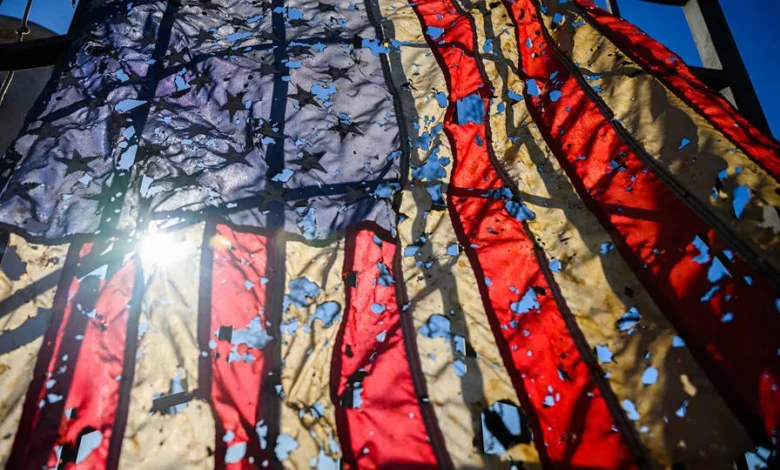
As the United States reaches its semiquincentennial on July 4, 2026, the milestone serves as a global focal point for evaluating the trajectory of the world’s most influential superpower. This 250-year journey, beginning with a revolutionary declaration in 1776 and culminating in a complex era of multipolarity, offers a profound case study in the exercise of national power and the dissemination of democratic values. While the anniversary is marked by grand celebrations across the fifty states, it also necessitates a rigorous and honest appraisal of the nation’s founding principles in contrast with its historical record of racial inequality and imperial expansion. For many observers, particularly within the Global South, the American story is one of dualities: a beacon of liberty that simultaneously pioneered sophisticated methods of global hegemony.
The Evolution of American Primacy: From Colonies to Global Hegemon
The rise of the United States from a collection of thirteen disparate Atlantic colonies to a global industrial and military titan is a phenomenon without modern parallel. By the turn of the 20th century, the U.S. had surpassed Great Britain as the world’s leading industrial power, fueled by a massive internal market, abundant natural resources, and a rapid influx of immigrant labor. This economic engine provided the foundation for the "American Century," a term coined by Henry Luce to describe the nation’s dominant influence over the 20th century.
The post-1945 era represented the apex of this influence. In the wake of World War II, with the traditional European powers in ruins, the United States assumed the role of the primary architect of the modern international order. This period saw the creation of the "Bretton Woods" system, which established the financial and political infrastructure that governs the world today. Key institutions, including the United Nations (UN), the International Monetary Fund (IMF), the World Bank, and the General Agreement on Tariffs and Trade (GATT)—the precursor to the World Trade Organization (WTO)—were largely designed in Washington and New Hampshire. These bodies were intended to prevent a recurrence of the catastrophic global conflicts of the early 20th century while promoting a liberal economic order based on free trade and capital mobility.
A Chronology of American Global Influence (1776–2026)
To understand the current standing of the United States at its 250-year mark, it is essential to view its history through a timeline of expansion and institutionalization:
- 1776: The Declaration of Independence establishes the United States, grounding the state in Enlightenment ideals of life, liberty, and the pursuit of happiness, though these rights were initially restricted to white male property owners.
- 1823: The Monroe Doctrine is announced, asserting U.S. influence over the Western Hemisphere and warning European powers against further colonization in the Americas, a move that laid the groundwork for future regional hegemony.
- 1898: The Spanish-American War marks the transition of the U.S. into an overseas imperial power, with the acquisition of territories including Puerto Rico, Guam, and the Philippines.
- 1917–1918: U.S. entry into World War I signals the end of American isolationism and the beginning of its role as a global "arbiter of peace" under Woodrow Wilson’s Fourteen Points.
- 1944–1945: The Bretton Woods Conference and the founding of the United Nations establish the U.S. as the guarantor of global financial and political stability.
- 1947–1991: The Cold War era sees the U.S. engage in a global ideological and military struggle with the Soviet Union, leading to significant interventions in Korea, Vietnam, and across Latin America and Africa.
- 1991–2001: The "Unipolar Moment" following the collapse of the USSR, characterized by unchallenged U.S. military and economic dominance.
- 2001–2021: The War on Terror and the invasions of Afghanistan and Iraq, which strained U.S. diplomatic relations and highlighted the limits of military power in nation-building.
- 2026: The Semiquincentennial, occurring in an era of renewed great-power competition with China and a growing push for a multipolar world order.
The Institutional Legacy and the Global South
The United States’ role in advancing decolonization across Africa and Asia during the mid-20th century remains a point of historical nuance. While the U.S. often pressured its European allies (such as the UK and France) to dismantle their colonial empires to prevent the spread of communism, this support was frequently conditional. In many instances, the U.S. supported anti-colonial movements only when they aligned with Western interests, while simultaneously backing authoritarian regimes that opposed Soviet influence.
This pragmatic approach has left a lasting legacy of cynicism in the Global South. From the perspective of many developing nations, the international institutions built by the U.S. are often viewed as tools of "neo-colonialism." The voting structures of the IMF and the World Bank, for example, remain heavily weighted toward Western economies, with the U.S. maintaining a de facto veto over major decisions. Data from the World Bank indicates that while global poverty has decreased significantly since 1945, the wealth gap between the Global North and the Global South has widened in absolute terms, leading to accusations that the current global governance system is designed to maintain the status quo.
Supporting Data: The Scale of American Influence
Despite the rise of competing powers, the United States enters its 250th year with staggering metrics of influence:
- Economic Might: As of the mid-2020s, the U.S. GDP remains the world’s largest in nominal terms, representing approximately 24% of the global economy. The U.S. dollar continues to serve as the world’s primary reserve currency, involved in nearly 90% of all foreign exchange transactions.
- Military Reach: The U.S. defense budget, which exceeded $800 billion annually in the lead-up to 2026, is greater than the next ten countries combined. The nation maintains an estimated 750 military bases in more than 80 countries, providing a level of global power projection unprecedented in history.
- Diplomatic Presence: The U.S. remains the largest financial contributor to the United Nations, providing roughly 22% of the organization’s core budget and 25% of its peacekeeping budget.
- Soft Power: American cultural exports—ranging from technology and cinema to higher education—continue to dominate global markets. Eight of the world’s ten largest technology companies are headquartered in the United States.
Analysis of Implications: The Paradox of Principles
The primary challenge facing the United States at 250 is the persistent gap between its stated ideals and its domestic and international realities. The "racist and imperialist legacy" cited by critics refers to the long history of chattel slavery, the displacement of Indigenous populations, and the era of Jim Crow, which lasted well into the 20th century. While the Civil Rights Movement of the 1960s addressed many legal inequalities, systemic disparities in wealth, incarceration, and political representation remain central themes in American discourse.
Internationally, the U.S. often finds itself accused of "exceptionalism"—the belief that it is not bound by the same international laws it expects others to follow. The refusal to join the International Criminal Court (ICC) and the occasional bypassing of the UN Security Council for military actions have provided ammunition for critics who argue that the "rules-based international order" is applied selectively.
Reactions from the International Community
As the 2026 celebrations unfold, global reactions are mixed. European allies have largely reaffirmed their commitment to the Transatlantic alliance, citing the U.S. role in NATO as essential for regional security. Conversely, leaders from the BRICS+ nations (Brazil, Russia, India, China, South Africa, and others) have used the occasion to call for a "democratization of international relations," arguing that the 250-year-old American model must make room for a more diverse array of voices in global decision-making.
In Johannesburg and other major hubs of the Global South, the anniversary is viewed through the lens of economic justice. Diplomats from the African Union have frequently pointed out that while the U.S. championed the post-1945 system, that system has often failed to address the structural debt and trade imbalances that hinder development in the southern hemisphere.
Conclusion: The Road Ahead
The semiquincentennial of the United States is more than a national birthday; it is a moment of reckoning for the international system. The nation’s ability to prevent a third world war and build a framework for global trade is a historic achievement. However, the cynicism that persists in the Global South suggests that the next 250 years will require a shift from hegemony to true partnership.
As the U.S. navigates the complexities of the 21st century—including climate change, artificial intelligence, and the shift toward a multipolar world—the success of the "American Experiment" will likely depend on its ability to reconcile its founding promise of equality with the realities of its global power. Whether the United States can evolve from a dominant hegemon into a collaborative leader in a more equitable world remains the defining question of its 250th year.