Hands-On AI Trading for Quantitative Trading: Python, QuantConnect and AWS Guide


The Evolution of Quantitative Trading Infrastructure
The quantitative trading landscape has undergone a radical transformation over the past decade. Historically, institutional players maintained a distinct advantage through proprietary high-frequency infrastructure and vast, private data lakes. However, the democratization of cloud computing—specifically through platforms like Amazon Web Services (AWS)—and the maturation of open-source algorithmic frameworks like QuantConnect have leveled the playing field for independent researchers and boutique firms.
This structural shift necessitates a new approach to strategy development. The industry has moved beyond simple technical indicators toward a paradigm where models must account for "market frictions"—the tangible costs of execution, including slippage, transaction fees, and liquidity constraints. According to recent industry surveys, nearly 65% of quantitative hedge funds have integrated some form of machine learning into their alpha-generation pipelines, yet a substantial portion of these firms report difficulties in managing the "model decay" that occurs when static algorithms face volatile, real-world market shifts.
Bridging Theory and Deployment
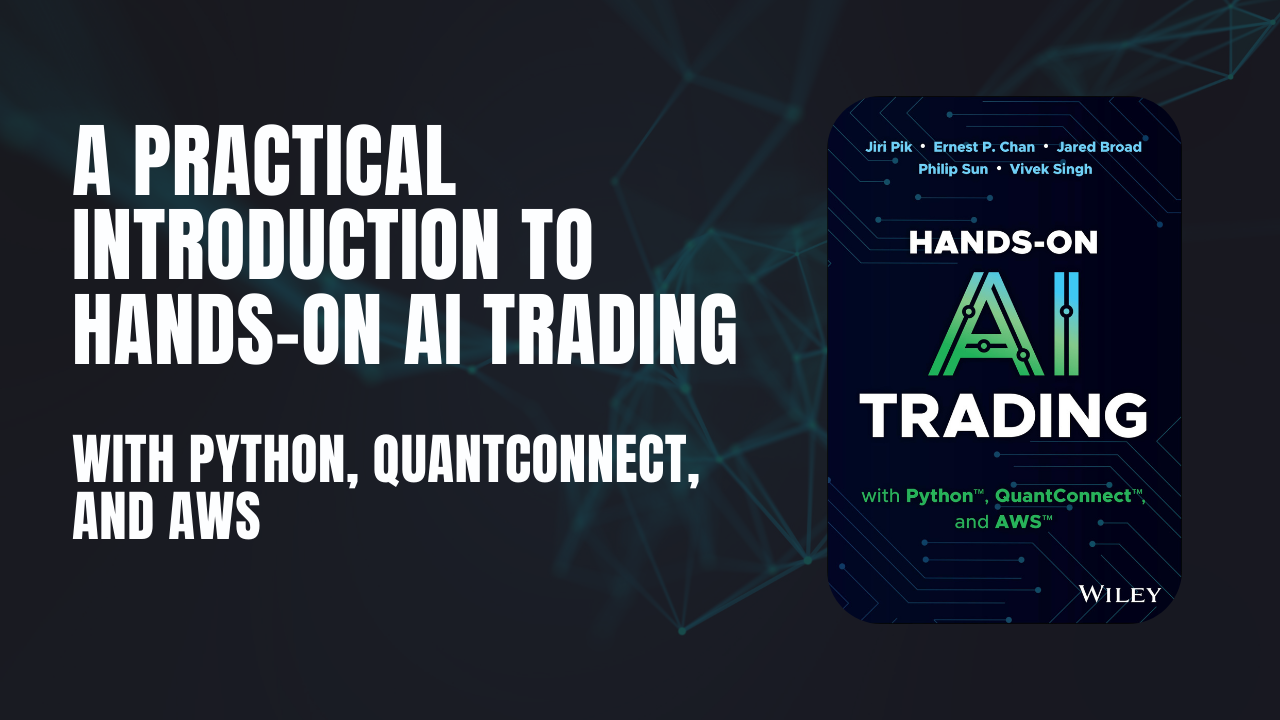
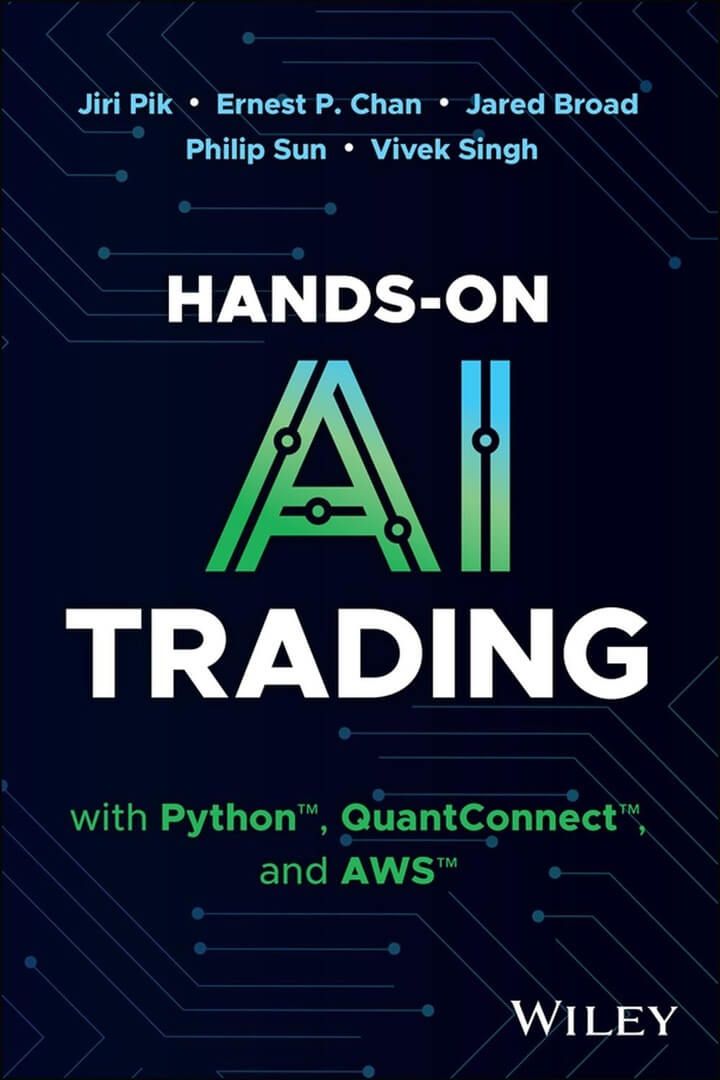
The recently published Wiley release, Hands-On AI Trading with Python, QuantConnect, and AWS, aims to address these operational complexities. The text distinguishes itself by eschewing the common trap of focusing solely on predictive accuracy in a vacuum. Instead, it prioritizes a "strategy-first" methodology, where the objective function of the trade dictates the selection of the model, rather than the inverse.
The authors of the book bring a unique synthesis of expertise to the table, combining academic rigor with hands-on institutional experience. By leveraging the QuantConnect ecosystem, the book provides a standardized environment that replicates professional institutional workflows. This is critical because, in a professional quant setting, the research phase is only the beginning. The deployment phase involves rigorous stress testing, walk-forward validation, and the implementation of sophisticated risk-management guardrails.
Chronology of Modern Algorithmic Integration
The path toward AI-centric trading has been characterized by several distinct phases:
- The Rule-Based Era (Pre-2010): Dominated by deterministic, "if-then" logic based on moving averages, relative strength, and classic statistical arbitrage.
- The Machine Learning Transition (2010–2018): The introduction of Scikit-learn and basic ensemble methods allowed traders to move toward predictive modeling, though often hampered by overfitting and data leakage.
- The Cloud-Native Era (2018–2023): The migration of backtesting to cloud-based platforms like QuantConnect allowed for global, parallelized research, drastically reducing the time-to-market for new strategies.
- The Generative and LLM Frontier (2023–Present): The current era, where unstructured data—such as central bank transcripts, sentiment analysis from news feeds, and social media trends—is being synthesized into alpha signals using transformer-based architectures.
Tactical Implementation and Strategic Themes
The core of the book features over 20 fully implemented strategies, providing a tangible library of deployment-ready code. Each strategy is designed to operate within the constraints of real-world trading, covering several critical themes:
- Volatility and Risk Awareness: Strategies that dynamically adjust position sizing based on VIX levels or realized volatility, ensuring that capital preservation is prioritized during market turbulence.
- Regime Detection: Implementing hidden Markov models and clustering algorithms to identify structural shifts in market behavior (e.g., transitioning from a bull market to a range-bound environment).
- Alpha Across Data Types: Incorporating multi-modal data, including traditional price-volume metrics combined with macro-economic indicators and alternative sentiment data.
- NLP and LLM Integration: Utilizing Natural Language Processing to parse earnings calls and news, providing a distinct edge by quantifying qualitative information.
By utilizing the QuantConnect platform, these strategies are subjected to realistic constraints. This includes the simulation of "market impact"—the effect a large order has on the price of an asset—which is often overlooked in amateur research.
Analytical Implications for Practitioners
The primary implication of this shift toward integrated, cloud-based AI trading is the shortening of the feedback loop between hypothesis generation and live deployment. Traditionally, a quant might spend months moving a strategy from a research environment to a production server. With modern infrastructure, this cycle can be condensed into days or even hours, provided the researcher maintains a disciplined approach to version control and backtest integrity.
However, this speed introduces new risks. The risk of "over-optimization"—where a model performs perfectly on historical data but fails to generalize to future data—remains the greatest threat to AI-driven portfolios. The text emphasizes that the key to avoiding this is robust cross-validation and the inclusion of "out-of-sample" testing that accounts for the non-stationary nature of financial markets.
The Role of Institutional Collaboration
The publication of this work is reflective of a broader trend in the quantitative finance community: the move toward open-source collaboration. Institutions and individual practitioners alike are increasingly moving away from "black box" secrecy toward a model of collaborative innovation. Organizations like QuantInsti have been central to this, fostering a learning ecosystem that supports the professional development of quants globally.
The collaborative aspect is further evidenced by the push for standardized reporting and documentation. By providing a framework that is both academically sound and commercially viable, the book encourages a more disciplined, evidence-based approach to trading. This professionalization is essential, as the entry of sophisticated AI models into the market has necessitated a higher standard of competence for all market participants.
Future Outlook and Ethical Considerations
As AI becomes further entrenched in the financial sector, the focus will likely shift toward the ethics of algorithmic trading and the importance of explainable AI (XAI). Regulators are increasingly scrutinizing the "black box" nature of machine learning models. Therefore, the ability to decompose a model’s decision-making process into readable components is no longer just a technical requirement—it is becoming a regulatory necessity.
The methodologies outlined in the book regarding strategy implementation and model validation provide a foundation for this transparency. By focusing on models that are grounded in economic intuition, practitioners can better defend their strategies to stakeholders and ensure compliance with evolving industry standards.
Conclusion: Navigating the New Frontier
For the aspiring or experienced quantitative researcher, the integration of Python, QuantConnect, and AWS represents the current gold standard for AI-driven strategy development. The transition from theoretical interest to practical execution is the defining challenge of this generation of traders.
While the availability of powerful tools has lowered the barrier to entry, the complexity of the markets remains constant. Success requires more than just technical proficiency; it demands a deep understanding of market microstructure, a disciplined approach to risk, and the ability to iterate rapidly within a professional framework. As the industry continues to evolve, the ability to synthesize these elements will separate successful practitioners from the rest of the market. By treating strategy development as a rigorous, iterative, and evidence-based engineering problem, traders can leverage AI not as a magic bullet, but as a sophisticated, reliable tool for navigating the complexities of the global financial system.