Navigating the Tightrope of Investment During Market Booms: Balancing FOMO with Prudence

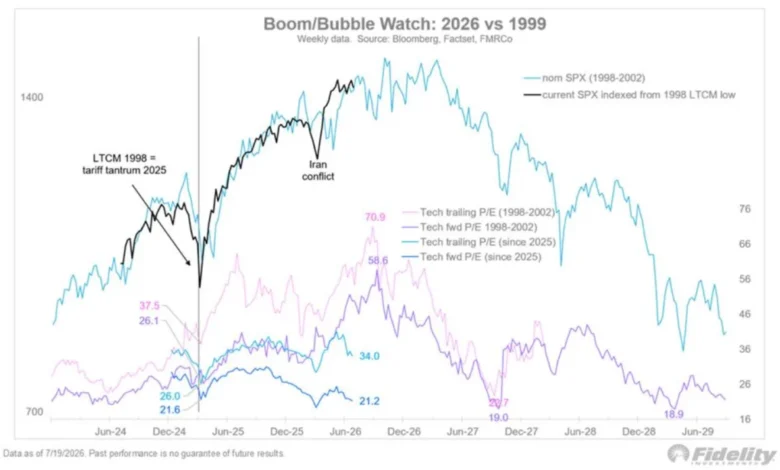
Investing during periods of significant market expansion, often characterized by euphoric sentiment and rapid asset appreciation, presents a unique set of challenges for even seasoned investors. The allure of escalating gains, amplified by the pervasive fear of missing out (FOMO), clashes with the innate human tendency towards loss aversion, a deep-seated psychological bias that triggers a stronger emotional response to potential losses than to equivalent gains. This inherent tension forces investors to grapple with a fundamental question: how does one remain invested to capture the upward momentum of a bull market without becoming overly exposed to the inevitable downturn that follows such expansions? This dilemma is not merely theoretical; it has tangible consequences, as vividly illustrated by recent events in South Korea’s booming technology sector.
The narrative surrounding investing in boom times is one of constant calibration. On one side of the scale is the desire to participate in the perceived easy money, to stay invested and ride the wave of optimism. On the other side lies the palpable fear of the "bust," the sharp and often painful correction that historically follows periods of unsustainable growth. This inherent duality of risk and reward, the very essence of successful investing, is a recurring theme in market commentary and a central concern for individuals seeking to grow their wealth responsibly.
The South Korean AI Trade: A Case Study in Euphoria and Correction
The recent surge in South Korea’s stock market, particularly its technology-heavy components, offers a stark illustration of the dynamics at play during a boom. Companies at the forefront of the artificial intelligence (AI) revolution, such as SK Hynix and Samsung Electronics, which collectively represent a significant portion of the nation’s market capitalization, experienced extraordinary growth. This ascent fueled a widespread sense of FOMO, drawing significant investor attention and capital.
In the 12 months leading up to recent market shifts, the South Korean stock market posted impressive gains, exceeding 130%. However, this period of fervent ascent was followed by a swift and significant correction. Within a matter of weeks, the market experienced a decline of as much as 25% from its peak. Such volatility, while not entirely unexpected after such a rapid climb, can be amplified to devastating levels when leverage is introduced into investment strategies.
The Perilous Embrace of Leverage: Margin Calls and Forced Liquidations
A critical element exacerbating the recent downturn in South Korea was the rampant use of leverage. Margin debt, which allows investors to borrow money from their brokers to purchase securities, surged to all-time highs. This aggressive use of borrowed funds meant that even modest market declines could have outsized negative impacts on investors’ portfolios. The situation became so extreme that regulators were compelled to take action, tripling margin requirements to curb the excessive speculation.
The human cost of this leverage-fueled speculation is vividly captured in recent journalistic accounts. One particular story highlights the plight of Lee Seung-ho, a 24-year-old South Korean university student. Lee managed to build a substantial trading fortune of nearly 300 million won (approximately $202,515 USD) within a short period, fueled by a 500% margin loan. This initial capital of 20 million won, saved during his mandatory military service, had multiplied fifteenfold. The ease with which he accessed this leverage, described as a "tiny circle button" on his trading app, underscores the accessibility of leveraged products in the market.
However, the fortunes of investors like Lee can evaporate with alarming speed. When the South Korean stock market experienced its sharp swings, it triggered a cascade of forced liquidations by brokerage firms. This process, designed to protect lenders from further losses, effectively wiped out Lee’s gains. Within weeks, his account balance fell below his initial investment, leading to immense psychological distress. As he recounted, "I literally could not breathe."
Tragically, the experience did not deter Lee from his leveraged approach. He expressed his intention to "borrow again and return to the market the moment he has enough capital." His rationale, driven by the belief that volatility, when moving upward, enables rapid wealth creation, illustrates a persistent misunderstanding of risk management. "If I add five times leverage," he stated, "I can build wealth five times faster than others." This sentiment, while seemingly logical on the surface, disregards the symmetrical nature of leverage, which magnifies losses just as effectively as it magnifies gains.
Fundamental Principles for Navigating Boom Times
The experiences witnessed in South Korea serve as a potent reminder of the foundational principles that investors must adhere to, especially during periods of market exuberance. The primary imperative is to avoid being in a position where market downturns trigger forced selling. This often arises from excessive leverage or an undiversified portfolio.
Diversification: The Cornerstone of Risk Management
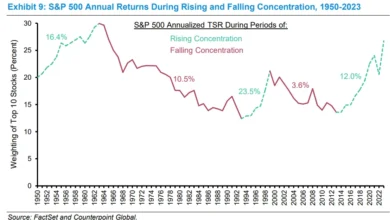
One of the most effective strategies for mitigating risk during a boom is diversification. The concentration of market gains in specific sectors, such as technology driven by AI advancements, can create an illusion of broad market strength while leaving investors vulnerable if that sector falters. While technology stocks have indeed been a significant driver of recent market performance in both the U.S. and globally, a well-diversified portfolio extends beyond a single asset class or industry.
Investors can achieve diversification by allocating capital across various sectors, geographies, and asset types, including bonds, real estate, and alternative investments. This approach helps to smooth out portfolio returns, as different asset classes often perform differently under varying economic conditions. The adage that diversification is "much easier to pull off than market timing" holds true; attempting to predict the exact peak of a market is notoriously difficult, whereas building a diversified portfolio is a proactive and controllable strategy.
Establishing a Clear Investment Plan
A well-defined investment plan acts as a crucial bulwark against emotional decision-making during volatile market periods. The beauty of pre-established investment guidelines lies in their ability to remove the guesswork from the investment process. This involves creating a framework of "if-then" scenarios that dictate actions based on market movements or economic events.
For instance, an investor might establish rules such as: "If a particular economic indicator reaches X level, I will rebalance my portfolio by Y percentage." Or, "If the market experiences a Z% correction, I will re-evaluate my holdings and consider reallocating a portion of my assets to more defensive investments." Having a plan for various outcomes – continued boom, a sharp bust, or a period of stagnation – empowers investors to act with conviction and avoid impulsive decisions driven by fear or greed. While a plan may not guarantee perfect navigation of market fluctuations, it fosters a more disciplined and rational decision-making process.
Reassessing Risk Appetite and Asset Allocation
Boom times often lead to a gradual, almost imperceptible shift in an investor’s risk profile. As portfolios grow in value, the proportion of riskier assets, such as equities, tends to increase. For example, a traditional 60% stock/40% bond portfolio might organically morph into a 75% stock/25% bond allocation as stock prices rise. Similarly, an aggressive 80/20 portfolio could become 90/10.
It is imperative during periods of market strength to proactively reassess asset allocation and risk appetite. Investors must honestly evaluate whether their current portfolio composition aligns with their long-term financial goals and their capacity to withstand potential market downturns. If an investor is 100% invested in equities, for instance, they must consider their ability to endure a significant bear market without panicking and selling at a loss. Addressing these questions while asset prices are still elevated is a far more prudent approach than waiting until the market has already corrected.
The Emotional Equilibrium: Taming Greed and Fear
Perhaps the most challenging aspect of investing during a boom is managing one’s emotions. The psychological interplay between the drive for profit and the aversion to loss is a constant battle. As financial commentator Jurrien Timmer aptly put it, the paradox of profiting from a boom while simultaneously protecting against a bubble is an "existential one" that reflects the "duality of the profit-seeking polarity juxtaposed against loss aversion."
It is almost impossible to accurately predict the duration of a boom while experiencing it. The clarity that comes with hindsight is a luxury that investors do not possess in real-time. A degree of humility is therefore essential. Recognizing the inherent uncertainty of market movements and acknowledging that predicting the future is fraught with difficulty can help temper overconfidence and prevent rash decisions.
Broader Implications and the Path Forward
The cycle of booms and busts is an intrinsic characteristic of financial markets. The recent events in South Korea, while a specific regional example, highlight universal principles of investment. The pursuit of rapid wealth, particularly when amplified by leverage, carries inherent and significant risks.
The implications of excessive speculation extend beyond individual investors. They can create systemic risks within the financial system, leading to broader economic instability. Regulatory intervention, as seen in South Korea’s increase in margin requirements, is often a necessary response to curb unsustainable practices.
Ultimately, successful investing during boom times hinges on a disciplined approach that prioritizes risk management, strategic diversification, and emotional control. By adhering to a well-defined plan and maintaining a realistic assessment of market dynamics, investors can navigate the exhilarating but precarious terrain of bull markets, positioning themselves to weather inevitable corrections and pursue sustainable long-term growth. The pursuit of "fast money" often leads to significant losses, while a patient, disciplined approach, grounded in sound financial principles, offers a more reliable path to wealth creation.