Hong Kong Woman Loses Nearly $1 Million in Sophisticated AI-Powered Crypto Investment Scam Amidst City-Wide Fraud Surge


A Hong Kong woman discovered the harrowing reality of sophisticated online investment fraud when her repeated attempts to withdraw funds from a seemingly legitimate cryptocurrency platform were consistently denied, revealing she had fallen victim to a fake scheme that cost her nearly HK$7.7 million, approximately $982,000 USD. This incident underscores an alarming surge in digital financial crimes sweeping across the city, prompting urgent warnings from local authorities regarding the escalating threat of AI-enhanced investment scams.
The Anatomy of a High-Tech Deception
The victim, whose identity has not been publicly disclosed in accordance with police protocols, had engaged with the fraudulent platform for several weeks, making 17 separate transfers of Tether (USDT) and Ethereum (ETH), two of the most widely traded cryptocurrencies. Her ordeal commenced on Telegram, a popular messaging application, where she was initially contacted by an individual masquerading as an experienced investment expert. This imposter presented a highly convincing narrative, detailing an exclusive trading strategy allegedly powered by advanced artificial intelligence (AI). The core of the pitch was the promise of unprecedented and, crucially, guaranteed returns—a classic hallmark of investment scams, yet increasingly difficult for the average investor to discern amidst the pervasive hype surrounding AI and digital assets.
The fraudulent platform itself was meticulously crafted to appear authentic, mimicking the professional interface and functionalities of legitimate cryptocurrency exchanges. This level of sophistication, from the polished user interface to the supposed real-time profit displays, often lulls victims into a false sense of security, convincing them their investments are growing as advertised. Scammers often invest considerable resources into developing these fake platforms, complete with believable customer support, fabricated legal disclaimers, and even "testimonials" to enhance their credibility. These platforms are designed to show a constant upward trend in the victim’s "portfolio," creating an illusion of substantial gains and encouraging further investment.
It was only when the woman sought to realize her purported gains and retrieve her principal investment that the elaborate facade crumbled. Each withdrawal request was met with a denial, often accompanied by convoluted excuses such as "system maintenance," "account freezes," or demands for additional "fees," "taxes," or "commissions" that purportedly needed to be paid before funds could be released. These subsequent demands are a common tactic in multi-stage scams, designed to extract even more money from the already ensnared victim. The ultimate realization that her substantial investment had vanished into the digital ether marked a profound personal and financial crisis, leaving her with significant losses and the psychological burden of betrayal.
Hong Kong’s Escalating Digital Fraud Crisis
This individual case, while significant in its financial loss, is not an isolated incident but rather a stark illustration of a broader and rapidly escalating crisis of online investment fraud gripping Hong Kong. The Hong Kong Police Force has confirmed a dramatic uptick in such cases, reporting over 80 incidents in a single week alone, with collective losses soaring past HK$80 million—equivalent to approximately $10 million USD. This alarming statistic highlights the pervasive nature of these scams and their devastating impact on the city’s residents.

Hong Kong, as a global financial hub with high internet penetration, a digitally savvy population, and a significant expatriate community, presents an attractive target for cybercriminals. The city’s embrace of digital finance and cryptocurrencies, while fostering innovation, also creates new vulnerabilities that fraudsters are quick to exploit. Authorities have observed a clear pattern: scammers are increasingly leveraging advanced technologies and psychological manipulation techniques to ensnare victims, adapting their methods to exploit emerging trends and public interest in areas like AI and digital assets. The sheer volume and financial scale of these recent frauds indicate a well-organized and sophisticated criminal ecosystem operating within and targeting the Special Administrative Region. The police have been actively monitoring a steady rise in technology-related crimes, with investment fraud consistently ranking among the top categories, often surpassing traditional forms of financial crime due to the ease of scalability and cross-border operations.
The Allure and Deception of "AI-Powered" Investments
The integration of "artificial intelligence" into scam narratives represents a critical evolution in financial fraud. For many, AI signifies cutting-edge technology, efficiency, and superior analytical capabilities. Fraudsters capitalize on this perception, using terms like "AI trading algorithms," "machine learning optimization," and "predictive analytics" to lend an air of legitimacy and technological superiority to their schemes. The promise that AI can somehow guarantee high, risk-free returns is particularly appealing, especially to individuals who may not fully grasp the complexities of AI, financial markets, or the inherent risks associated with cryptocurrency investments.
Legitimate AI applications in finance focus on risk management, market analysis, and automated trading strategies, but they never promise guaranteed returns. Financial markets, by their very nature, are inherently subject to fluctuations, volatility, and various risks. Any platform or individual guaranteeing profits, particularly exceptionally high ones with little to no risk, should immediately trigger extreme skepticism. The fraudulent platforms often present intricate charts, dashboards, and simulated profit statements, all meticulously generated to reinforce the illusion of a successful, AI-driven investment. This technological veneer makes it significantly harder for victims to differentiate between a genuine opportunity and a meticulously constructed deception, especially when combined with sophisticated social engineering tactics. The perceived complexity of AI can also intimidate potential victims, making them less likely to question the "expert" advice they receive.
Diverse Tactics: Understanding the Spectrum of AI Scams
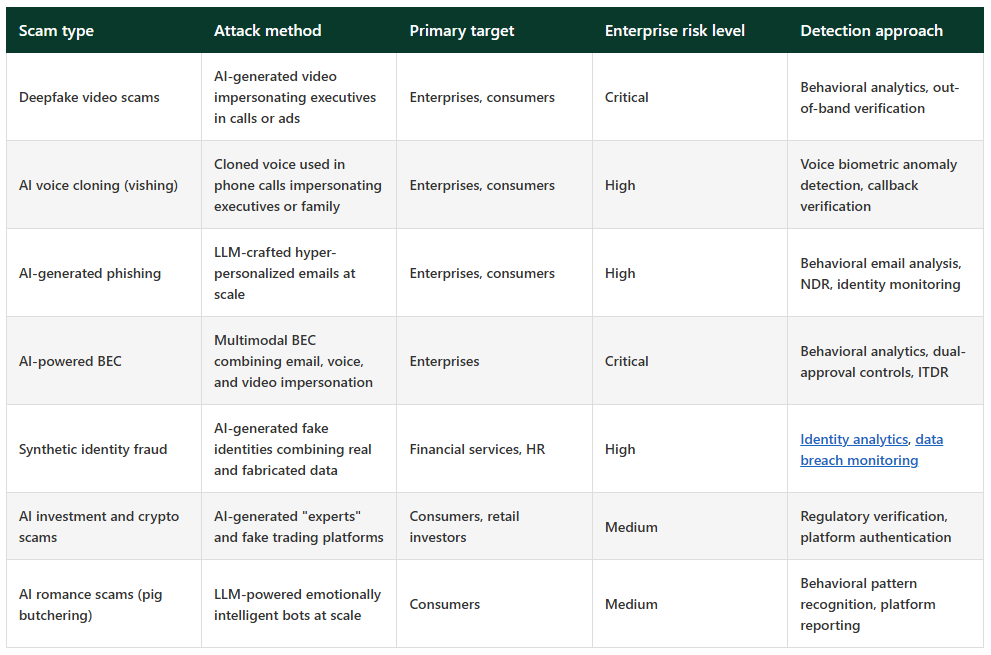
Cybersecurity firm Vectra has identified at least seven distinct categories of AI-driven scams, illustrating the breadth and sophistication of these modern threats. These categories span both consumer-focused and enterprise-level attacks, underscoring the universal vulnerability to AI exploitation. Among the most prominent and dangerous types are:
- Deepfake Video Scams: Utilizing AI to create highly realistic fake videos of individuals, often public figures, celebrities, or trusted professionals, to endorse fraudulent schemes, spread misinformation, or make false claims. The visual authenticity makes these particularly convincing.
- Voice Cloning Scams: Employing AI to mimic a person’s voice with startling accuracy, enabling fraudsters to impersonate colleagues, family members, or authority figures to demand money, solicit sensitive information, or authorize fraudulent transactions. The emotional impact of hearing a familiar voice can override critical thinking.
- AI-Driven Business Email Compromise (BEC): AI significantly enhances BEC attacks by generating more convincing and grammatically flawless phishing emails. It can analyze communication patterns to craft personalized messages that mimic a sender’s style, making it harder for employees to detect fraud and leading to substantial corporate losses.
- AI-Enhanced Social Engineering: Utilizing AI to analyze vast amounts of public data and social media profiles. This allows scammers to create highly personalized and persuasive scam narratives tailored to individual victims’ interests, vulnerabilities, relationships, and even their emotional states, thereby increasing the likelihood of success.
- Automated Scam Bots: AI-powered chatbots can engage in extended, seemingly human-like conversations, building rapport and trust with potential victims over messaging platforms. These bots can adapt their responses, learn from interactions, and maintain a consistent persona, making the interaction feel genuine and prolonging the deception.
- Algorithmic Investment Scams: The type seen in the Hong Kong case, where AI is falsely claimed to power superior, guaranteed-profit trading platforms. These often involve fake apps, websites, and sophisticated data visualizations to create a compelling, albeit fraudulent, investment ecosystem.
- Synthetic Identity Fraud: AI can generate entirely new, believable fake identities, complete with backstories, digital footprints, and credit histories, to open fraudulent bank accounts, apply for loans, or engage in other forms of financial crime, making detection extremely difficult.
This comprehensive framework from Vectra underscores that AI is not merely a tool for automating existing scams but is fundamentally transforming the landscape of cybercrime, making attacks more targeted, realistic, and difficult to detect, posing an unprecedented challenge to both individuals and organizations.
A Recurring Pattern of Predatory Behavior

The case of the Hong Kong woman is unfortunately not unique, reflecting a broader trend of sophisticated, multi-stage financial fraud. Just last month, another disturbing incident came to light involving a 66-year-old retiree who lost an staggering HK$6.6 million (approximately $840,000 USD) to a similar multi-stage fraud scheme. This particular case unfolded over an agonizing six-month period, demonstrating the sustained psychological manipulation employed by these criminals. Initially, scammers posed as legitimate investment advisors, meticulously building trust with the victim through consistent communication and fabricated success stories. Once they had extracted a significant sum, they reappeared with an even more insidious tactic: a fake "recovery" offer. This second stage of the scam involved promising to help the victim recover their previously lost funds, thereby squeezing even more money from someone already financially and emotionally vulnerable.
This pattern of initial deception followed by a "recovery scam" highlights the evolving sophistication of fraudsters. They are not merely conducting one-off attacks but are engaging in prolonged campaigns of exploitation, leveraging the victim’s distress to inflict further damage. The Hong Kong Police Force has emphasized that the playbook for these criminals is becoming increasingly refined, characterized by a deliberate effort to borrow the language and aesthetics of legitimate technology and finance to enhance the credibility of their pitches. Terms like "AI trading" and "guaranteed profits" are strategically deployed to lure individuals who may be eager for financial growth but lack a deep understanding of the underlying technologies or market realities. The inherent complexity of AI, coupled with the rapid pace of technological advancements, makes these pitches particularly difficult to dismiss, especially for individuals not intimately familiar with how such sophisticated systems genuinely operate. The psychological impact of such prolonged deception can be devastating, leading to profound financial ruin and severe emotional distress.
Cryptocurrency Market Context and Vulnerabilities
The choice of cryptocurrencies like USDT and Ethereum as the medium for these scams is not coincidental. The cryptocurrency market, while offering unprecedented opportunities for innovation and financial inclusion, also presents unique vulnerabilities that fraudsters readily exploit. Its largely decentralized nature, global accessibility, and often perceived anonymity can make tracing funds challenging for law enforcement agencies across different jurisdictions. Furthermore, the inherent volatility of crypto assets, coupled with the often-complex technical jargon and rapid market fluctuations, can overwhelm new investors, making them more susceptible to promises of stable, guaranteed returns from "expert" advisors who claim to possess exclusive insights.
USDT (Tether) is a stablecoin pegged to the US dollar, frequently utilized as a bridge between traditional fiat currency and other cryptocurrencies due to its supposed stability. Ethereum (ETH) is the second-largest cryptocurrency by market capitalization, known for its smart contract capabilities and vast decentralized application (dApp) ecosystem. Their high liquidity and widespread acceptance across various exchanges make them attractive targets for scammers looking to quickly move and obfuscate stolen funds through multiple transactions, making recovery exceedingly difficult. While Hong Kong has made significant strides in establishing a regulatory framework for virtual asset service providers, particularly concerning licensed exchanges, many illicit operations continue to thrive outside these regulated channels, preying on unsuspecting investors who might be drawn to unregulated platforms by promises of higher returns or lower fees.
Official Responses and Public Advisory
In light of the escalating threat, the Hong Kong Police Force is intensifying its efforts to combat online investment fraud and protect its citizens. Authorities are issuing urgent public advisories, urging residents to exercise extreme caution when encountering unsolicited investment advice, regardless of its source—whether it arrives through social media platforms, messaging applications like Telegram, email, or any other digital channel. The emphasis is on rigorous verification and profound skepticism towards any financial offer that seems too good to be true.
A cornerstone of the police’s preventive strategy is the promotion of the official CyberDefender platform. This crucial online resource is designed to empower the public by allowing them to check whether an investment site, service, or even specific bank account numbers carry known signs of fraud before any funds are transferred. By providing a centralized, reliable tool for verification, CyberDefender aims to act as a frontline defense, equipping citizens with the means to identify and avoid sophisticated scams. The platform aggregates reported scam websites and accounts, providing a quick reference for users to verify legitimacy.
Police officials are consistently reiterating a fundamental principle of legitimate investing: "no legitimate investment guarantees returns." This warning is paramount, as reports indicate that every single recent case in this wave of fraud involved precisely that deceptive promise. Both the woman who tragically lost nearly $1 million and the retiree who lost HK$6.6 million were explicitly assured that their money was safe and that profits were certain. In both devastating instances, these assurances proved to be utterly false, leaving behind a trail of financial ruin and profound emotional distress. The authorities also advise consulting licensed financial advisors and using only regulated platforms for any investment activities, particularly in the volatile cryptocurrency market.
Broader Implications and the Path Forward
The surge in AI-powered crypto scams in Hong Kong carries significant broader implications that extend beyond the immediate financial losses suffered by individuals. These incidents erode public trust not only in specific investment platforms but also in the burgeoning fields of legitimate cryptocurrency and artificial intelligence itself. The association of these cutting-edge technologies with pervasive fraud can hinder legitimate innovation and adoption, creating an environment of suspicion and fear among potential investors and businesses. This erosion of trust can have long-term negative effects on Hong Kong’s ambition to remain a leading global financial and technology hub.
For regulators, the challenge is immense. The rapid evolution of AI and digital assets means that legislative and enforcement frameworks often struggle to keep pace with criminal ingenuity. There is a pressing need for enhanced international cooperation among law enforcement agencies, cybersecurity firms, and financial institutions to dismantle cross-border scam networks, which often operate from multiple jurisdictions, making apprehension and prosecution complex. Furthermore, a multi-faceted approach involving robust public education and awareness campaigns is more critical than ever, not just to warn against specific scam types but to foster a deeper understanding of financial literacy, digital security best practices, and the inherent risks of investment.
Financial institutions and licensed crypto exchanges also bear a significant responsibility to implement robust security measures, conduct thorough due diligence on new clients, and actively monitor for suspicious transaction patterns that could indicate fraudulent activity. They are often the first line of defense in detecting and preventing the movement of illicit funds. While the investigations into the specific cases mentioned are ongoing, the overarching message from authorities is clear: vigilance, continuous education, verification, and a healthy dose of skepticism are the most powerful tools individuals possess in safeguarding themselves against the increasingly sophisticated and pervasive threat of online investment fraud. The digital landscape, while offering unparalleled opportunities for financial growth and technological advancement, also demands an unprecedented level of caution and informed decision-making from all participants to navigate its inherent risks successfully.