The landscape of professional trading has undergone a seismic shift as proprietary (prop) trading firms have expanded their reach into the digital asset markets. Crypto prop trading serves as a mechanism that allows retail traders to leverage institutional-grade capital to execute trades, provided they can demonstrate consistent risk management skills through a rigorous evaluation process known as a "challenge." As of November 13, 2026, the industry has reached a state of relative maturation, characterized by standardized evaluation protocols, transparent payout structures, and a clear distinction between simulated market participation and real-world capital gains.
The Mechanism of Modern Prop Trading
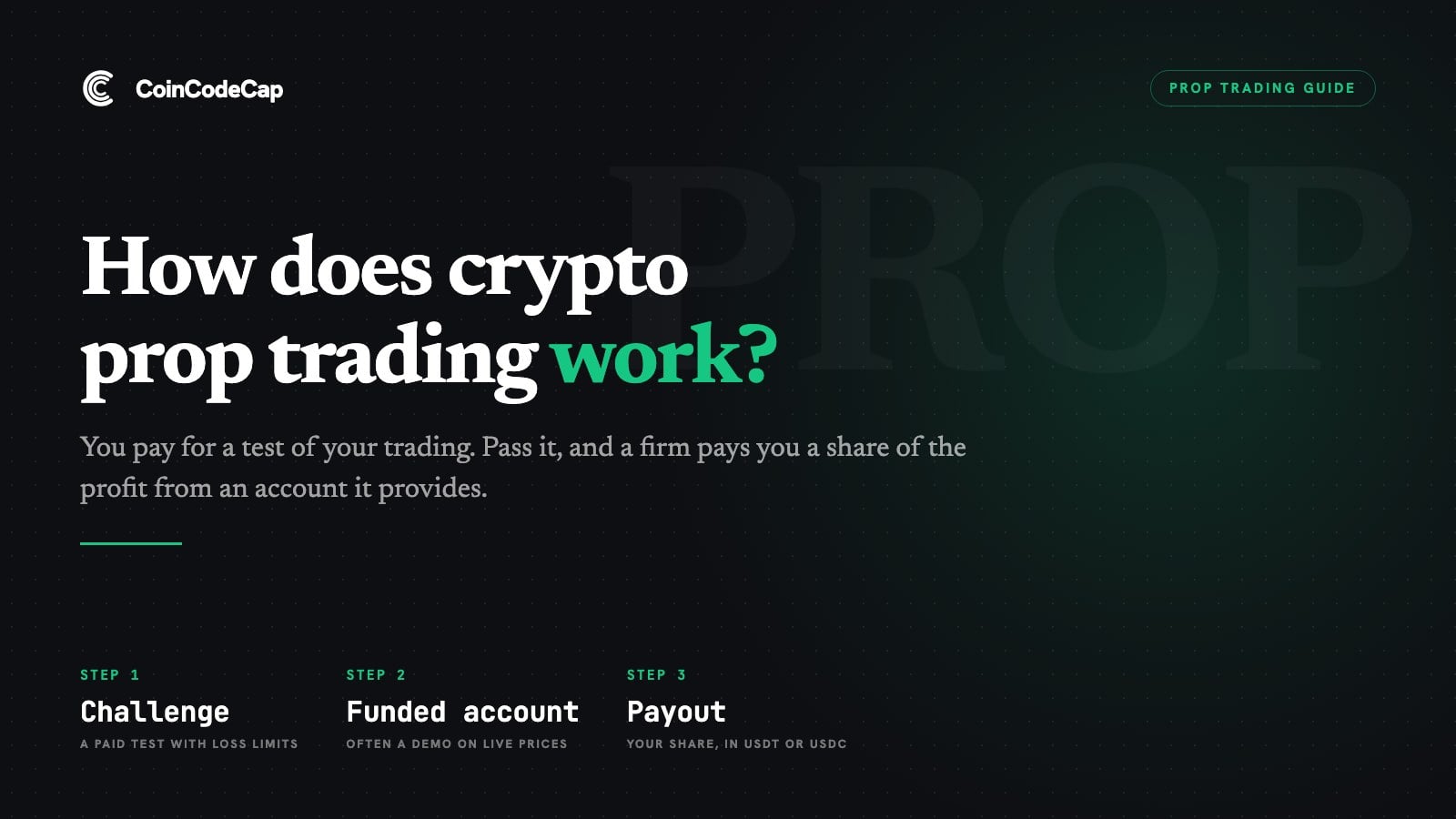
A crypto prop firm operates as an intermediary between individual traders and the broader perpetual futures market. Unlike traditional employment, where a firm provides a salary and capital, the modern crypto prop model is meritocratic and performance-based. The process begins with a "challenge"—a paid assessment period where the trader operates on a simulated account. The entry fee paid by the trader covers the cost of the evaluation, including platform access and risk monitoring software.
It is critical for participants to understand that in most contemporary models, the trading account remains a demo environment throughout the entire lifecycle of the professional relationship. The "funding" that a successful candidate receives is actually a contractual agreement: the firm commits to paying out a percentage of the profits generated on the simulated account. If a trader earns $1,000 on a demo balance, the firm compensates the trader in real stablecoins based on their agreed-upon profit split. This structure mitigates the firm’s exposure to market volatility while allowing talented traders to scale their operations without risking their own personal savings on market positions.
Chronology and Evolution of Regulatory Standards
The industry has moved rapidly since its inception around 2020. Early models were often opaque, lacking clear documentation on how payouts were calculated or how slippage was accounted for. By 2023, firms such as HyroTrader emerged with more robust infrastructures, introducing direct API integrations with established cryptocurrency exchanges. This shift was significant; it allowed traders to execute orders on familiar interfaces like Bybit or BloFin while being evaluated by the prop firm’s proprietary risk engine.
As of November 2026, the industry has largely abandoned the "Zero-Step" model—a simplified, high-risk evaluation path—in favor of multi-stage challenges that demand long-term consistency rather than short-term luck. This transition reflects an effort to align with global financial standards that prioritize capital preservation over high-frequency gambling. Furthermore, firms have increasingly adopted blockchain-based transparency, providing transaction IDs for payouts to build trust with a global, decentralized user base.
The Mathematics of the Challenge
The core of any prop firm evaluation is the set of parameters governing the trader’s behavior. These are typically divided into profit targets and loss limitations. The profit target acts as a benchmark, typically expressed as a percentage of the initial account balance. For instance, a $100,000 account might require a 10% gain, or $10,000, to move to the funded phase.
Loss limits are the more restrictive component. They are generally categorized into two types:
- Daily Loss Limit: A protective mechanism that resets every 24 hours. If a trader exceeds this threshold, the account is usually suspended for the remainder of the day or permanently terminated.
- Maximum Drawdown: The total aggregate loss allowed. Once a trader’s account balance falls below this cumulative threshold, the challenge is considered failed.
The industry has largely moved toward "static" limits, which are calculated against the initial balance, rather than "trailing" limits, which move up with every peak in the account’s performance. Trailing limits are widely considered more difficult to navigate, as they can "lock in" a loss even if the trader remains profitable on a net basis.
Market Context and Risk Management
Prop firms operating in the crypto space exclusively utilize perpetual futures contracts. These derivatives allow traders to profit from both rising and falling markets. However, the use of leverage—the ability to control a large position with a small amount of margin—introduces significant risk.
To maintain institutional stability, firms like HyroTrader have implemented stringent exposure limits for funded accounts that were not present during the evaluation phase. For example, a trader might be restricted from holding positions that exceed 200% of their total account value, or they may be limited to using only 25% of their balance as margin for any single trade. These constraints serve as a safeguard, ensuring that a single "fat-finger" error or market flash crash does not liquidate the firm’s simulated portfolio.
Comparative Analysis of Funding Models
The market currently features two primary funding models:

- The Challenge Model: This requires the trader to pass one or two phases of evaluation. The primary advantage is the lower entry cost, though it demands a disciplined approach over several weeks.
- The Instant Funding Model: This allows traders to bypass the evaluation phase by paying a higher upfront fee. While this provides immediate access to a funded account, it is typically accompanied by stricter, more aggressive drawdown rules that leave less room for strategic error.
Data from late 2026 indicates that payout efficiency has become a key competitive differentiator. Leading firms now guarantee payouts within 24 hours of a request, provided the trader has closed all open positions. The use of stablecoins—specifically USDT on the Tron or Solana blockchains and USDC on Arbitrum—has become the industry standard for ensuring low-cost, near-instant settlement.
The Reality of Professional Participation
It is vital to address the success rate of these programs. Industry-wide data suggests that a significant majority of participants fail to pass the challenge, often due to a lack of adherence to risk management protocols. Prop trading is not a substitute for financial planning; it is a high-stakes environment for experienced market participants.
The requirement for "trading days" is a common tool used by firms to prevent "gambling" behavior. For example, a firm might require a trader to prove their consistency by ensuring that no single day contributes more than 40% toward the total profit target. This forces the trader to demonstrate a repeatable process rather than a reliance on a single high-leverage "home run" trade.
Implications for the Future of Retail Trading
The integration of decentralized finance (DeFi) tools with centralized exchange liquidity has enabled a new class of "prop-tech" platforms. By allowing users to trade on their own demo accounts via API, firms have lowered the barrier to entry while simultaneously increasing the quality of the data they collect.
Looking forward, we can expect increased regulatory scrutiny. As these firms continue to handle millions of dollars in payouts, transparency regarding their balance sheets and the nature of their simulated accounts will become mandatory. Traders should prioritize firms that offer public transaction records and clear, enforceable rulesets.
In conclusion, crypto prop trading offers a viable path for skilled traders to gain access to substantial capital. However, it requires a clear understanding of the mathematical constraints involved. Before committing capital, potential traders must perform a comprehensive audit of a firm’s rules, verifying that their personal trading style—whether it be intraday scalping or swing trading—aligns with the firm’s specific margin, position, and drawdown requirements. As the market evolves, the firms that prioritize education, risk management, and transparent, high-speed payouts will likely define the future of this competitive sector.