KuCoin Spotlight Returns With Gno.land GNOT Pre-Listing Subscription Offering

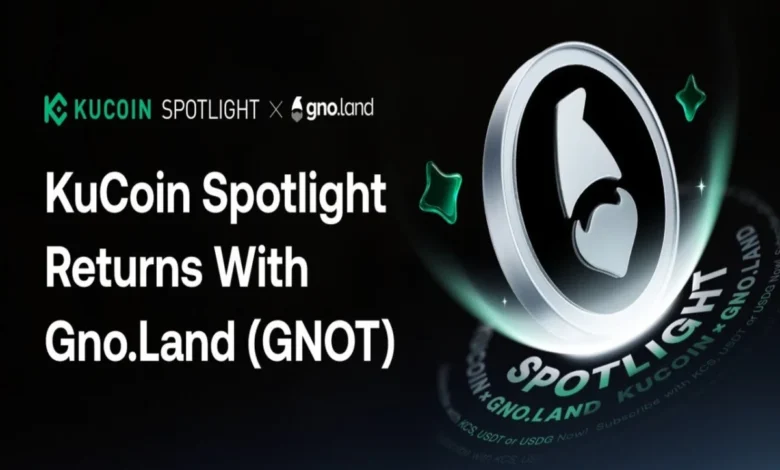
KuCoin has officially announced the return of its Spotlight platform, a launchpad service designed to introduce high-potential blockchain projects to its global user base, with the inclusion of Gno.land (GNOT). This latest offering provides eligible participants with the opportunity to subscribe to 7,751,938 GNOT tokens at a fixed price of $0.0645 per unit before the asset is listed for live spot trading. The move marks a strategic shift in KuCoin’s token distribution model, introducing a more structured, oversubscription-based allocation framework intended to enhance transparency and participation efficiency.
The Spotlight event for Gno.land is not merely a token sale; it represents a significant update to the mechanism through which KuCoin facilitates early access to infrastructure projects. By integrating a pro-rata allocation system, the exchange aims to distribute tokens more equitably among interested parties. Furthermore, the inclusion of multi-asset payment options—specifically KCS (KuCoin Token), USDT, and USDG—provides users with flexibility, while an optional conditional post-listing buyback mechanism introduces a new layer of risk mitigation for early participants.
Understanding Gno.land: A New Paradigm for Smart Contracts
Gno.land, an open-source Layer 1 smart-contract platform, was developed by NewTendermint, a team deeply embedded in the evolution of the Cosmos ecosystem. At its core, the project utilizes Gno, a deterministic variation of the Go programming language specifically engineered for on-chain application development. Unlike traditional smart-contract environments that may encounter non-deterministic behavior, the Gno environment is built to ensure consistent and predictable execution, which is critical for complex decentralized applications.
The GNOT token serves as the fundamental utility asset within this ecosystem. Its primary functions include serving as the medium for gas fees, which covers storage deposits, the execution of complex smart contracts, and cross-chain messaging. As blockchain interoperability remains a primary focus for the industry, the development of a Go-based infrastructure that prioritizes developer-friendly syntax while maintaining high-performance execution is seen as a key step in lowering the barrier to entry for mainstream developers looking to migrate from Web2 to Web3 environments.
The Evolution of the KuCoin Spotlight Model
The KuCoin Spotlight has long served as a bellwether for emerging crypto assets, having facilitated the early-stage distribution of numerous projects that have since gained significant market traction. The return of this service with the Gno.land campaign signifies a renewed commitment by KuCoin to curate and support foundational blockchain technology.
The updated participation framework is designed to address common criticisms of previous token launch models, such as "gas wars" or exclusive, lottery-style entries that often alienate smaller investors. By implementing an oversubscription mechanism, KuCoin is adopting a model that mimics traditional financial book-building processes. In this structure, if the total demand exceeds the supply of 7,751,938 GNOT, the tokens are distributed on a pro-rata basis, ensuring that all participants who meet the eligibility criteria receive an allocation proportional to their subscription commitment.
The addition of a conditional post-listing buyback mechanism is particularly notable. This feature allows participants to opt-in to a program that provides a safety net, potentially offering a level of downside protection in the volatile post-listing phase. This reflects a broader trend in the industry toward creating more robust, investor-friendly launchpads that prioritize long-term project stability over short-term speculative fervor.
Chronology and Operational Mechanics
The subscription process for GNOT follows a strictly timed sequence intended to manage liquidity and demand. Eligible users are required to navigate to the KuCoin Spotlight Center, where they can initiate their participation using KCS, USDT, or USDG. The integration of USDG as a payment method signals KuCoin’s focus on its stablecoin ecosystem, further incentivizing users to maintain liquidity within the exchange’s native infrastructure.
Once the subscription period concludes, the system calculates the final allocations. Participants who have opted for the conditional buyback will have their positions locked or monitored according to the specific terms outlined in the campaign documentation. Following the successful subscription phase, the project will transition to the spot trading market, where the price discovery phase will occur, allowing for open market buying and selling.
Institutional Security and Market Context
KuCoin’s decision to feature Gno.land on its Spotlight platform occurs against a backdrop of increased regulatory scrutiny and a heightened focus on platform security. Founded in 2017, KuCoin has expanded its footprint to serve over 45 million users across more than 200 countries. To maintain this scale, the exchange has undergone rigorous auditing processes, securing certifications such as SOC 2 Type II, ISO/IEC 27001:2022, and ISO/IEC 42001:2023. These credentials, coupled with registrations and licenses in various jurisdictions—including Australia’s AUSTRAC and compliance with Europe’s MiCA framework—underscore the platform’s emphasis on institutional-grade security.
The selection of a Layer 1 infrastructure project like Gno.land aligns with KuCoin’s stated goal of fostering a compliant, transparent, and sustainable digital asset infrastructure. By focusing on projects that provide utility rather than mere speculative value, the exchange aims to bolster the credibility of the broader crypto market.
Implications for the Layer 1 Landscape
The integration of Gno.land into the KuCoin ecosystem highlights a shift toward high-performance, developer-centric blockchains. The reliance on Go—a language widely adopted in enterprise-grade software development—suggests that the project is targeting developers who may have been deterred by the complexities of Solidity or the specific constraints of other virtual machines.
From an market analysis perspective, the introduction of GNOT through a structured, multi-asset subscription model provides a controlled entry point for the token. By avoiding the typical volatility associated with open-market launches on decentralized exchanges (DEXs), the Spotlight approach seeks to cultivate a more stable initial shareholder base. The pro-rata model ensures that the token distribution is not overly concentrated, which can lead to healthier price discovery and lower manipulation risks post-launch.
Furthermore, the "conditional buyback" mechanism acts as a signaling device. It suggests that the project team and the exchange are confident in the long-term utility and value proposition of Gno.land, thereby providing a degree of reassurance to retail investors. While such mechanisms do not eliminate market risk, they represent a significant step toward professionalizing the token launch process.
Broader Impact on the Crypto Ecosystem
The return of the KuCoin Spotlight with a project of Gno.land’s caliber serves as a reminder of the critical role centralized exchanges play in the lifecycle of blockchain startups. While the industry has seen a surge in decentralized launchpads and automated market makers, the reach, liquidity, and security frameworks offered by a global exchange like KuCoin remain indispensable for projects seeking widespread adoption.
As the industry matures, the focus has shifted from "launching at all costs" to "launching with integrity." The GNOT campaign will likely be observed by other projects as a template for future token distribution events. If the oversubscription and buyback models prove effective in maintaining price stability and user engagement, it is highly probable that other major exchanges will adopt similar structures.
For the participants, the event is an opportunity to gain exposure to a project that aims to solve fundamental issues in smart-contract determinism. For the broader market, it serves as a barometer for investor appetite regarding new Layer 1 infrastructure. As Gno.land prepares for its transition from the Spotlight center to the open spot market, the outcome will provide valuable data on the current state of investor sentiment, the effectiveness of the updated subscription model, and the ongoing demand for infrastructure-focused blockchain innovation in a post-cycle market environment.
In summary, the Gno.land Spotlight campaign is a multidimensional event that combines technical innovation, a refined economic model, and an emphasis on institutional security. By streamlining the participation process and adding protective measures, KuCoin is attempting to redefine the standard for project incubation in the digital asset space, moving away from the chaotic nature of early-stage token sales toward a more measured, secure, and predictable methodology.