The Strategic Shift from GPU Rental to Infrastructure Ownership: Clichmont and the New Economics of Artificial Intelligence

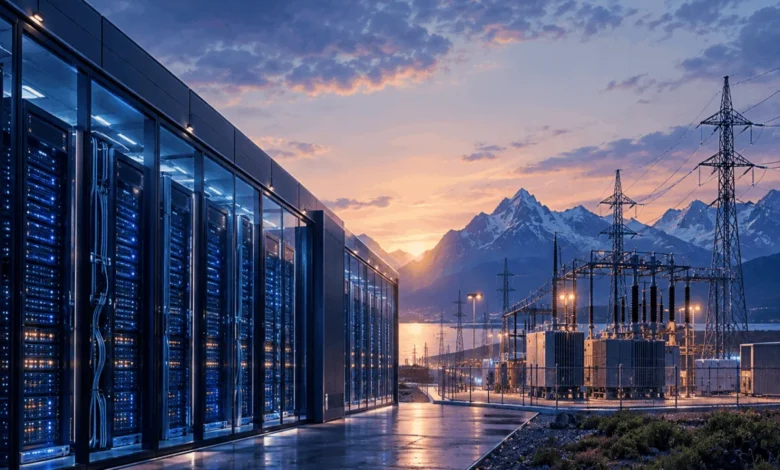
The global race for artificial intelligence dominance has largely been defined by the pursuit of silicon—specifically, the high-end H100 and Blackwell-series graphics processing units (GPUs) manufactured by NVIDIA. However, as the demand for large-scale model training and inference skyrockets, a new, more foundational bottleneck has emerged. Companies are finding that securing chips is only half the battle; the ability to house, cool, and power these energy-hungry processors has become the primary constraint on growth. Clichmont, an infrastructure-focused firm, is moving to redefine this landscape by pivoting away from the industry-standard model of renting hyperscale GPU capacity in favor of owning and operating the underlying physical data-center architecture.
The emergence of this "infrastructure-first" strategy arrives at a critical juncture for the technology sector. According to data from the International Energy Agency (IEA), electricity consumption from data centers could double by 2026, reaching over 1,000 terawatt-hours. This surge is driven by the density requirements of modern AI clusters, which often demand racks that consume 40 to 100 kilowatts of power, far exceeding the traditional 5 to 10 kilowatts per rack standard in legacy data centers.
The Anatomy of the Infrastructure Bottleneck
For the past three years, the AI boom has been characterized by a scramble for "compute-as-a-service." Companies such as CoreWeave, Lambda, and Crusoe have scaled rapidly by leasing GPU capacity from hyperscalers or building out massive clusters to lease back to software developers. While this model has allowed for rapid deployment, it leaves the end-user vulnerable to the pricing, scheduling, and power limitations of the host provider.
Alexis Cathalifaud, CEO of Clichmont, argues that the current industry reliance on third-party capacity is fundamentally unsustainable for companies aiming for long-term strategic independence. "GPU access gives you compute; infrastructure ownership gives you control over the economics of compute," Cathalifaud states. By controlling the data center, Clichmont shifts the business model from a service-provider dependency to a real-asset management model. This approach allows the firm to dictate the engineering specifications of the facility—optimizing for specific cooling requirements, rack density, and network topology—without being bound by the rigid constraints of a pre-built hyperscale facility.
A Chronology of the Physical Shift
The transition toward vertical integration in AI infrastructure did not happen overnight. The following timeline illustrates the progression from simple chip-leasing to the current era of heavy infrastructure investment:
- 2020–2021: The early AI boom, marked by an abundance of underutilized data-center space and the emergence of specialized GPU clouds.
- 2022: The launch of ChatGPT triggers an unprecedented demand for compute, leading to global GPU shortages and the first signs of strain on grid capacity in major hubs like Northern Virginia and Dublin.
- 2023: The "Energy Crisis" begins. Developers realize that even with unlimited capital to buy GPUs, the lack of permitted, grid-connected land prevents deployment.
- 2024: Clichmont and similar firms begin targeting secondary and tertiary markets—such as Northern Norway and specific regions in Spain—where energy availability and climate-based cooling efficiency take precedence over proximity to traditional tech hubs.
The Power-First Strategy: Site Selection and Energy Economics
Clichmont’s approach to site selection reflects a departure from traditional real estate logic. In the past, data-center developers prioritized fiber latency and proximity to population centers. Today, Clichmont evaluates sites based on "time-to-power" and grid capacity.
"A GPU without reliable power is just expensive hardware sitting in a rack," Cathalifaud notes. The firm’s current expansion strategy highlights this disparity. Its facility in Bodo, Norway, leverages the region’s abundant, low-cost hydroelectric power and naturally cool climate to minimize the energy-intensive burden of mechanical chillers. Conversely, its Alicante site integrates solar energy, demonstrating an effort to diversify the energy mix.
This focus on geography is a strategic hedge. As grid congestion increases, the ability to secure 50 or 100 megawatts of power becomes a moat. Because power cannot be easily transported, the compute must migrate to the energy. This is a reversal of the historical trend where energy-intensive industries moved to where the labor was. In the AI era, the industry is moving to where the electrons are.
Financial Engineering and the Role of $CLAI
A distinctive aspect of the Clichmont model is the introduction of the $CLAI token, an attempt to create a digital economic layer for infrastructure governance. While crypto-infrastructure projects have historically faced skepticism due to the volatility of token markets, Clichmont maintains that the token is designed for treasury management and community participation rather than speculative financing.
The goal, according to company leadership, is to allow stakeholders to engage with the infrastructure ecosystem in a way that standard equity structures cannot facilitate. However, the firm acknowledges the burden of proof. "If we can’t show that the token does something useful and measurable that couldn’t be accomplished with a normal database or corporate structure, then the skepticism is justified," Cathalifaud explains. Analysts suggest that the success of such a model depends on the tangible integration of the token with real-world power purchase agreements (PPAs) and asset utilization, rather than merely using it as a secondary currency for GPU rental.
Challenges in Scaling Physical Assets
While the build-it-yourself model offers control, it introduces significant risks that software-native companies often overlook. The primary danger is the "timing gap." Software can be scaled by spinning up virtual machines in seconds; a data center requires years of permitting, electrical substation construction, and supply-chain coordination for cooling components.
Mistakes in this sector are unforgiving. If a company overbuilds during a period of hardware transition, they may find themselves with millions of dollars in stranded assets—buildings that are perfectly suited for current-generation chips but lack the power density for future, more intensive iterations. Clichmont aims to mitigate this by designing modular facilities that focus on "durable infrastructure"—the long-lived assets like land, substations, and fiber—while maintaining the flexibility to swap out the compute hardware every 24 to 36 months.
Future Outlook and Market Positioning
Looking ahead to the next three years, Clichmont does not intend to challenge the hyperscale giants like CoreWeave or Nebius in terms of pure GPU volume. Instead, it is carving out a niche as a high-efficiency operator of "sovereign-grade" compute infrastructure. By focusing on energy-dense, strategically located assets, the company positions itself as an essential provider for enterprises that require bespoke infrastructure solutions rather than generic cloud access.
The broader implications of this shift are profound. If successful, Clichmont’s model could signal a transition where AI companies stop viewing themselves as pure-play software entities and begin operating as integrated utility-tech hybrids. As energy becomes the most significant line item in the AI cost structure, the ability to generate, secure, and manage that power will likely determine the winners of the next decade of artificial intelligence development.
In summary, the AI industry is entering a "physical" phase. The initial excitement over algorithmic breakthroughs is now yielding to the harsh realities of physics and electrical engineering. For firms like Clichmont, the path to long-term profitability lies not in the speed of the model training, but in the efficiency and reliability of the foundation upon which those models are built. As the industry matures, the distinction between those who rent the machine and those who own the power plant will define the next tier of the global tech economy.