LG Electronics Crackdown: Smart TV Apps with Residential Proxy SDKs Face Suspension Following Security Exposures

Home appliance and consumer electronics giant LG Electronics USA has announced a decisive policy shift targeting smart television software that repurposes consumer displays into always-on residential proxy nodes. Under the newly enforced guidelines, the company will suspend any applications built for its webOS-powered smart televisions that route third-party internet traffic through a user’s home network without proper structural authorization.
The enforcement action arrives in the wake of exhaustive cybersecurity research revealing widespread integration of Software Development Kits (SDKs) designed to monetize user bandwidth. The findings have ignited a broader industry debate regarding platform accountability, user consent models, and the hidden risks associated with embedding monetization frameworks into consumer hardware typically exempt from traditional security auditing.
Background Context: The Rise of Residential Proxy SDKs
The modern internet economy relies heavily on data collection, web scraping, and market research, which often requires entities to view web pages from authentic residential IP addresses to bypass localized geo-blocks and anti-bot mechanisms. To achieve this, proxy infrastructure providers supply developers with monetizable SDKs. When integrated into consumer applications—ranging from simple games and utility tools to screensavers—these SDKs silently convert user devices into relay nodes.
While developers receive financial compensation for embedding these libraries, consumers frequently find themselves unknowingly participating in commercial proxy networks. The architectural danger lies in the vector: smart televisions, refrigerators, and connected thermostats are rarely viewed by the average consumer as traditional computers capable of hosting unauthorized proxy servers. Consequently, users rarely monitor their smart TVs for unexpected outbound bandwidth consumption or anomalous network routing activities.
Chronology of the Vulnerability Exposure
The momentum leading to LG’s policy reversal began in early July 2026, mapping out a swift trajectory from academic and commercial discovery to corporate intervention:
- July 2, 2026: Security firm Spur published a comprehensive empirical study examining the prevalence of residential proxy SDKs across major smart television ecosystems, specifically focusing on LG’s webOS and Samsung’s Tizen operating system.
- Early July 2026: Security researchers revealed that over 42 percent of applications available on the LG webOS store contained embedded residential proxy components, while more than 25 percent of Samsung Tizen applications exhibited similar integrations.
- Mid-July 2026: Technology journalists and cybersecurity outlets escalated scrutiny around the findings, prompting official inquiries directed at hardware manufacturers and prominent proxy service providers.
- Late July 2026: LG Electronics USA officially responded to media queries, confirming that review procedures were well underway and announcing immediate plans to penalize non-compliant developers with application suspensions.
- July 22, 2026: Proxy provider Bright Data issued formal statements defending its compliance protocols, emphasizing user opt-in consent mechanisms and independent auditing procedures.
Empirical Findings: Scale of the Proxy SDK Phenomenon
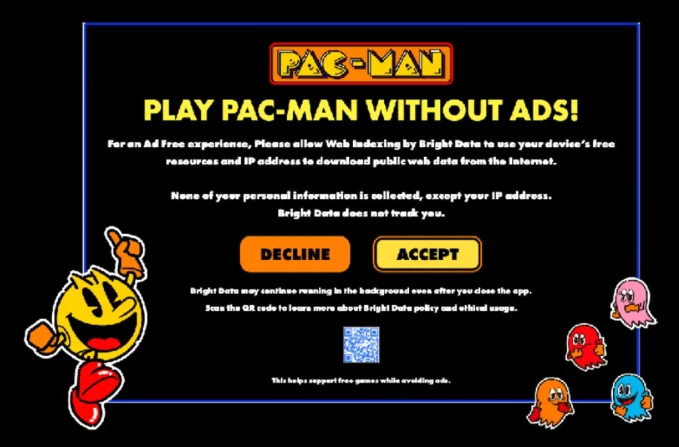
The core of the security community’s alarm stems from Spur’s analytical deep dive into smart television app stores. According to the research, residential proxy monetization is not an isolated anomaly but a pervasive monetization vector. The SDKs were discovered across a surprisingly diverse spectrum of software, including casual games like Pac-Man, media players, and system utility packages.
Bright Data emerged as the dominant proxy network provider operating within these ecosystems, accounting for the vast majority of proxy SDK implementations across both LG and Samsung television platforms. Spur’s telemetry demonstrated that these third-party integrations could leave televisions operating as active proxy nodes indefinitely, quietly routing unknown data streams through domestic routers 24 hours a day.
Official Responses and Industry Defense
Faced with mounting pressure from security analysts and consumers, representatives from both LG Electronics and the primary proxy providers have addressed the architectural concerns.

John Taylor, Senior Vice President at LG Electronics USA, issued a definitive statement clarifying the company’s operational stance on the matter. Taylor emphasized that turning a television into a residential proxy node violates the intended usage model of the platform.
"A residential proxy network is not an intended use for LG smart TVs, and LG Electronics is working with developers to remove the residential proxy option from their apps on the webOS platform," Taylor stated. He further confirmed that the platform evaluation process is actively expanding to intercept developer-submitted apps containing residential proxy SDKs before they reach the consumer market, noting that uncooperative developers will face immediate application suspensions.
Conversely, proxy providers maintain that their operations adhere to stringent legal and ethical frameworks. In a statement provided to security researchers, representatives for Bright Data defended their business model by highlighting user interaction design and third-party validation.
"Every peer opts in through a dedicated screen and receives value in return; every customer is vetted, and our practices have now undergone a second independent audit by PwC," the company declared. Bright Data asserted that its network facilitates legitimate enterprise research, data acquisition, and institutional indexing, backed by strict Know-Your-Customer (KYC) compliance policies and technological safeguards designed to prevent proxy users from probing or interacting with secondary devices residing on the local home network.
Critical Perspectives: The Illusion of Consent
Despite assertions of transparency by proxy vendors, security experts remain skeptical regarding the efficacy of consumer consent within shared household environments. Trevor Sutter of Spur highlighted the inherent dangers of relying on single-point authorization prompts displayed on family-shared hardware.
"A one-time consent prompt buried in a TV app is not a substitute for meaningful transparency, ongoing control, and platform oversight," Sutter noted. He emphasized that the vulnerability is significantly magnified in households containing minors or guests who frequently operate streaming hardware without understanding the technical ramifications of accepting terms buried within digital UI menus. While vendors argue that games like Pac-Man offer users a binary choice between viewing advertisements or sharing bandwidth, critics argue that such choices exploit user fatigue and lack adequate ongoing auditing tools.
Broader Implications for IoT Security and Ecosystem Trust
LG’s swift intervention marks a critical milestone for Internet of Things (IoT) security, yet it runs parallel to emerging questions regarding the company’s broader software bundling practices. Simultaneously surrounding LG’s consumer hardware portfolio are separate criticisms regarding unsolicited software deployments. Recent investigations by hardware analysis channels, such as Gamers Nexus, revealed that certain high-end LG LCD monitors automatically install applications promoting paid third-party antivirus subscriptions via Windows Update without explicit user approval prompts.
Together, these incidents underscore a growing friction between consumer expectations of hardware autonomy and corporate strategies involving third-party software partnerships and monetization. As smart TVs and connected displays evolve into fully fledged computing environments complete with app stores, operating systems, and background services, the attack surface expands exponentially.
The decision by LG to purge proxy SDKs from webOS represents a necessary defensive posture against unauthorized network relay utilization. However, industry analysts suggest that manufacturers must transition from reactive remediation to proactive, automated static and dynamic code analysis during the app submission phase. Without rigorous and continuous vetting protocols enforced by hardware vendors, consumer living rooms will remain vulnerable to silent exploitation under the guise of casual entertainment software.