Market Volatility and Sectoral Divergence: Navigating the New Economic Landscape Amidst Political Uncertainty


The landscape of global equity markets is undergoing a profound transformation as investor sentiment shifts from the relentless optimism that defined the tech-heavy rallies of recent years to a more cautious, defensive posture. As market volatility intensifies, the once-uniform upward trajectory of major indices has fractured, revealing an uneven distribution of weakness. While the high-flying technology sector faces significant momentum loss, traditional defensive and value-oriented sectors—namely healthcare, financials, and specific consumer segments—are exhibiting newfound resilience. For the modern investor, the prevailing challenge lies in discerning whether these emerging market leaders possess the structural integrity to withstand a broader sell-off or if they are merely temporary havens in a cooling environment.
The Erosion of Tech Dominance and the Nasdaq 100 Correction
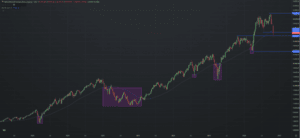
The Nasdaq 100, a bellwether for the broader technology sector, has officially entered correction territory, having retreated approximately 14% from its record highs. The index closed last week at roughly 26,900 points, breaching the critical technical support of its 50-week moving average at 27,480. In financial markets, such a breach is viewed with high gravity; it is a relatively rare occurrence that often signals a change in the medium-term trend.
Historical precedents offer a mixed outlook. Following the 2020 pandemic-induced crash, the index experienced a rapid V-shaped recovery, quickly reclaiming its moving averages. Similarly, after the tariff-related turbulence of early 2025, the market demonstrated significant resilience. However, the 2022 bear market serves as a cautionary tale, where the index languished below its 50-week moving average for an extended period, defined by successive, grinding waves of selling.

The current technical setup is precarious. The double-top formation at 26,250 points, established in January, represents the primary support zone. Should this level fail to hold, market participants are looking toward the March low of approximately 22,800 as the next significant floor. Analysts suggest that a stabilization of the index would require a sustained move back above the July lows of 27,060, followed by a successful retest of the 50-week moving average. Until such a reversal is confirmed, the path of least resistance remains skewed toward the downside.
Political Winds and Regulatory Headwinds: The Post-Election Reality
The recent US midterm elections have injected a fresh layer of complexity into the investment environment, particularly regarding sectors sensitive to legislative shifts: data centers, healthcare, defense, and broader fiscal policy. While a divided Congress typically signals legislative gridlock, the real impact for investors lies in state-level regulatory changes and the evolving tenor of executive branch priorities.
Data center development, long considered a cornerstone of the AI-driven infrastructure boom, is facing an unexpected political hurdle. Both Democratic and Republican legislators have begun to scrutinize the rapid expansion of these facilities, citing concerns over power grid strain, water usage, and land allocation. This newfound bipartisan skepticism has translated into tougher construction requirements and the potential erosion of existing tax benefits.
For investors, this creates a stark bifurcation. The risks are not uniformly distributed. Companies like Microsoft, Amazon, and Alphabet, which possess massive existing networks and established computing capacity, may benefit from a "moat" effect; as new supply is restricted by regulatory red tape, their existing infrastructure becomes more valuable. Conversely, specialized developers such as IREN, Applied Digital, and Hut 8 face mounting operational costs and project delays. Furthermore, the downstream ripple effects are significant: cooling and electrical equipment providers like Vertiv and Eaton, alongside chipmakers such as Nvidia and AMD, are bracing for a potential deceleration in demand for new hardware installations.
Healthcare: A Sector of Nuanced Risks
Healthcare is frequently touted as a defensive play, yet it remains highly susceptible to political interference. Democrats have signaled a policy shift focused on shoring up Medicaid funding and reinstating Affordable Care Act (ACA) subsidies. While these measures support patient volume, the corresponding push to lower drug prices and reform Medicare Advantage programs creates substantial headwinds for insurers and pharmaceutical manufacturers.
Investors must avoid treating healthcare as a monolithic entity. Hospitals may see an uptick in revenue from increased insurance penetration and expanded coverage. In contrast, the pharmaceutical industry and private insurers face margin compression as the government exerts downward pressure on pricing. The overarching takeaway for the sector is that regulatory rhetoric often serves as a proxy for future policy; even if specific legislation fails to pass, the mere prospect of tightening oversight can compress valuation multiples and dampen investor sentiment.
Defense Spending and Fiscal Policy
Defense companies have historically been viewed as immune to economic cycles, but they are not immune to fiscal brinkmanship. As the current administration pushes for increased military spending, the reality of a divided Congress suggests that these budget hikes may face significant delays. The risk is not that defense budgets will shrink, but that the velocity of spending will fail to meet the high expectations already priced into equity valuations. Companies with long-term, established government contracts are better positioned to weather the potential for legislative friction than those reliant on the approval of new, multi-year procurement cycles.
Furthermore, the debt ceiling has re-emerged as a potent bargaining chip. The threat of political paralysis surrounding government borrowing limits is creating a climate of uncertainty, which inevitably leads to corporate caution. When the regulatory and fiscal outlook is clouded, companies naturally delay capital expenditure, which compounds the broader economic slowdown.
Siemens Energy: A Test Case for Infrastructure Resilience
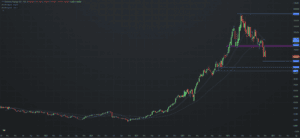
The upcoming Q3 earnings report from Siemens Energy is widely viewed by institutional analysts as a litmus test for the sustainability of the global infrastructure cycle. As a key supplier of transformers and grid technology, Siemens Energy is at the epicenter of the AI-driven data center boom.
However, the company’s stock has suffered, falling nearly 40% from its peak. This decline reflects broader anxieties: can the infrastructure build-out continue if the tech sector scales back its AI investment? Furthermore, the company’s business model is sensitive to interest rates. With bond yields remaining elevated, the multibillion-euro projects—ranging from wind farms to grid upgrades—are facing increased financing costs, which threaten project viability and timing. Technical indicators for the stock are currently bearish, with the 20-week moving average crossing below the 50-week, suggesting that the path to a recovery would require a sustained breakout above the €138 resistance level.
Cryptocurrency: Liquidity Constraints and Market Consolidation
The digital asset market is currently navigating a period of reduced liquidity and consolidation. Bitcoin, in particular, is undergoing a phase of technical adjustment, with recent data showing that spot Bitcoin ETFs experienced over $1.28 billion in net outflows in a single week. Additionally, a 2.2% contraction in the market capitalization of major stablecoins suggests a reduction in the "dry powder" available for new market entry.
On-chain metrics indicate that short-term holders are currently under pressure, with only 38% of their holdings in profit as of early November. This creates a psychological ceiling for the price; as the market rallies toward entry levels, many recent buyers are likely to use the opportunity to exit their positions, thereby blunting the momentum of any recovery.
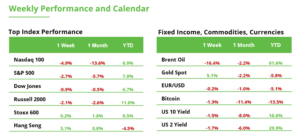
Ethereum faces its own set of challenges, specifically regarding its performance relative to Bitcoin. For a broader crypto-market recovery to materialize, Ethereum would need to demonstrate sustained outperformance, signaling a rotation of capital into more diverse assets. Our analysis suggests a 50% probability of continued consolidation over the next month, a 30% chance of a deeper decline should ETF redemptions continue, and a 20% probability of a firmer recovery, contingent on improved capital flows and a stabilization of the macroeconomic backdrop.
Strategic Investment Takeaways
The current market environment demands a shift in strategy. The transition from a period of liquidity-driven excess to one of selective growth necessitates a review of portfolio concentration. An equal-weight investment approach may provide better insulation against the volatility currently plaguing the largest technology firms.
Investors are advised to prioritize businesses with robust cash generation, manageable debt-to-equity ratios, and reasonable valuation metrics. It is crucial to distinguish between relative strength and absolute protection; even sectors that hold up better during a market correction are not immune to the gravitational pull of a broader sell-off.
Finally, the most important lesson for the current cycle is that political and regulatory changes do not require legislative finality to impact share prices. The mere anticipation of higher taxes, stricter construction standards, or delayed government spending is sufficient to influence corporate investment behavior and, by extension, market valuation. Rebalancing should be approached gradually; investors should resist the urge to treat the first signs of a rebound as a definitive signal that the correction has concluded. Instead, they should maintain a disciplined, data-driven approach, leaving sufficient room to maneuver as the economic and political landscape continues to evolve.
Related posts: