Global Markets Brace for Volatility Following US Inflation Surprise and Hawkish Fed Signals


Financial markets experienced a week of high drama, defined by a dramatic reprisal of monetary policy anxieties in the United States, a resilient equity landscape buoyed by artificial intelligence optimism, and fluctuating geopolitical tensions affecting global energy supplies. The catalyst for the turbulence arrived on Tuesday, when the latest US Consumer Price Index (CPI) report shattered prevailing market assumptions, triggering an extraordinary sell-off in fixed-income assets and driving the euro to its lowest valuation against the US dollar in more than twelve months.
Bond markets bore the brunt of the macroeconomic shock. A 22-basis-point intra-day surge in US two-year Treasury yields represents a rare and aggressive market reaction, underscoring the severity of the inflation data. The core CPI reading advanced by 0.3% month-on-month for the third consecutive month, pushing the annual headline rate up from 2.6% to 2.9%. This stubborn upward trajectory directly challenges the Federal Reserve’s overarching mandate to steer inflation sustainably back down to its stated 2.0% target.
The data release did not occur in a vacuum; it was preceded and immediately followed by forceful commentary from prominent central bank officials. Before the figures were made public, Federal Reserve Governor Christopher Waller publicly stated that the central bank ought to seriously contemplate a 50-basis-point rate hike at its upcoming December meeting if the October inflation metrics mirrored the previous two months. Following the publication of the report, Chicago Fed President Austan Goolsbee characterized the print as "borderline disturbing," amplifying concerns that monetary authorities might be forced into a more aggressive tightening cycle than previously anticipated.
Consequently, interest rate futures markets have swiftly repriced the probability of monetary policy outcomes. Traders are now pricing in a 13% likelihood of a jumbo-sized 50-basis-point rate increase at the Federal Open Market Committee meeting scheduled for December 9. Analysts at major financial institutions anticipate a more measured path, penciling in a standard 25-basis-point hike in December, followed by another quarter-point increase in March, as the central bank navigates the delicate balance between cooling inflation and sustaining economic expansion.
The Currency and Fixed-Income Fallout
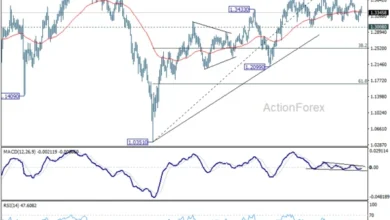
The immediate casualty in the foreign exchange market was the shared European currency. The EUR/USD exchange rate tumbled below the critical 1.11 threshold, plumbing depths not witnessed in over a year. The widening yield differential between US Treasuries and European sovereign debt heavily favored the greenback, as global capital rushed toward dollar-denominated assets offering higher nominal returns.
In Europe, peripheral debt markets presented a contrasting narrative. French government bond spreads relative to German Bunds tightened further over the course of the week, contracting to 153 basis points after having peaked at an alarming 178 basis points on October 22. While this narrowing of spreads offers a measure of relief for fiscal policymakers in Paris, market participants remain acutely aware that the underlying political and fiscal fragility within the Eurozone has not entirely dissipated, even in a week characterized by a relative scarcity of major regional economic releases.
Meanwhile, economic indicators emanating from Asia highlighted persistent resilience, particularly within the export sector of the world’s second-largest economy. Official trade data from China revealed an impressive 35.2% year-on-year surge in exports for October. A significant driver of this expansion was a 15% rise in export prices, which itself was heavily influenced by a dramatic leap in global memory chip prices throughout the year. This inflationary impulse in the technology hardware sector has begun filtering through to downstream electronics prices globally, creating a complex backdrop for international supply chains and consumer goods pricing.
Equities Defy Yield Pressures on AI Enthusiasm
Conventional financial theory suggests that a sharp, sudden spike in bond yields—particularly one accompanied by hawkish monetary policy signals—should create a deeply hostile environment for global equity markets. Higher yields typically increase the discount rate applied to future corporate cash flows, heavily penalizing growth-oriented and technology stocks. Yet, equities defied historical correlations this week, driven primarily by renewed and intense sentiment surrounding artificial intelligence.

Following a sharp sell-off in the wake of recent mid-term elections, the technology sector staged a robust recovery. Beyond the fact that major equity indices were technically oversold heading into the period, investor sentiment received a vital psychological boost from a stellar quarterly earnings report delivered by CoreWeave. The neocloud infrastructure provider had previously been the source of industry-wide jitters regarding capital expenditure sustainability and infrastructure oversupply, making its strong financial performance a welcome reassurance for market participants.
Further momentum was injected into the technology complex by developments surrounding Anthropic. The prominent artificial intelligence lab announced that its highly anticipated initial public offering (IPO), scheduled for the coming Wednesday, was heavily oversubscribed. Given the pervasive anxiety and valuation debates that have dogged the AI sector in recent months, the upcoming market debut is widely viewed by institutional investors as a critical litmus test for broader technology sentiment as the industry approaches the end of the calendar year.
Geopolitical Pressures and the Rollercoaster of Oil Prices
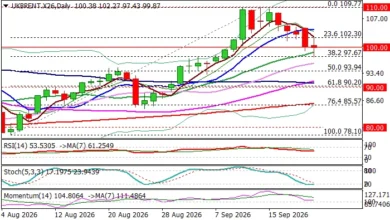
Energy markets endured a volatile week, reacting sharply to a shifting mosaic of geopolitical declarations and fundamental supply data. Crude oil benchmarks experienced a dramatic round-trip, initially slipping below the psychological threshold of USD 90 per barrel before staging a robust recovery to reach USD 96 per barrel by Friday’s closing bell.
The early-week downward pressure on oil prices was catalyzed by diplomatic signals and production metrics. Over the weekend, US President Donald Trump stated publicly that it was "highly unlikely" he would order additional military strikes against Iran, alleviating immediate fears of a major regional conflagration that could severely choke Middle Eastern energy corridors. Concurrently, new data indicated that the Organization of the Petroleum Exporting Countries (OPEC) had successfully increased its collective production output back toward pre-conflict levels, easing concerns over global supply deficits.
However, the fragile tranquility in the energy markets was short-lived. Geopolitical friction reasserted itself on Thursday when Iranian authorities intercepted and halted two oil supertankers. This aggressive maritime maneuver coincided with remarks from President Trump asserting that Washington no longer felt the necessity of pursuing a new diplomatic agreement with Tehran. The combination of renewed supply route disruptions and hardening geopolitical rhetoric swiftly reversed the earlier downward trend, injecting fresh upward pressure into crude oil prices and complicating the global inflation outlook for central bankers.
Looking Ahead: The Week’s Crucial Catalysts
As financial markets transition into the next weekly cycle, attention is pivoting toward several high-stakes events that could dictate asset price trajectories for the remainder of the fourth quarter.
Undoubtedly, the marquee event for global markets will be the Anthropic IPO on Wednesday. The performance of the newly public shares and the secondary market reception will serve as an empirical gauge of risk appetite for high-growth, bleeding-edge technology firms. Any sign of faltering demand could quickly sour broader equity sentiment, whereas a triumphant market debut could solidify the artificial intelligence trade through the holiday season.
On the macroeconomic data front, the analytical focus will shift heavily toward the United States, where market participants will dissect upcoming retail sales figures and the Philadelphia Fed manufacturing index. In Europe, the release of Germany’s ZEW economic sentiment indicator for November will be closely monitored. Because historical indicators—such as the recent momentum in industrial metal prices—point toward a potential rolling over of the global manufacturing cycle, the ZEW survey is frequently utilized by economists as a reliable leading indicator for the direction of broader industrial activity across the continent.
Finally, the geopolitical arena will command significant headlines as China plays host to the annual Asia-Pacific Economic Cooperation (APEC) Summit in Shenzhen. High-level diplomatic engagements are anticipated, with US President Donald Trump, Chinese President Xi Jinping, and Russian leader Vladimir Putin reportedly slated to intersect. The outcomes, tone, and diplomatic optics of these interactions will be parsed meticulously by global strategists seeking clarity on trade policy, geopolitical alliances, and the future stability of international commerce in an increasingly fragmented global economy.