New Inception extortion gang launches large-scale vishing campaign


A sophisticated and aggressive new data extortion syndicate known as Inception has emerged, signaling a significant evolution in the landscape of corporate cyber-espionage and credential harvesting. Since mid-November 2026, the group has captured the attention of global cybersecurity researchers by launching a high-volume, multi-vector campaign specifically designed to compromise single sign-on (SSO) credentials at major multinational firms. While the group claims to have already successfully breached several high-profile organizations, the broader cybersecurity community remains in a state of high alert, meticulously analyzing the group’s infrastructure and operational patterns.
The Rise of the Inception Syndicate
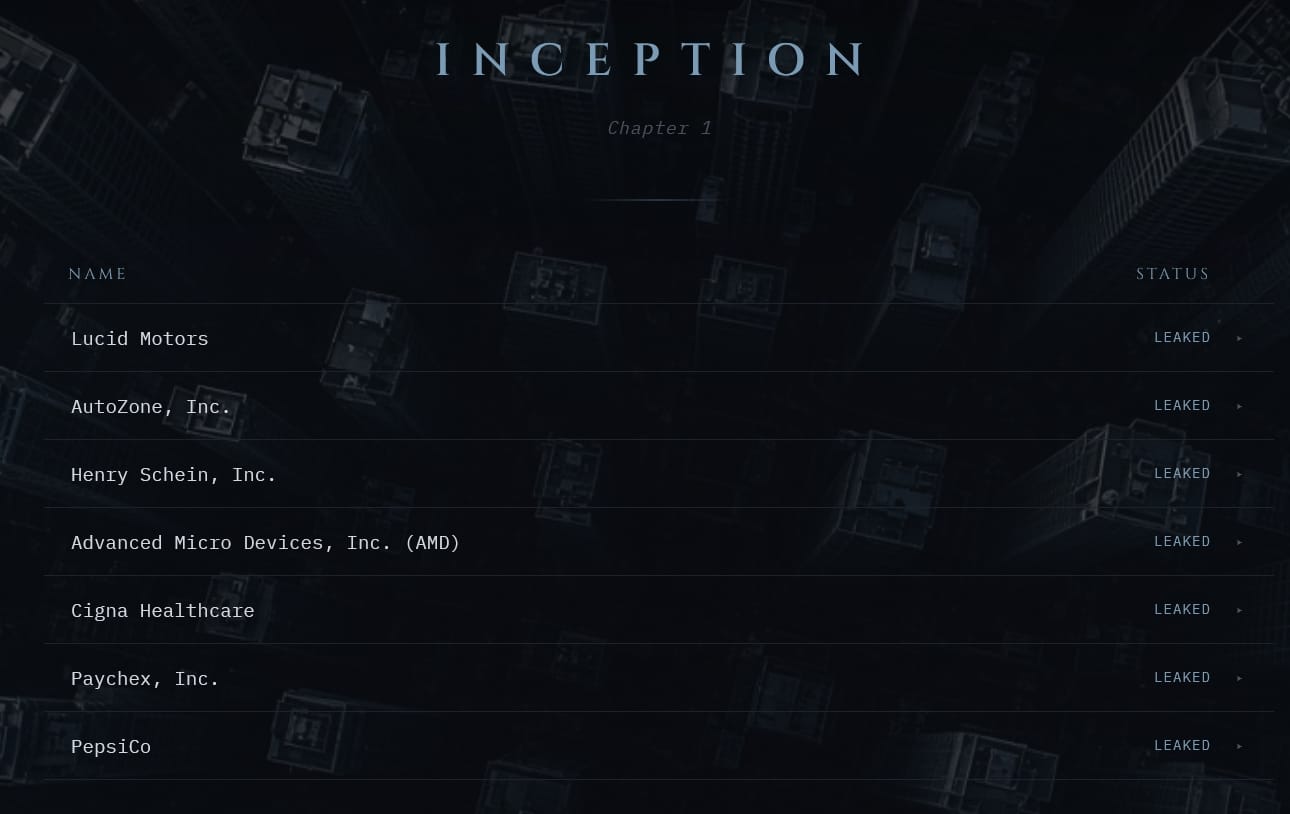
The emergence of Inception was officially documented on November 17, 2026, when the group unveiled its primary data leak site. Upon its debut, the portal listed seven prominent victims, including semiconductor giant AMD, consumer goods leader PepsiCo, healthcare provider Cigna, retailer AutoZone, and automotive manufacturer Lucid Motors. Despite these bold claims, none of the listed organizations have issued public acknowledgments of a confirmed data breach, leading security analysts to treat the claims with a degree of cautious skepticism while prioritizing defensive postures.

Data provided by the security firm ReversingLabs suggests that Inception did not materialize overnight. Researchers have been monitoring the group’s backend activities since late October, observing a methodical build-out of infrastructure that indicates a high level of technical planning and long-term intent. The group appears to be a successor or a rebrand of existing threat actors rather than a group of novices, given the complexity of the domains they have registered and the specific targeting of SSO authentication services.
Chronology of the Campaign
The operational timeline of the Inception group reveals a calculated approach to building its attack surface. The following chronological breakdown highlights the group’s rapid expansion:
- Late October 2026: The O-UNC-053 threat cluster—previously linked to the ShinyHunters extortion group—begins registering a massive fleet of domains.
- Early November 2026: The infrastructure matures, with researchers identifying 21 domains explicitly designed for SSO phishing and 41 additional domains serving as the backbone for the campaign’s command-and-control operations.
- November 17, 2026: The Inception leak site goes live, officially announcing the group’s identity and listing its initial victims.
- November 18–20, 2026: Cybersecurity firms, including Okta and ReversingLabs, publish findings linking the infrastructure patterns of Inception to the previous activities of the O-UNC-053 cluster.
Infrastructure and Tactical Methodology
Unlike traditional ransomware groups that rely primarily on automated malware deployment or bulk email phishing, Inception leverages "vishing"—voice-based social engineering. This approach involves calling corporate help desks or employees, posing as internal IT staff, and directing users to highly realistic, spoofed authentication pages. These portals are designed to mimic legitimate corporate identity providers, most notably Okta and the NetIQ/OpenText Access Manager.

The breadth of this infrastructure is staggering. Investigations have uncovered a sprawling network of domains impersonating an extensive list of global entities, including industry leaders such as Dropbox, Duolingo, Western Union, Indeed, Activision Blizzard, Riot Games, Twitch, Reddit, Nestlé, Anthropic, Nintendo, Starbucks, McDonald’s, Paramount, and NBCUniversal. It is critical to note that the existence of these impersonation domains does not definitively confirm a successful breach of these specific entities; rather, it highlights the immense reach and potential targeting scope of the Inception operation.
The ShinyHunters Connection
A central point of contention in the cybersecurity community is the potential link between Inception and the infamous ShinyHunters group. Following the intervention of international law enforcement—which led to the arrest of several key individuals associated with ShinyHunters in mid-2026—the group’s primary leak site was dismantled.
Okta’s threat intelligence division has been instrumental in mapping the transition, noting that the O-UNC-053 threat cluster continued its activities uninterrupted despite the law enforcement crackdown on its predecessor. According to Okta, the transition from the old ShinyHunters infrastructure to the new Inception brand was seamless, characterized by consistent tactics, techniques, and procedures (TTPs). This pattern of "rebranding" after a period of regulatory pressure is a common phenomenon in the modern cybercrime economy, allowing threat actors to shake off heat while maintaining their core operational capabilities.
Threat Actor Defense and Denial
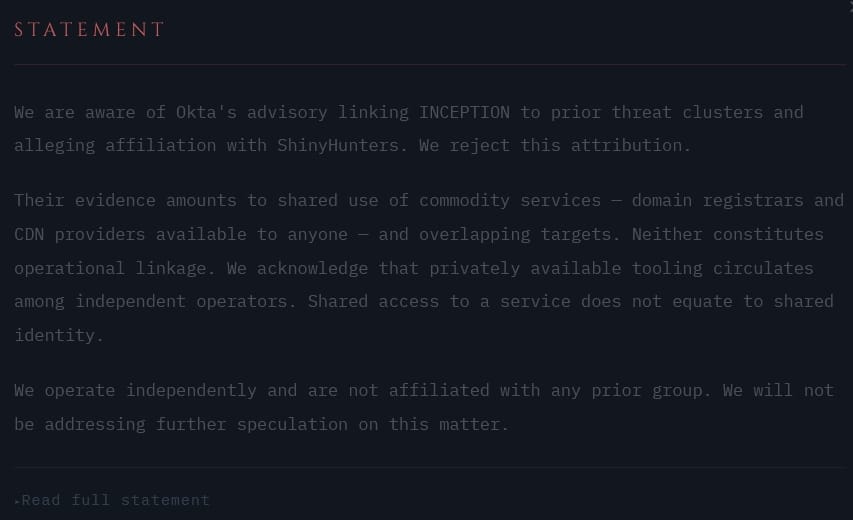
In an unusual move, the Inception group issued a formal statement on its own extortion site, explicitly denying any affiliation with ShinyHunters or other known threat syndicates. The group’s statement argued that the overlap in target lists and the utilization of shared domain registration services and content delivery networks (CDNs) are not indicative of a shared identity, but rather a reflection of the "industry standard" tools used by independent cybercriminals.
"Private tooling circulates among the independent community," the statement read, suggesting that the use of similar phishing templates and infrastructure setups is a result of commodified cybercrime services rather than institutional continuity. While this denial is likely intended to complicate attribution efforts and sow confusion among researchers, it underscores the difficulty of accurately identifying threat actors in a landscape where sophisticated tools are increasingly available as a service.
Security Implications and Recommendations
The emergence of Inception serves as a stark reminder of the vulnerabilities inherent in modern identity management. As companies shift toward centralized SSO providers, these platforms become high-value targets for attackers. A single successful credential harvest via vishing can grant an attacker access to an entire corporate ecosystem, including sensitive cloud environments, internal communication tools, and proprietary data stores.
Security experts, including those at ReversingLabs, emphasize that traditional password-based authentication is no longer sufficient to stop modern, motivated threat actors. The following defensive measures are considered the baseline for organizations seeking to mitigate the risks posed by campaigns like Inception:
- Transition to Phishing-Resistant MFA: Organizations must move away from SMS or push-based multi-factor authentication (MFA) and transition to FIDO2-compliant security keys or passkeys. These methods are inherently resistant to the type of interception and credential relaying that characterizes the Inception campaign.
- Help Desk Verification Protocols: Because Inception relies on human-based social engineering, technical defenses must be bolstered by procedural ones. Organizations should implement strict, multi-step identity verification for all help desk requests, ensuring that employees are who they claim to be before granting access or resetting credentials.
- Log Analysis and Threat Hunting: Security teams should conduct a retroactive audit of all identity provider logs, DNS traffic, and proxy logs dating back to October 21, 2026. Unusual login patterns, especially those originating from unexpected geographic locations or occurring outside of business hours, should be treated as potential indicators of compromise.
- Employee Awareness Training: While technical controls are paramount, the human element remains a significant vulnerability. Periodic training regarding the risks of vishing and the importance of verifying the identity of callers—even those claiming to be from internal IT departments—is essential.
Broader Impact on the Cyber Landscape
The Inception campaign highlights a concerning trend where extortion groups are becoming more specialized and more resilient. By focusing on SSO credentials, these groups are moving up the "value chain" of data theft. Rather than targeting individual endpoints with ransomware, they target the keys to the kingdom.
The potential impact of this campaign is widespread. If even a fraction of the targeted companies fall victim to these phishing efforts, the resulting data exfiltration could lead to catastrophic intellectual property loss, regulatory fines, and long-term damage to consumer trust. As the security community continues to monitor Inception, the focus remains on identifying the remaining infrastructure and proactively notifying the organizations that find their corporate branding being used to facilitate these malicious activities. The evolution of O-UNC-053 into Inception proves that while law enforcement can disrupt specific groups, the underlying threat—the methodology and the personnel—often survives to evolve into more dangerous, better-hidden iterations. Organizations must prioritize identity security now more than ever, as the "new normal" involves threats that can bypass traditional defenses with ease.
Related posts: