Major Software Supply Chain Attack Compromises 178 High-Traffic Websites Including BBC, CNN, and Zoom via Optimizely Vulnerability

In one of the most sweeping software supply chain incidents of the decade, at least 178 major global web destinations unwittingly served malicious malware exploits to their visitors over a 24-hour period. The widespread compromise stemmed from a critical security vulnerability within Optimizely, a prominent industry-standard digital experience platform utilized by enterprises worldwide to customize user interfaces, manage content delivery, and execute real-time A/B testing.
Security researchers revealed that the breach allowed unauthorized actors to silently inject data-stealing malicious JavaScript into the digital infrastructure of heavily trafficked household names, including the BBC, CNN, Equifax, Ledger, and Zoom. The incident has cast an uncomfortable spotlight on the structural vulnerabilities inherent in the modern web ecosystem, specifically highlighting how an overwhelming reliance on third-party vendors and lax implementation of browser-level security controls can expose millions of unsuspecting users to sophisticated cyber threats without a single primary organization’s native servers ever being breached.
The Anatomy of the Optimizely Supply Chain Compromise
The security crisis came to light following a detailed technical analysis published by the cybersecurity firm Report URI. According to Scott Helme, a security researcher at the firm, the malicious JavaScript payload was initially served to visitors across 178 distinct organizational domains on November 16. Rather than relying on a static piece of malicious code, the threat actors demonstrated high levels of operational agility. The payload was continuously rebuilt and re-engineered 26 times over the course of a single day.
This dynamic restructuring delivered a multi-purpose malware kit designed to perform a wide array of illicit activities on a victim’s machine. The integrated toolset was capable of harvesting sensitive payment card data, capturing browser cookies, recording screenshots, and actively monitoring clipboard or browser activity to swap out any legitimate cryptocurrency wallet addresses with those controlled by the attackers.
Compounding the threat, the affected websites served custom-tailored exploit code specifically engineered to target known vulnerabilities in legacy Apple iPhone and iPad devices. Referred to in threat intelligence circles as "DarkSword" and "Coruna," these sophisticated, zero-click exploit kits seamlessly chain together multiple operating system vulnerabilities. Their primary objective is to bypass standard sandbox protections, seize absolute administrative control over outdated mobile devices, and covertly exfiltrate personal data without requiring any overt user interaction.
Chronology of the Incident and Remediation Efforts
The unfolding of the November 16 incident forced both platform operators and downstream corporate clients into a rapid crisis-management posture.
Early Hours of November 16: Unauthorized actors successfully discover and exploit a vulnerability within the Optimizely Experimentation platform. By leveraging compromised administrative permissions or underlying API weaknesses, the attackers inject malicious JavaScript into active customer projects.
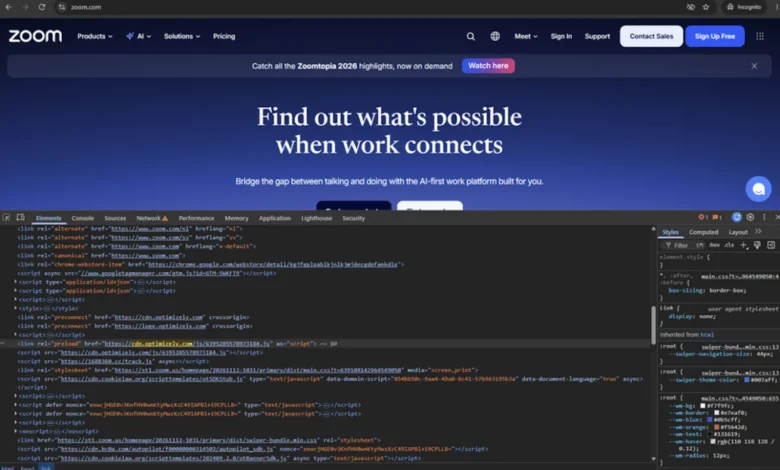
Throughout the Day: The injected scripts begin firing automatically upon page loads across 178 high-profile client websites. The malware payload is dynamically updated 26 times throughout the 24-hour window to evade signature-based detection mechanisms deployed by corporate security tools. Security analysts at Report URI and related monitoring firms detect abnormal external requests and anomalous script behavior originating from trusted Content Delivery Network (CDN) paths.
End of Day, November 16: Optimizely security teams formally identify the unauthorized activity, categorizing it as a security incident wherein an unauthorized party exploited a vulnerability in the platform to append malicious code to customer projects.
Immediate Remediation: Optimizely acts swiftly to contain the breach. The company blocks access to the compromised execution path, rolls out a comprehensive software patch, strips the malicious script injections from all affected customer environments, forcefully terminates active user sessions, revokes compromised authentication tokens, and resets access credentials for all impacted administrative user accounts.
November 17–18: Optimizely implements stringent edge-security controls, including additional inspection layers within Cloudflare, to block any future delivery of malicious payloads. On November 18, the company officially releases an initial incident report (PDF) detailing its technical findings while continuing a comprehensive forensic investigation alongside third-party security experts.
The Mechanics of Third-Party Script Vulnerabilities

The modern web experience is built upon a foundation of extensive third-party integration. Contemporary web properties rarely operate in a vacuum; instead, they rely on dozens of external scripts to manage analytics, user tracking, advertisements, font hosting, and interface customization. According to data compiled in the 2025 Web Almanac by HTTP Archive, the median homepage loads a minimum of 22 distinct JavaScript files.
Because JavaScript runs directly on the end user’s local hardware via the web browser, it possesses sweeping capabilities. It can read, manipulate, and copy almost any piece of information displayed on a screen, alter page layouts, and communicate back to remote command-and-control servers.
The Optimizely platform occupies a particularly sensitive position within this architecture. Zach Edwards, a security researcher at Infoblox and co-founder of the ad-tracking service DecryptAds, explains that Optimizely’s operational model requires its tracking and testing code to be embedded as close to the top of the Document Object Model (DOM) as possible.
"To make the product work as expected, this code is set up to fire immediately on page load, and not restrict rendering behind a consent dialog box," Edwards noted. Because the script executes instantaneously upon landing on a webpage—often bypassing explicit user consent banners due to its technical implementation for A/B testing—the supply chain attack did not require victims to click malicious links or accept tracking prompts. The moment a user loaded a compromised site, the malicious payload executed silently in the background.
The Defense Gap: Content Security Policies (CSPs)
In the wake of the incident, security experts have renewed calls for widespread adoption of Content Security Policies (CSPs). A CSP is an HTTP header that allows site operators to restrict the resources—such as JavaScript, CSS, and images—that the browser is permitted to load for a given page. By explicitly whitelisting authorized domains, a robust CSP can effectively neutralize supply chain attacks; even if a trusted vendor’s script repository is compromised, the browser will refuse to execute any newly injected external domains.
However, the implementation metrics gathered by Report URI reveal a concerning industry-wide complacency. An analysis of the 178 organizations impacted by the Optimizely incident exposed a glaring lack of defense-in-depth measures:
- 68 of the affected websites possessed no Content Security Policy whatsoever.
- 50 of the websites utilized a CSP, but their configuration was overly permissive, inadvertently allowing both the malicious malware payload and subsequent data theft to execute.
- Only 24 of the affected sites—representing a mere 15 percent of the total cohort—had deployed CSPs configured strictly enough to completely block the malicious payload.
This localized vulnerability mirrors a broader global trend. According to data from crawler.ninja, a daily scanning utility operated by Scott Helme that analyzes the top one million websites on the internet, overall CSP deployment among the web’s busiest properties hovers at a meager 10 percent.
Industry analysts point out that marketing departments and commercial pressures often drive these gaps. Strict CSPs require rigorous maintenance and continuous updates to ensure legitimate tracking, advertising, and user-experience tools do not break. Consequently, many organizations prioritize operational convenience and marketing analytics over rigid security enforcement, leaving their users vulnerable when a third-party vendor is compromised.
Broader Implications and the Changing Face of Web Security
While the direct financial toll of the Optimizely incident was relatively modest—Report URI estimates that the attackers successfully stole approximately $7,500 in virtual currency alongside an undisclosed quantity of payment card records—the strategic implications are severe.
Security professionals emphasize that the incident represents a chilling validation of the "Wild West" nature of contemporary web development. Organizations routinely execute millions of lines of third-party code without internal validation of its real-time behavior. Furthermore, the integration of generative artificial intelligence and automated payload generation tools by cybercriminals means that threat actors can rapidly iterate, adapt, and scale attacks once an initial foothold is secured within a trusted third-party pipeline.
End-user defense strategies have also shifted in response to these systemic risks. While traditional advice urged consumers to maintain updated antivirus software and firewalls, security authorities increasingly view modern ad-blocking and script-blocking software as the primary frontline defense for everyday web browsing. Tools capable of neutralizing unauthorized third-party scripts provide an essential barrier against drive-by compromises that bypass enterprise-level server security.
As the digital economy continues to lean heavily on interconnected SaaS providers, the Optimizely incident serves as an urgent reminder that an organization’s security posture is only as resilient as its weakest third-party dependency. Industry leaders hope the event will serve as a catalyst for sweeping adoption of stricter Content Security Policies and a fundamental re-evaluation of how third-party code is vetted and executed across the global web.
Related posts: