Optimizing Transformer Inference Through Operator Fusion and Specialized Hardware Kernels


Modern transformer models, the backbone of contemporary artificial intelligence, are constructed from a standardized set of operations: linear projections, attention mechanisms, normalization layers, activation functions, and residual connections. While the mathematical foundations of these models are conceptually straightforward, their practical execution on modern hardware—specifically Graphics Processing Units (GPUs)—frequently encounters a critical performance bottleneck: the overhead associated with moving data between the processor and high-bandwidth memory (HBM). A naive implementation of a transformer layer often launches a separate accelerator kernel for each distinct operation, forcing the system to write intermediate tensors to memory and read them back repeatedly. This "memory-bound" execution pattern means that the hardware spends significantly more time shuttling values across the bus than performing actual arithmetic calculations.
The Engineering Challenge: Memory Bandwidth vs. Compute
The transition from academic research to production-scale deployment has necessitated a fundamental shift in how neural networks are executed. In the early stages of transformer development, researchers prioritized mathematical correctness and code readability. However, as model sizes exploded—moving from millions to hundreds of billions of parameters—the limitations of eager execution became apparent. Every kernel launch incurs a latency cost, and every read/write cycle to HBM consumes power and time.
This problem is particularly acute in decoder-only architectures like GPT-4, Llama 3, and Qwen. Within a single transformer block, operations such as the SwiGLU activation—which involves gated projections, SiLU activations, and element-wise multiplications—can trigger a sequence of fragmented operations. If implemented without optimization, each step in the SiGLU block requires a separate round-trip to global memory. Consequently, the computational throughput is throttled not by the GPU’s TFLOPS (Tera-Floating Point Operations per Second) capacity, but by the memory bandwidth limitations of the hardware.
Evolution of Optimization: From Eager Execution to Fusion
The industry has responded to these bottlenecks through a strategy known as operator fusion. This technique reconfigures the computational graph to keep intermediate values within the GPU’s on-chip registers or L1/L2 caches, thereby avoiding the costly round-trips to HBM. By combining multiple operations—such as combining a residual addition with an RMS normalization layer—into a single kernel, developers can drastically reduce the memory footprint of a model during inference.
This optimization trajectory reached a significant milestone with the introduction of FlashAttention in 2022. Traditional attention mechanisms, as originally described in the seminal "Attention Is All You Need" paper, required the explicit materialization of the $T times T$ attention score matrix (where $T$ is the sequence length). For long-context models, this matrix grows quadratically, consuming massive amounts of memory and stalling the pipeline. FlashAttention revolutionized this by tiling the computation, processing queries, keys, and values in small blocks that fit entirely within the GPU’s high-speed static random-access memory (SRAM). By avoiding the materialization of the full attention matrix, FlashAttention not only speeds up inference by several factors but also enables the processing of significantly longer sequences than was previously possible on the same hardware.
Paged Attention: Solving the KV Cache Bottleneck
As large language models moved into production serving environments, a new challenge emerged: the Key-Value (KV) cache. During the generation phase of inference (the "decode" phase), the model must store the history of tokens to compute the next word. Because the length of a sequence is unpredictable and requests arrive concurrently, allocating memory for the KV cache traditionally led to extreme fragmentation. If a system reserved a fixed, large block of memory for every request, it quickly ran out of capacity; if it allocated too little, the system would crash.
The industry-standard solution to this, popularized by the vLLM project, is Paged Attention. Borrowing a concept from traditional operating system design, Paged Attention divides the KV cache into fixed-size blocks. This allows the system to manage memory non-contiguously. A "block table" maps the logical sequence of tokens to these physical memory blocks. The primary advantage is two-fold: it eliminates internal and external memory fragmentation, and it allows for memory sharing between sequences (such as in parallel sampling or prompt caching), which can improve memory utilization by nearly 100%. This innovation has been instrumental in the rapid adoption of high-concurrency LLM serving platforms.
The Role of Compiler Technology: torch.compile and Beyond
The current frontier in model optimization is the shift toward automated compilation. Tools such as torch.compile, introduced in PyTorch 2.0, leverage the TorchInductor backend to automate the process of graph optimization. Instead of requiring developers to manually write highly complex Triton or CUDA kernels, torch.compile captures the model’s execution graph, analyzes the dependencies, and automatically performs operator fusion, buffer reuse, and kernel selection.
This compilation process effectively bridges the gap between ease of development and peak hardware performance. When developers use torch.compile in conjunction with mode="reduce-overhead", the compiler further attempts to wrap the generated execution graph into CUDA Graphs. CUDA Graphs allow for the recording of a sequence of operations and their subsequent replay as a single unit, which drastically minimizes the "CPU-to-GPU" latency that can plague small-batch inference tasks.
Strategic Implications for Model Deployment
The implications of these optimizations for the broader tech landscape are significant. By reducing the memory and compute overhead of transformer models, these techniques have democratized access to high-performance AI. Smaller organizations can now serve models that previously required massive, multi-GPU clusters, and cloud providers can significantly increase the "tokens per dollar" metric for their inference endpoints.
However, these optimizations are not a "silver bullet." They introduce complexity regarding numerical stability and portability. Because fusion changes the order of operations and the way floating-point numbers are rounded, the output of a compiled model may differ slightly from its eager-mode counterpart. Furthermore, these kernels are often hardware-specific; a kernel optimized for an NVIDIA H100 GPU may not be optimal, or even functional, on an AMD Instinct or an Apple Silicon chip.
Future Outlook: The Next Phase of Efficiency
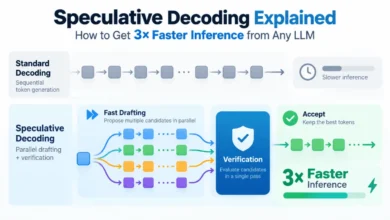
As the industry looks toward the next generation of architectures—including Mixture-of-Experts (MoE) models and speculative decoding—the importance of these low-level optimizations will only grow. Speculative decoding, for instance, requires running a small "draft" model to predict tokens before verifying them with a larger "target" model. The efficiency of this process relies entirely on the ability of the underlying infrastructure to switch kernels and manage memory with microsecond-level latency.
The convergence of algorithmic innovation (like FlashAttention) and compiler-level automation (like torch.compile) suggests a future where the distinction between "research code" and "production code" continues to blur. While the underlying mathematics of the transformer remains constant, the mechanical efficiency with which these models interact with silicon is undergoing a profound transformation. For engineers and researchers alike, the focus has shifted from merely training larger models to ensuring that those models can be deployed with the maximum possible efficiency, ultimately determining which AI systems will be economically viable at scale.