The Rapid Deployment of Enterprise AI Outpaces Critical Data Governance Foundations Across Global Organizations

The modern corporate landscape is currently witnessing a paradoxical trend where the adoption of generative artificial intelligence is moving at a velocity that significantly outstrips the maturity of the underlying data security frameworks. According to the recently published State of Microsoft 365 Governance Report 2026, released on September 10 by security governance firm Syskit, the vast majority of organizations in the United States and the United Kingdom are prioritizing AI implementation over the fundamental cleanup of their digital permissions architecture. This gap between innovation and security is creating a systemic vulnerability that exposes sensitive corporate data to unauthorized access on an unprecedented scale.
The research, which surveyed 327 IT and security decision-makers at organizations with 500 or more employees, reveals that 76% of firms have already deployed or are actively piloting enterprise AI tools, such as Microsoft 365 Copilot. While these tools promise a revolution in productivity, they rely on existing data access permissions to function. The report highlights that only 43% of these organizations conducted a comprehensive review of their internal permission structures and oversharing risks prior to enabling AI features. The remaining 57% proceeded with either incomplete assessments or no review at all, essentially granting AI agents access to entire data repositories without verifying who—or what—is permitted to see specific information.
The Illusion of Control and the Reality of Risk
A primary finding of the Syskit report is the significant discrepancy between an organization’s perceived level of control over AI agents and their actual technical oversight. While 91% of respondents expressed confidence in their ability to monitor active AI agents and their scope of access, the operational reality suggests a lack of formal policy enforcement. Only 22% of surveyed organizations have implemented a formal, documented policy defining the specific data parameters that AI agents may access.
More concerning is the "set-and-forget" mentality regarding agent permissions. One in ten organizations (9%) reported that they allow AI agents to inherit the full permissions of the user who deployed them. This practice creates an expansive, high-privilege environment where a single user’s broad, unmanaged access rights effectively become the baseline for an AI’s reach. Should that user’s account be compromised, or should they simply query the AI for information they should not legally or operationally possess, the AI becomes a conduit for potential data exfiltration or internal leakage.
Toni Frankola, CEO of Syskit, emphasized the gravity of this transition. "AI agents have effectively removed the friction that once made accidental access to sensitive files less likely," Frankola noted. "Copilot and other AI tools can now surface content based on existing, often outdated permissions, including files and sites that were shared broadly years ago and have not been reviewed since. What stands out in this data is that so few organizations can check what their AI can actually reach before switching it on, and fewer still plan to spend anything on finding out. Reviewing permissions is unglamorous work, but it has become the deciding factor in whether an AI rollout is safe."
The Persistent Legacy of Misconfiguration
The security challenges identified in the report are not entirely new; rather, they are legacy issues that have been amplified by the introduction of AI. Microsoft 365 environments are frequently plagued by "permission creep," where access rights are granted for specific projects but never revoked, and "content sprawl," where data resides in forgotten corners of the cloud.
The statistical breakdown of current exposure is significant:
- 41% of organizations maintain SharePoint sites that remain accessible to all staff without restriction.
- 35% of organizations acknowledge that files belonging to former employees remain available to active staff members.
- 33% of organizations have files shared with the "Everyone" group, a common misconfiguration that essentially makes the content public within the corporate tenant.
The leading governance challenge, however, is the proliferation of "orphaned" content. Approximately 47% of respondents identified teams, groups, and sites that lack an accountable owner as a primary concern. When a site loses its owner, there is no one to manage the lifecycle of the data, review access rights, or oversee the deletion of stale information. Because AI tools are designed to index and search across the entire tenant, they can access these orphaned silos with the same authority as any other file, effectively turning unmanaged data into a significant security liability.

Compliance and the Auditability Gap
The report highlights a growing tension between executive confidence and the actual technical ability to prove compliance. When asked about their capacity to audit access to sensitive data, 83% of participants claimed they knew exactly who had access to specific files at any given moment. However, when asked to provide a complete access report for an external auditor within one hour, only 4% were able to do so. A majority—55%—admitted they would require a day or longer to produce the necessary documentation.
This disconnect suggests that while organizations believe they have visibility, they lack the tools or the automation required to translate that visibility into actionable reporting. In the event of a regulatory audit or a post-incident forensic investigation, the delay in producing such data could result in significant fines and extended periods of uncertainty regarding the scope of a data breach.
A Two-Year Chronology of Escalating Incidents
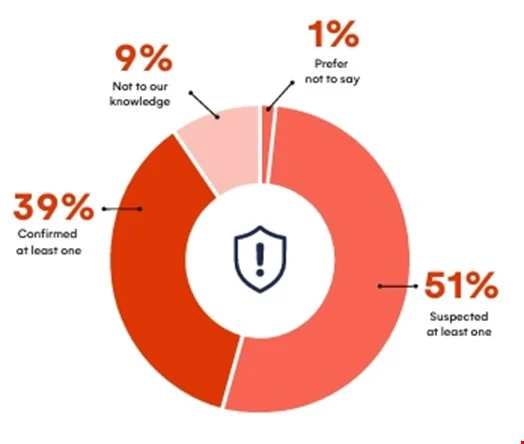
The risk is not merely theoretical. The report identifies that 90% of organizations have experienced or suspect they have experienced a security incident linked to misconfiguration or over-permissioned access within the last two years. Of that group, 39% have confirmed such an incident.
The timeline of these issues often begins with rapid cloud migration or the adoption of collaborative features without a corresponding update to governance policies. Following this, organizations often experience a surge in "shadow IT" or unmanaged data sprawl. The recent introduction of generative AI serves as the final catalyst, where these latent, long-standing misconfigurations are suddenly exposed by automated search and synthesis engines.
The implication is clear: the threat vector has shifted from the user manually navigating to a sensitive file to an AI agent automatically surfacing it. This evolution requires a shift from manual security management to automated, proactive governance.
Implications for Future Security Strategies
The broader impact of these findings suggests that the next phase of the AI gold rush will be defined by a "re-governance" movement. As organizations realize that AI is only as secure as the data it accesses, security leaders will be forced to prioritize the cleanup of M365 environments. This includes:
- Automated Lifecycle Management: Implementing systems that automatically identify and archive orphaned teams and sites, thereby reducing the "attack surface" of the corporate tenant.
- Zero-Trust Access Models: Shifting away from broad permission settings to a granular, least-privilege model that treats AI agent access as a distinct security layer.
- Continuous Compliance Auditing: Moving beyond annual or quarterly reviews to continuous monitoring of permissions, ensuring that any deviation from the established policy is flagged in real-time.
The Syskit report serves as a stark warning to the enterprise sector: the acceleration of AI adoption is not a replacement for security hygiene, but rather a compelling reason to accelerate it. As organizations continue to integrate large language models and intelligent agents into their workflows, the cost of inaction regarding permissions and data governance will likely rise. The "unglamorous work" of auditing access rights, as identified by Frankola, is no longer a secondary administrative task—it is now a primary pillar of enterprise security and risk management.
For many organizations, the next 12 to 18 months will likely be characterized by a difficult balancing act: maintaining the momentum of AI-driven productivity while simultaneously retrofitting their data architecture to prevent the catastrophic exposure of sensitive intellectual property, personal identifiable information (PII), and proprietary corporate data. The data provided by Syskit indicates that the window for addressing these vulnerabilities before they manifest as high-profile security incidents is closing rapidly. Organizations that fail to bridge the gap between AI capability and data control risk turning their most powerful productivity tool into their greatest security liability.