Senate Blocks Landmark Clarity Act, Dealing a Major Blow to Republican-Led Cryptocurrency Regulation Efforts

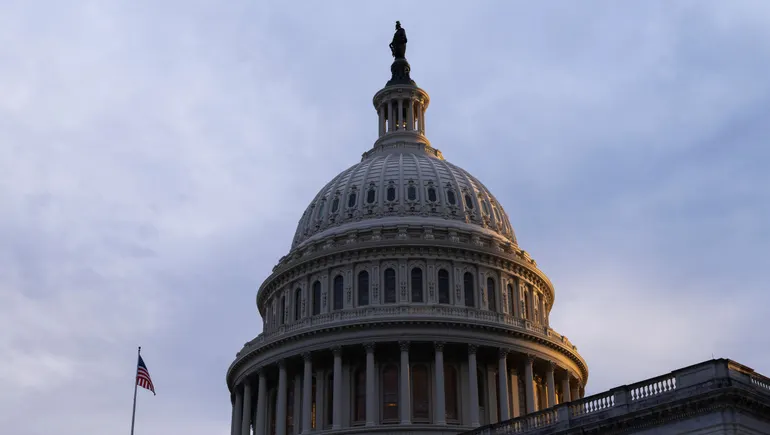
WASHINGTON — In a legislative showdown that underscores deep partisan divisions and ethical concerns surrounding digital assets, the United States Senate on Tuesday blocked consideration of the Clarity Act. The 50-49 vote effectively dashes, at least for the foreseeable future, the Republican-led campaign to establish a comprehensive federal framework for regulating cryptocurrencies and digital tokens.
The measure fell short of the requisite 60 votes needed to advance. A unified Democratic caucus voted against the bill, joined by a handful of high-profile Republicans, including Sens. Josh Hawley of Missouri, Susan Collins of Maine, Jerry Moran of Kansas, and Thom Tillis of North Carolina.
While Sen. Tillis subsequently filed a motion to recommit—a procedural maneuver that theoretically leaves the door open for the bill to return to the Senate floor—such a prospect remains vanishingly remote. Senators are scheduled to leave Washington in early October for the final stretch of the campaign trail ahead of November’s midterm elections, a political crucible widely expected to rebalance the scales of power in both chambers of Congress.
A Long and Contentious Legislative Road
The demise of the Clarity Act marks the culmination of months of grueling, high-stakes negotiations. A previous version of the bill successfully cleared the House of Representatives last year, raising hopes among digital asset proponents that the United States was finally poised to replace a patchwork of state laws and aggressive agency enforcement with clear federal rules.
However, the Senate proved to be a formidable legislative roadblock. The debate shifted continuously, ensnared by competing financial interests, systemic risk fears, and intense partisan wrangling over ethics.
As early as June, the legislative battle centered intensely on the issue of stablecoin yield. Critics and banking trade groups argued fiercely that rewards offered on stablecoin balances would siphon vital capital out of traditional community banks, potentially triggering widespread deposit flight. In response, a bipartisan compromise was crafted by Sen. Tillis and Sen. Angela Alsobrooks (D-MD). Their language barred crypto firms from issuing rewards on stablecoin balances that were deemed "economically or functionally equivalent" to interest-bearing bank deposits.
Further refined text went a step further, granting the Treasury secretary temporary authority to restrict stablecoin rewards if community banks demonstrated measurable deposit flight—a clause slated to sunset after 18 months. Yet, even as this compromise satisfied some traditional banking advocates, new and more explosive controversies quickly overshadowed the text.
The Ethics Debate and Presidential Entanglements
In the final weeks leading up to the vote, the legislative focus shifted dramatically toward executive ethics and potential conflicts of interest. Central to the controversy was President Donald Trump, who publicly reported $1.4 billion in income from his family’s various cryptocurrency business ventures over the previous year.
Democrats seized on these disclosures, pushing aggressively for tighter guardrails to prevent high-ranking government officials from personally profiting off the very regulatory frameworks they help shape. Senate Democrats labeled the legislative push a "charade," arguing that the proposed rules were custom-built to protect presidential wealth rather than everyday investors.
In a last-minute scramble to salvage the bill, Republicans released updated ethics rules just days before the vote. The revised text would have empowered state attorneys general to ban public officials from issuing, sponsoring, or maintaining a significant financial interest in digital assets. Furthermore, the rules proposed penalizing cryptocurrency exchanges that listed any digital asset carrying a forbidden connection to a public figure.
Under these proposed ethical restrictions, covered officials would have been forced to either divest their crypto holdings entirely or place them into a qualified blind trust. Crucially, however, the restrictions contained a glaring carve-out: they did not extend to Trump’s adult sons, who actively manage the family’s primary crypto ventures.
This loophole drew immediate condemnation. The advocacy group Democracy Defenders Action decried the ethics provisions as fundamentally flawed, arguing that the legislation would afford the Trump family ample time to restructure their corporate holdings to secure unprecedented financial windowns.
Simultaneously, a coalition of state-level regulators mobilized against the bill. New York Attorney General Letitia James, joined by more than a dozen other state attorneys general, sent a sharp letter to the Senate Banking Committee on Monday. The state prosecutors warned that the Clarity Act would severely undermine their jurisdictional authority, ultimately stripping them of the legal tools necessary to protect local consumers and investors from widespread crypto fraud and market manipulation.
Fallback on Regulators: SEC and CFTC Take the Reins
With the Clarity Act officially stalled, the regulatory landscape for digital assets remains in a state of administrative limbo. Market participants and legal experts note that federal oversight will now default back to existing regulatory bodies—principally the Securities and Exchange Commission (SEC) and the Commodity Futures Trading Commission (CFTC)—which must navigate the burgeoning sector using legacy authorities.
The SEC recently proposed targeted rules designed to help early-stage startups raise capital through digital tokens without immediately triggering onerous securities regulations. Meanwhile, the leadership of the CFTC has repeatedly asserted that the agency possesses adequate statutory authority to establish and enforce a functional digital asset rulebook.
Yet, legal scholars and industry analysts warn that administrative rulemaking lacks the permanence and statutory armor of an act of Congress.
"While regulatory agencies can promulgate rules, those frameworks are inherently less stable and permanent than legislation passed by Congress," Austin Campbell, an adjunct professor at New York University, told Bloomberg following the vote.
Without statutory clarity from Capitol Hill, the U.S. digital asset ecosystem risks falling back into the contentious legal battles of the past. The central ambiguity—precisely which digital assets qualify as securities—remains unresolved, threatening to reignite the wave of aggressive, Biden-era enforcement actions that defined the early 2020s. In the absence of clear statutory definitions, federal and state courts will likely continue to shape crypto policy on a case-by-case basis.
Industry Reactions and International Implications
Cryptocurrency advocates and institutional investors expressed deep frustration over the Senate’s inaction, though many maintained a long-term view of inevitable reform.
Brian Dixon, chief executive of Off the Chain Capital, argued that the overarching trajectory of digital asset regulation is a matter of timing rather than ultimate destination. "We are going to get regulatory clarity; it’s simply a question of the timeline," Dixon noted.
Nevertheless, market analysts warn that the legislative setback could immediately chill corporate activity, leading to a temporary slowdown in mergers, acquisitions, and institutional capital deployment within the domestic crypto sector.
Patrick Witt, executive director of the Trump administration’s council of advisers for digital assets, offered a blistering assessment of the vote, labeling the bill’s defeat "a major disappointment and, I believe, a failure of American leadership."
Writing on social media platform X, Witt cautioned that legislative inaction carries profound geopolitical consequences. "It increases the risk that the standards that global financial markets adhere to in the future will be those of Brussels or Beijing, rather than Washington and New York," he warned.
As Washington lawmakers scatter to their respective home districts ahead of the midterm elections, the future of American digital asset policy hangs in the balance. Until a new Congress convenes next year, the multi-trillion-dollar cryptocurrency market will continue to navigate a fractured landscape defined by competing federal agencies, wary state regulators, and persistent judicial oversight.