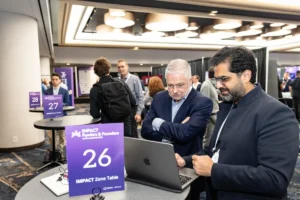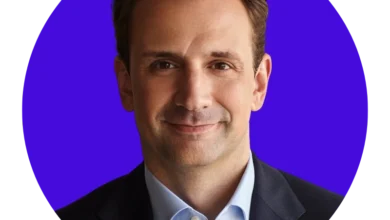
The third day of the Stellar Meridian conference in Lisbon served as a definitive declaration of intent for the Stellar Development Foundation (SDF) and its ecosystem: the era of mere experimentation with blockchain is ending, replaced by an aggressive push toward operational utility. Denelle Dixon, CEO of the Stellar Development Foundation, addressed attendees with a clear objective: to transition the approximately $5 billion in real-world assets (RWAs) currently residing on the Stellar network from passive, yield-bearing vehicles into active components of the global financial plumbing. For Dixon, the goal is to see these assets utilized at scale as collateral in repo markets, lending protocols, and sophisticated financial instruments that mirror, and eventually surpass, traditional banking capabilities.
The Evolution of Asset Utility: From Yield to Collateral
Dixon’s strategic framework for the Stellar ecosystem categorizes assets into three distinct tiers: "Useful," "Usable," and "Used." The first tier, Useful assets, already generates yield, providing an entry point for investors. The second tier, Usable assets, represents the current frontier; these are instruments capable of functioning as collateral or within repo and lending markets. This transition requires significant infrastructure development, regulatory alignment, and institutional trust. Finally, "Used" assets are those that have achieved full integration, facilitating daily economic activity.
This hierarchy underscores a philosophy that has defined the SDF since Dixon took the helm in 2019. While a significant portion of the broader cryptocurrency industry pivoted toward speculative meme coins and high-volatility assets, the Stellar team maintained a rigorous focus on institutional-grade payments and regulated asset issuance. "If we can’t do everything that you can do in traditional finance and then some, there’s not a lot of point to it," Dixon noted during her keynote, emphasizing that the network’s value proposition lies in its ability to replicate the stability and reliability of legacy finance while adding the efficiency of blockchain technology.
Real-World Applications: Figure and Etherfuse
The practical application of this vision is already taking shape through partnerships with firms like Figure and Etherfuse. Figure’s YLDS product serves as a prime example of institutional-grade tokenization. Karl Samsen, who leads the YLDS business at Figure, explained that the product is structured as a face-amount certificate—a debt security registered with the U.S. Securities and Exchange Commission (SEC).
Unlike typical stablecoins that may lack transparency or regulatory oversight, YLDS operates with a clear legal framework. It functions similarly to a stablecoin in terms of transferability—permitting transactions between holders on a pre-approved list—but pays yield that is credited daily and distributed monthly. Since its launch on Stellar in May, the product has demonstrated the efficiency of the network, allowing fintech firms and neobanks to onboard in approximately 90 seconds and swap USDC for YLDS without incurring fees. The firm is currently planning to launch a permissionless version, wYLDS, to further expand accessibility.
Simultaneously, Etherfuse is addressing the demand for local currency stability in emerging markets. CEO Dave Taylor described the company’s "stablebonds," which are yield-bearing tokens backed by local government debt held by regulated custodians. In Mexico, for instance, Etherfuse tokenizes Cetes—short-term treasury bills—held at BBVA. This model allows users to access government-backed yields via blockchain, a significant improvement over traditional, high-friction banking processes. With approximately $50 million moving through the platform monthly, Etherfuse demonstrates that demand for regulated, yield-bearing assets transcends geographical boundaries.
The Marshall Islands Case Study: Redefining Sovereign Finance
Perhaps the most compelling evidence of tokenization’s potential is the Marshall Islands’ adoption of the USDM1 sovereign bond. According to Jordan Goldman, president of M1X Global, the bond is issued directly on Stellar and backed one-to-one by U.S. Treasuries held by a trustee under New York law. For a nation spread across an expansive ocean area, this technology is transformative.
Ambassador Charles Paul recounted the historical difficulties of managing government distribution, which previously involved physically transporting cash via boat to remote islands with as few as 20 residents. Today, the government distributes aid through USDM1, allowing residents to purchase essential goods like groceries and electricity seamlessly.
For institutional investors, the implications are equally profound. Goldman compared USDM1 to a Brady bond, noting its compatibility with standard repurchase agreements. In a recent stress test, the asset rolled 72 times at hourly intervals, including overnight and weekend periods, with a 2% haircut and pricing at SOFR plus 10 basis points. In traditional finance, such a repo transaction would typically take 24 to 48 hours to settle. By enabling 24/7 collateral movement, Stellar provides a liquidity advantage that traditional banking systems, tethered to business-day cycles, simply cannot match.
Institutional Readiness: Moving Beyond the Sandbox
The transition from pilot programs to production-level deployment is the current primary focus for financial institutions, according to Kurt Fields, an EY partner specializing in blockchain and digital assets. Fields observed that over the past few months, bank clients have ceased asking if blockchain is viable and started asking how to scale it. The challenge has shifted from technological validation to organizational integration—aligning risk management, compliance, legal departments, and product teams to support live, large-scale deployments.
Dixon corroborated this, noting that when banks approach the SDF, they often lack a clear understanding of the specific problems they aim to solve. The Foundation’s role has become one of advisory, guiding these institutions toward critical metrics such as compliance, uptime, and integration ease. With a decade of 99.99% uptime and built-in features like clawback and freeze controls, Stellar positions itself as a natural extension of existing banking rails.
When asked what bank leadership should prioritize in the next 90 days, the consensus among speakers was clear: identify the specific pain point before implementing the technology. Whether it is speeding up treasury movements or earning yield on idle capital during weekends, blockchain is a tool for problem-solving, not a solution in search of a problem.
Future Outlook: 2027 and the Path to Ubiquity
Looking toward 2027, the industry leaders at Meridian presented an ambitious roadmap. Dave Taylor of Etherfuse aims to expand into 40 countries, focusing on regions with high remittance volumes and limited financial access, with the goal of enabling cross-border payments that bypass the dollar entirely. RedSwan’s Ed Nwokedi highlighted the potential for tokenizing commercial real estate and creating profit-sharing structures for institutional funds, offering large property owners a new route to liquidity that is currently unavailable in private markets.
Perhaps most significantly, Denelle Dixon confirmed that the SDF has been working for months to integrate the Depository Trust and Clearing Corporation (DTCC) tokenization service with the Stellar network, with a target connection date in the first half of 2027.
The convergence of regulatory compliance, institutional infrastructure, and real-world utility suggests that the "Stellar model" is gaining momentum. By prioritizing legal certainty and focusing on the unglamorous but vital task of improving financial plumbing, the SDF and its partners are building a foundation that could fundamentally reshape how assets are held, traded, and leveraged globally. As the industry moves toward 2027, the focus will likely remain on the "Used" tier of Dixon’s framework—proving that in the world of finance, the most successful innovations are those that quietly, efficiently, and securely power the global economy.