Fed Rate Hike Signals Deeper Shift As Markets Navigate Momentum Unwind And Musk Teases Tesla SpaceX Merger

The Federal Reserve implemented a 25-basis-point interest rate hike at its September 2026 Federal Open Market Committee (FOMC) meeting, signaling to global financial markets that a "one and done" monetary policy approach is off the table. Following the unanimous committee vote, policymakers outlined a hawkish trajectory characterized by persistent anti-inflation resolve, prompting a significant reassessment of borrowing costs across asset classes. Concurrently, equities are grappling with a sharp rotation away from the momentum trade, while corporate headlines are dominated by Elon Musk hinting at a potential merger between Tesla and SpaceX.

The FOMC Policy Shift: Beyond the 25-Basis-Point Hike
The decision to raise the federal funds rate by a quarter-point met prevailing market expectations, yet the deeper implications of the September gathering stem from forward-looking guidance rather than the immediate policy adjustment. By examining the updated Summary of Economic Projections (SEP), the evolving balance of risk language, and official policy framing, analysts note that monetary authorities are prepared to enact at least one additional rate hike before the conclusion of the year.
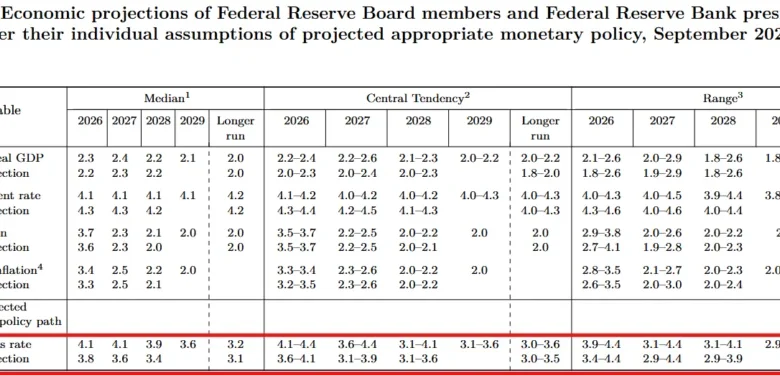
The SEP median federal funds ending rate for 2026 is now positioned at 4.1%, a projection that directly implies another quarter-point tightening cycle lies ahead. The range for the 2026 year-end rate tightened between 3.9% and 4.4%, demonstrating robust, albeit not entirely unanimous, conviction among voting members. More critically, the 2027 median projection remains anchored at 4.1%, marking a sharp upward revision of half a percentage point from June estimates of 3.6%.
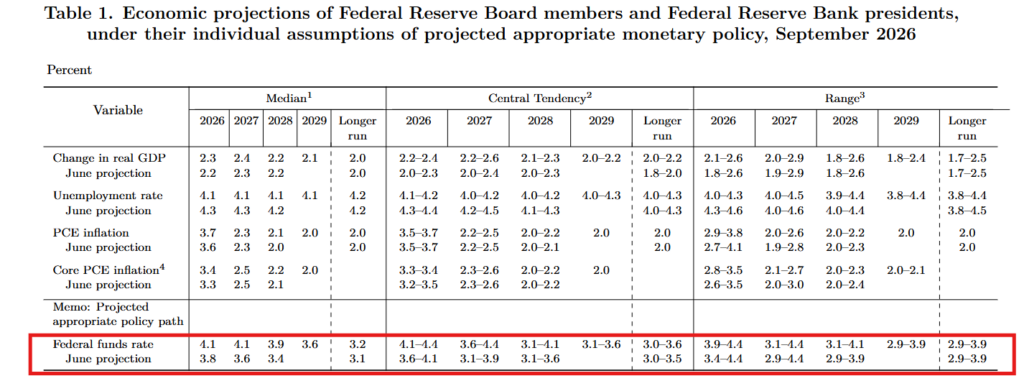
By recalibrating these forecasts, the FOMC effectively erased the timeline for anticipated rate cuts that markets had priced in earlier in the year. Under the updated projections, monetary easing is not scheduled to commence until 2028. This represents a decisively more aggressive stance than Wall Street futures had anticipated, catching fixed-income investors off guard and altering the valuation models for growth-oriented equities.
Unanimous Resolve and the Balance of Risks
A notable shift in the September FOMC meeting was the unanimity of the vote. Just six weeks prior, three dissenting members advocated for immediate policy tightening, but the latest gathering resulted in a unified consensus. Despite the release of relatively benign core inflation data in preceding weeks, the official FOMC statement maintained an unyielding tone regarding the central bank’s commitment to returning inflation to its 2% target.

The statement concluded with an explicit declaration: "The Committee will deliver price stability." Notably absent from the communication was any cautionary hedging language that would characterize the move as an isolated defensive action. Furthermore, the labor market assessment was framed in neutral rather than cautious terms, granting the committee greater strategic flexibility to concentrate entirely on price pressures. Taken together, the language and projections point toward a sustained series of tightening maneuvers rather than a solitary adjustment.
Market observers have similarly focused on the framing of risks by key policymakers. In his opening remarks, leadership emphasized that the policy action would secure a "timelier return to our target." The deliberate emphasis on a "timelier" timeline—a rhetorical step up from prior commentary—underscores an intensifying institutional resolve to suppress lingering inflationary impulses. With employment metrics and general economic growth demonstrating resilience, policymakers retain ample macroeconomic cover to prioritize price stability over growth accommodation.
Momentum Trade Unwind and Equity Market Dynamics
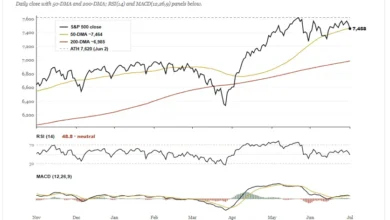
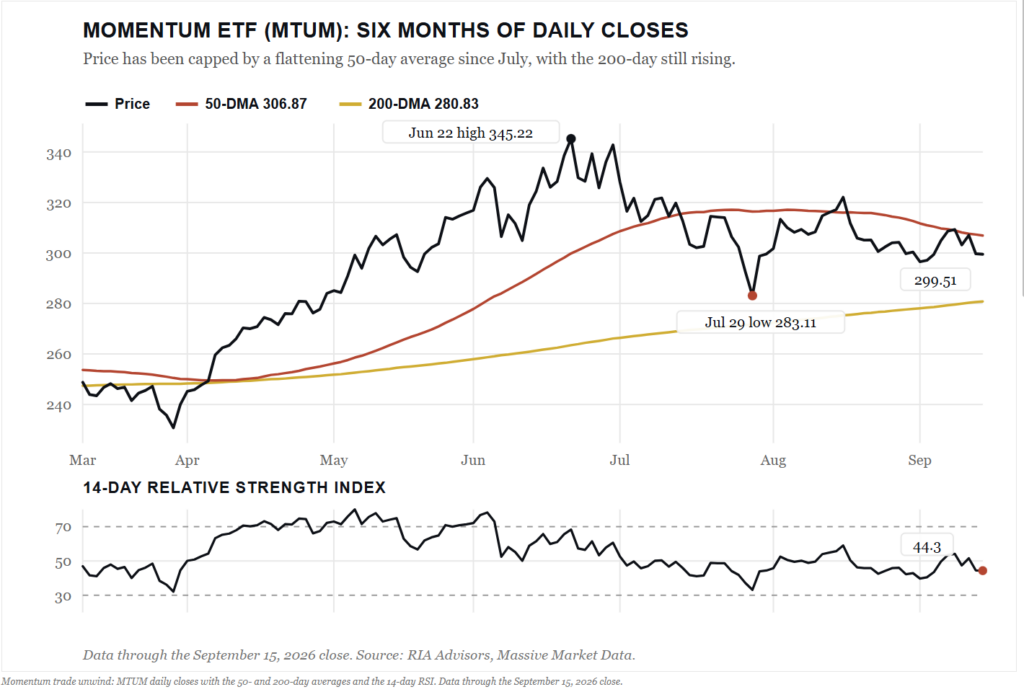
Away from the central bank, equity markets are navigating a profound structural rotation. The iShares MSCI USA Momentum Factor ETF (MTUM) has faced sustained selling pressure, closing significantly below its mid-year record highs. While the broader S&P 500 index remains relatively close to its annual peaks, the divergence highlights that momentum equities are undergoing a severe sector rotation rather than succumbing to a broader market bear phase.
When measured against the broader index, momentum strategies have suffered their steepest relative drawdown since 2023. Historically, such contractions occur when crowded positioning is aggressively flushed out, which often serves as a technical precursor for a relief rally. However, technical indicators suggest that the unwind has not yet reached capitulation levels. Relative strength indices (RSI) on momentum indicators have moderated without triggering the deep washouts typically associated cyclical market lows.
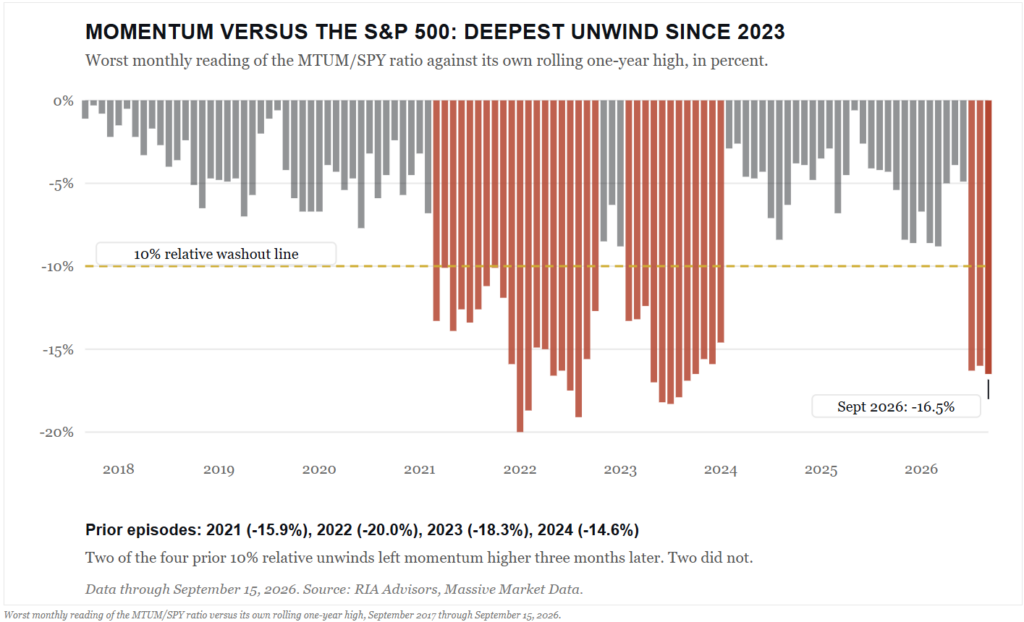
Furthermore, the 50-day moving average has acted as a persistent overhead resistance level, capping consecutive recovery attempts. Historical analogs indicate mixed outcomes following comparable drawdowns: while some periods successfully establish a floor and rebound within a single quarter, others experience extended consolidation phases before finding true equilibrium. Portfolio managers are consequently adjusting exposure targets, favoring high-quality balance sheets and reliable cash-flow generators over high-beta momentum plays until technical resistance levels are decisively cleared.
Corporate Consolidation: Musk Hints at Tesla and SpaceX Collaboration
In the corporate sphere, potential structural shifts are capturing investor attention following remarks made by Elon Musk at the All-In Summit in Los Angeles. When questioned about the deepening operational ties between his primary enterprises, Musk suggested that closer integration between Tesla and SpaceX could be on the horizon, raising questions about a potential mega-merger.

The two entities already share substantial operational overlap and strategic alignments. Tesla maintains an equity stake in SpaceX, and the firms operate under a formal framework agreement established earlier this year. Commercial exchanges between the companies are robust: SpaceX routinely procures advanced energy storage systems, battery technology, and specialized electric vehicles from Tesla. Meanwhile, technologies developed by xAI—such as the Grok language model—are being integrated into consumer vehicles and humanoid robotics initiatives like Optimus. The companies are also collaborating on advanced semiconductor manufacturing infrastructure through joint initiatives.
Financial institutions and prediction markets are taking the merger possibility seriously. Derivatives and prediction platforms indicate significant implied probability for a corporate combination materializing over the medium term. Investment banking analysts note that recent capital-raising activities provide adequate balance-sheet flexibility to execute large-scale corporate transactions.

However, corporate governance experts point to potential complications regarding executive compensation structures. Pay packages tied directly to combined market capitalization milestones in the event of a merger introduce complex governance considerations. While the operational and technological synergies between electric mobility, aerospace engineering, and artificial intelligence present a compelling long-term thesis, institutional shareholders continue to weigh strategic advantages against structural execution risks.
Macroeconomic Implications and the Road Ahead
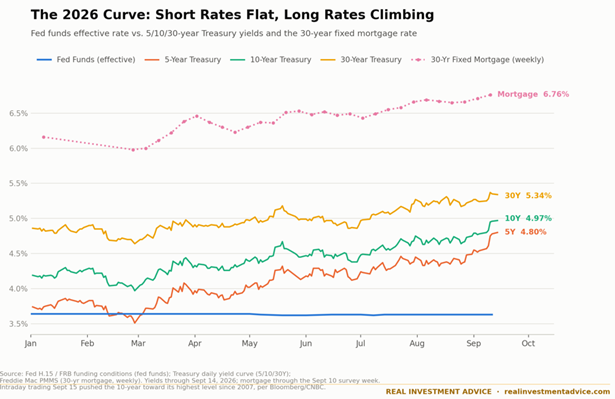
As the Federal Reserve presses forward with its higher-for-longer interest rate paradigm, the broader macroeconomic landscape faces a delicate balancing act. Long-term borrowing costs, mortgage yields, and corporate debt issuances remain sensitive to shifting rate expectations. While the bond market has independently exerted a tightening effect on economic activity through elevated long-term yields, the central bank’s determination to ensure structural price stability indicates that monetary policy will remain restrictive well into the coming years.
Market participants will closely monitor incoming employment reports, retail sales data, and upcoming corporate earnings releases for signals regarding consumer resilience. As the intersection of tight monetary policy, equity sector rotations, and unprecedented corporate restructuring shapes the financial landscape, investors are advised to maintain disciplined risk management protocols, relying on technical confirmations and fundamental cash-flow analysis to navigate the remainder of the year.