Is Buying a Home a Terrible Investment in the Current Economic Climate

The debate over whether residential real estate remains a viable financial asset has intensified as the U.S. housing market navigates a period of historic unaffordability. For many young professionals, the traditional path to homeownership—viewed for decades as a cornerstone of wealth creation—now appears mathematically inferior to alternative investment vehicles. With mortgage rates hovering consistently above 7%, elevated property insurance premiums, and home prices that have remained stubbornly high despite a cooling in transaction volume, prospective buyers are increasingly asking if the "American Dream" has become a financial liability.
A Shift in the Affordability Landscape
To understand the current impasse, one must look at the rapid transformation of the housing market since the beginning of the 2020s. During the period between 2010 and 2020, the housing market was characterized by historically low borrowing costs, which acted as a subsidy for higher home prices. When mortgage rates hovered near 3%, the monthly cost of servicing a mortgage for a median-priced home remained aligned with historical norms, even as home values appreciated.
However, the rapid monetary tightening that began in the early 2020s fundamentally altered this equation. As the Federal Reserve aggressively raised the federal funds rate to combat inflation, mortgage rates surged, more than doubling in a span of just a few years. When this spike in interest rates is combined with a 50% increase in median home prices, the result is a catastrophic reduction in buyer purchasing power.
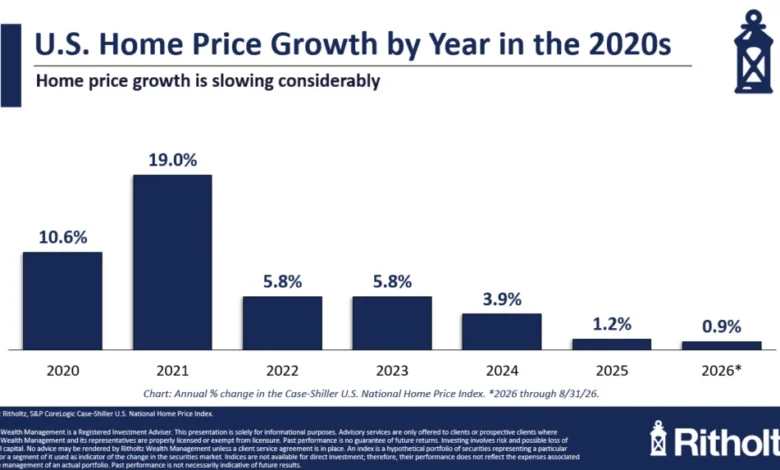
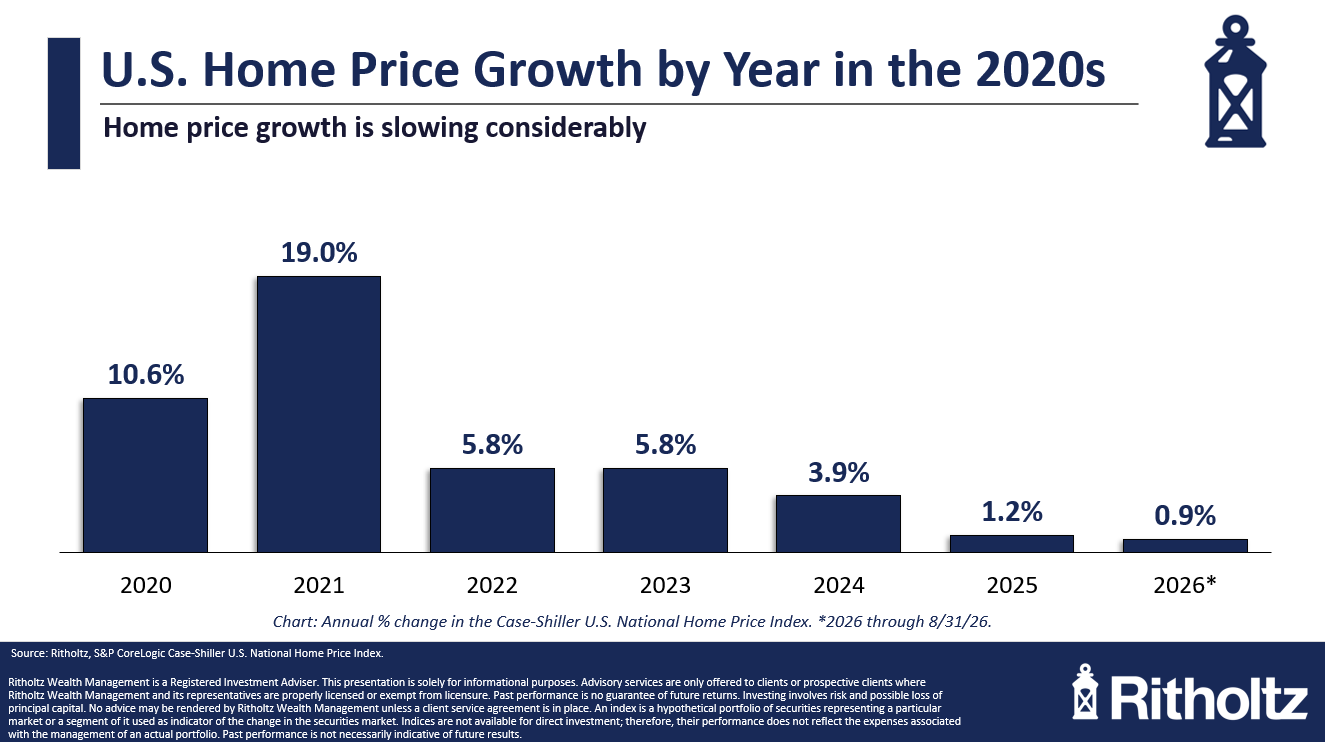
Data from the Case-Shiller National Home Price Index indicates that while the meteoric price increases seen in 2021 and 2022 have leveled off, they have not reversed. Instead, the market has entered a period of "muted growth," where home price appreciation in many regions is failing to keep pace with the broader Consumer Price Index (CPI). This suggests that in real, inflation-adjusted terms, the value of residential real estate has stagnated.
The Chronology of a Housing Correction
The current environment is the result of a multi-year convergence of economic factors:
- 2020–2021: The pandemic-era migration and low interest rates created a surge in demand that quickly outpaced supply, leading to double-digit annual price gains.
- 2022–2023: The Federal Reserve’s pivot to contractionary monetary policy caused mortgage rates to jump from roughly 3% to over 7%, effectively locking many homeowners into their existing low-rate mortgages and creating a "lock-in effect" that choked off supply.
- 2024–Present: A market stalemate has emerged. Buyers are sidelined by affordability constraints, while sellers are hesitant to list their properties and relinquish their favorable pre-2022 mortgage rates. This has resulted in a period of low transaction volume and minimal price discovery.
Evaluating Housing Against Alternative Assets
When comparing real estate to the stock market, financial analysts note that the two asset classes function on fundamentally different mechanics. The stock market, fueled by the rapid expansion of artificial intelligence and corporate productivity gains, has offered significant liquidity and high double-digit yields through various strategies. In contrast, residential real estate is a highly illiquid, capital-intensive asset that carries significant "ancillary costs."
A professional analysis of the "Rent vs. Buy" decision must account for the total cost of ownership (TCO). While a renter’s costs are generally limited to monthly payments and insurance, a homeowner must factor in:
- Maintenance and Capital Expenditures: Ongoing repairs, roofing, HVAC replacement, and landscaping.
- Transaction Costs: Brokerage commissions, closing costs, and moving expenses.
- Opportunity Cost: The capital tied up in a down payment, which could otherwise be deployed in high-yield bond markets or diversified equity indices.
While proponents of homeownership point to the benefits of leverage—where a 20% down payment allows a buyer to control an asset that appreciates in total value—critics argue that in a high-interest rate environment, the cost of that leverage (interest expense) often outweighs the long-term appreciation of the property.
Demographic Shifts and Supply-Side Outlook
The long-term outlook for the housing market is heavily dependent on demographic trends. The "Baby Boomer" generation, which currently owns a significant portion of the nation’s housing stock, is entering a phase of life characterized by downsizing or relocation. Economists suggest that the 2030s could see a meaningful increase in housing supply as these properties return to the market.
Conversely, the "bull case" for housing rests on the persistent underbuilding of new residential units. Since the 2008 financial crisis, the rate of housing starts has failed to keep pace with household formation. Even if mortgage rates decline, the fundamental shortage of inventory in desirable urban centers is expected to provide a floor for home prices, preventing a total collapse in valuations.
Housing as Consumption, Not Investment
From a rigorous financial perspective, the most critical takeaway for potential buyers is to distinguish between "housing as an investment" and "housing as consumption."
In mainstream economic theory, a primary residence is categorized as a consumption good—a service that provides shelter and utility. Unlike an index fund or a rental property, a primary residence does not generate cash flow. While it may appreciate in value over time, that appreciation is only realized upon the sale of the asset, at which point the homeowner must purchase another residence in what is likely a similarly inflated market.
Institutional advisors often warn against the "investment trap." Treating a primary home as a retirement vehicle can lead to an over-concentration of wealth in a single, non-diversified asset. When a significant portion of an individual’s net worth is tied to a single property, they become highly susceptible to localized economic downturns, changes in school district quality, and shifting municipal tax policies.
Implications for the Modern Buyer
For the individual in their late 20s or early 30s, the decision to purchase a home is rarely purely mathematical. It is a decision that involves trade-offs between financial liquidity and personal stability.
The primary benefits of homeownership remain social and psychological rather than strictly fiscal. These include:
- Inflation Hedge: Fixed-rate mortgage payments provide a predictable housing cost in an inflationary environment, whereas rents are subject to annual market adjustments.
- Forced Savings: The amortization schedule of a mortgage serves as a mechanism for building equity that might otherwise be spent on discretionary items.
- Utility and Control: The ability to modify one’s living space and plant roots in a community provides a form of non-monetary return that cannot be captured by an ETF.
Conclusion
The current financial environment suggests that the "easy money" period of housing appreciation has likely concluded. Prospective buyers must be prepared for a market where price gains are modest and tethered closely to inflation. While buying a home in the current climate may not outperform a high-growth equity portfolio on a spreadsheet, the decision should be framed within the context of total lifestyle goals.
For those who prioritize financial optimization above all else, the data suggests that renting and aggressively funding market-based investments remains the superior strategy. However, for those who value long-term stability and the utility of homeownership, the market remains a viable, albeit expensive, option. Ultimately, a home should be viewed as a place of residence that happens to build equity, rather than a speculative asset intended to drive wealth accumulation. As with all major financial decisions, the key lies in understanding that while the numbers are essential, they do not tell the entire story of one’s financial life.
Related posts: