Retrospective Simulation: A New Paradigm for Robust Financial Strategy Validation

The landscape of quantitative finance is fundamentally shaped by a recurring cognitive trap: the reliance on a single, realized historical price path to validate trading strategies. In his seminal work, Fooled by Randomness, Nassim Nicholas Taleb challenged the obsession with historical time series, questioning whether the activity of long-retired traders holds genuine predictive power for future market movements. This philosophical inquiry serves as the foundation for a modern analytical technique known as retrospective simulation—a method designed to move beyond the constraints of a single realized history by generating thousands of plausible alternate realities.
By utilizing a non-parametric Brownian bridge methodology, researchers can now simulate the infinite possibilities an asset index, such as the SENSEX, could have traversed over a specific timeframe. This approach allows for the rigorous testing of algorithmic strategies against multiple simulated market conditions, rather than overfitting parameters to one specific, lucky, or unlucky historical sequence.
The Mechanics of Retrospective Simulation
Standard backtesting typically involves training a model on historical data—such as SENSEX price action from 2000 to 2020—and subsequently testing it against a period of unseen out-of-sample data. However, this method is inherently flawed because it assumes the market’s historical path was the only one that could have occurred.
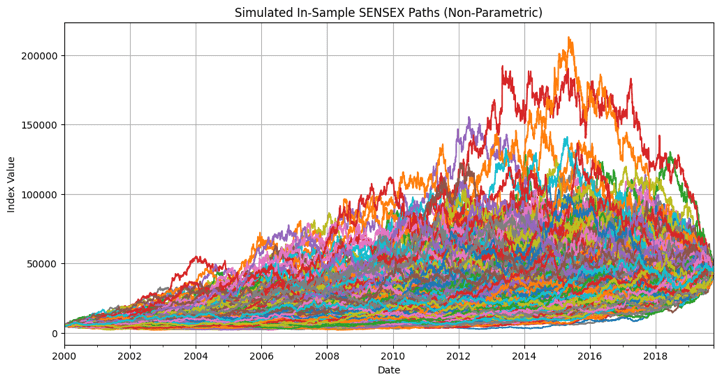
Retrospective simulation breaks this mold. By employing a modified Brownian bridge, which anchors the start and end prices of a simulated path to the actual historical values, analysts can generate thousands of paths that explore the volatility and drift of the asset. Unlike parametric simulations that assume normal distribution, this non-parametric bootstrap approach samples from actual realized returns. This allows the simulation to capture the "fat tails" and high kurtosis inherent in financial markets—the very outliers that typically lead to the catastrophic failure of over-optimized models.
Chronology of Data Analysis and Strategy Testing
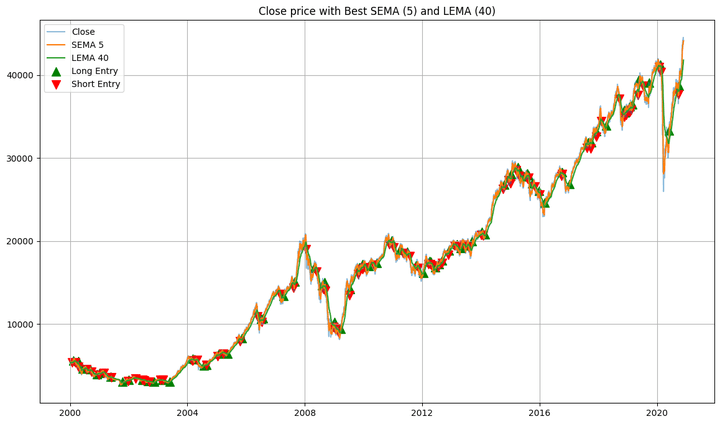
The empirical investigation into this methodology utilized daily SENSEX index data spanning from January 2000 through April 2025. The training, or in-sample, period was defined as January 2000 to November 2020, while the out-of-sample testing period covered December 2020 to April 2025.
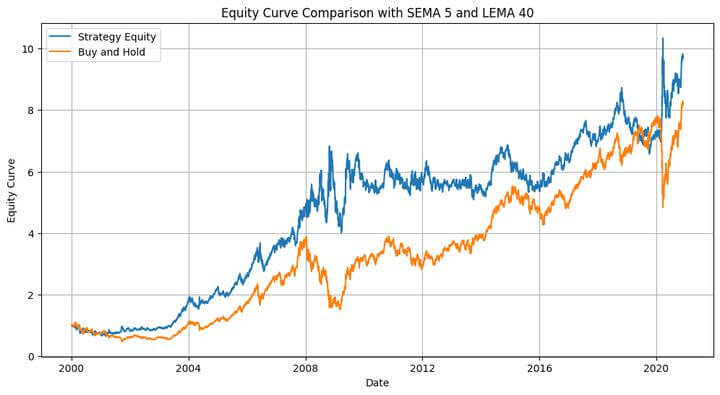
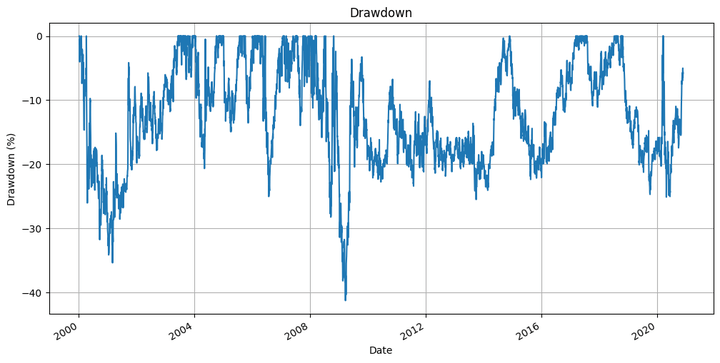
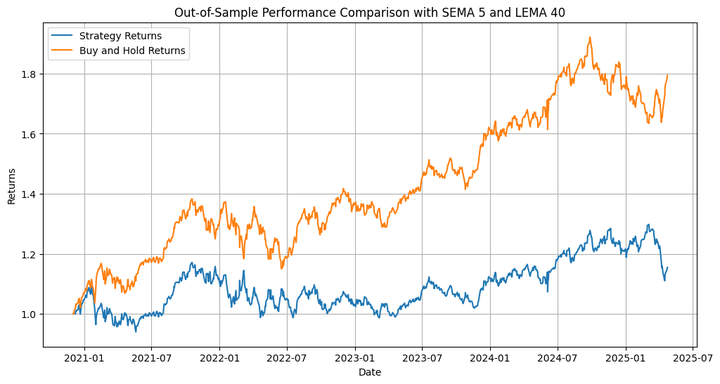
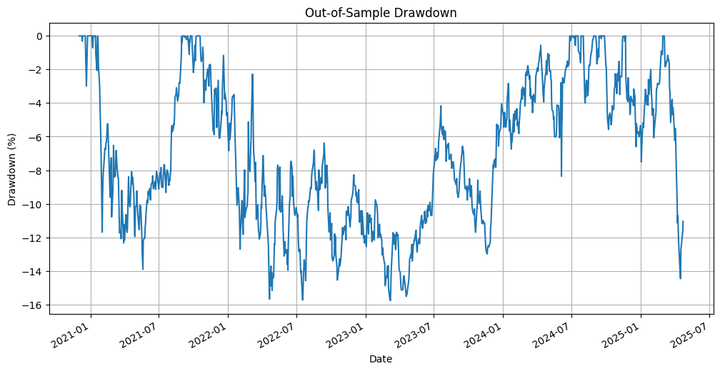
In the initial phase, an Exponential Moving Average (EMA) crossover strategy was optimized on the in-sample data. This strategy, which triggers long positions when a short-period EMA (SEMA) crosses above a long-period EMA (LEMA), yielded an impressive 873% return during the training phase. However, when these optimized parameters (SEMA 5, LEMA 40) were applied to the out-of-sample data (2020–2025), the strategy faltered significantly, returning only 15.46% compared to the 79.41% achieved by a simple buy-and-hold approach.
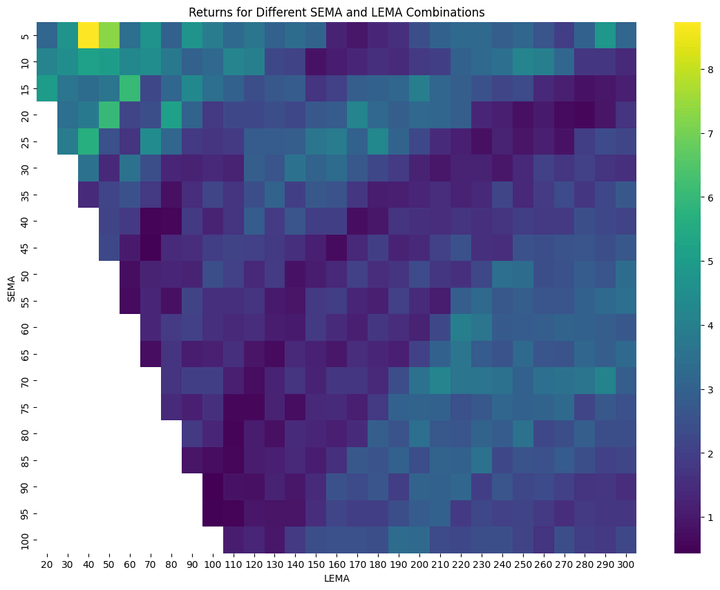
This disparity underscores the dangers of overfitting. By optimizing solely for the realized path, the model "learned" the noise of that specific sequence rather than the underlying signal. To rectify this, the study shifted the optimization process. By running the backtest across 1,000 simulated paths, the researchers identified the SEMA-LEMA combinations that performed most consistently across the majority of these alternate realities.
Statistical Implications: VaR and CVaR Analysis
The integration of retrospective simulation also provides a more nuanced view of risk management, specifically through the calculation of Value at Risk (VaR) and Conditional Value at Risk (CVaR). By aggregating over 5.1 million simulated daily returns, the study produced a comprehensive risk profile that accounts for extreme market events.
The analysis revealed that at a 99% confidence level, the maximum daily drawdown was approximately 4.25%. Crucially, the CVaR at the same confidence level—the expected loss given that the VaR threshold has been breached—was 5.86%. This delta is vital for institutional risk management, as it quantifies the "tail risk" that standard models often underestimate. The high kurtosis observed in the simulated returns confirms that extreme market moves occur with greater frequency than a standard bell curve would predict, suggesting that any strategy ignoring these fat tails is inherently fragile.
Broader Market Implications
The failure of the optimized EMA strategy in the out-of-sample test, even when using parameters derived from simulated paths, highlights a critical truth in quantitative trading: no amount of backtesting can substitute for robust, adaptive strategy design. However, the retrospective simulation framework provides a sophisticated filter. It enables portfolio managers to discard strategies that are fragile across various scenarios before deploying capital into the live market.
This framework is particularly transformative for:
- Machine Learning Models: Deep learning strategies are notoriously prone to overfitting; testing them against 1,000 simulated paths can expose structural weaknesses.
- Multi-Condition Strategies: Strategies involving complex entry and exit criteria benefit from the "stress test" nature of multiple simulated environments.
- Tail-Risk Hedging: By understanding the distribution of simulated extremes, managers can better size their positions to survive "black swan" events.
Expert Perspectives and Future Directions
Financial analysts and developers emphasize that this method is not a panacea for market uncertainty, but rather a significant upgrade to the traditional testing toolkit. The shift from asking "what happened" to "what could have happened" represents a fundamental change in the mindset of risk assessment.
Moving forward, the potential for extending this research is vast. Future iterations could incorporate macroeconomic variables—such as interest rate cycles or inflation indices—directly into the Brownian bridge generation process. By creating simulated paths that react to changing environmental factors, rather than just historical price volatility, analysts could build models that are not only robust to random noise but also resilient to systemic shifts.
Conclusion
The experiment conducted with SENSEX data serves as a stark reminder that historical performance is not a guarantee of future results, particularly when that performance is predicated on a single path of reality. While the EMA strategy tested here demonstrated that even the most "optimized" parameters can fail, the retrospective simulation framework succeeded in providing a more honest, rigorous assessment of risk.
As the financial industry moves toward more complex algorithmic reliance, the adoption of retrospective simulation becomes increasingly necessary. By validating strategies against the spectrum of potential realities rather than the singular thread of the past, firms can better prepare for the inherent unpredictability of the global markets. The transition toward this methodology is an essential step in maturing quantitative finance from a game of pattern-matching to a rigorous science of probabilistic scenario planning.
The methodology, while computationally intensive, remains accessible to those with the necessary resources and curiosity. As more practitioners adopt this approach, the industry may see a reduction in the "over-optimized" strategies that have historically plagued retail and institutional portfolios alike. The path forward is not in perfecting the prediction of the past, but in preparing for the manifold possibilities of the future.