The Disconnect Between Earnings Growth and Market Performance in the Age of Artificial Intelligence

Artificial intelligence currently stands as the defining narrative of the modern financial era, arguably representing the most significant technological and economic shift of the century. As capital continues to pour into AI-driven infrastructure and software development, investors are grappling with a paradox: while corporate earnings are surging, the equity markets are struggling to reconcile these fundamental gains with valuation expectations. This phenomenon highlights a persistent tension in modern finance—the unpredictable, often divergent, path between realized corporate profits and the sentiment-driven fluctuations of the stock market.
The Earnings Forecast Revision Cycle
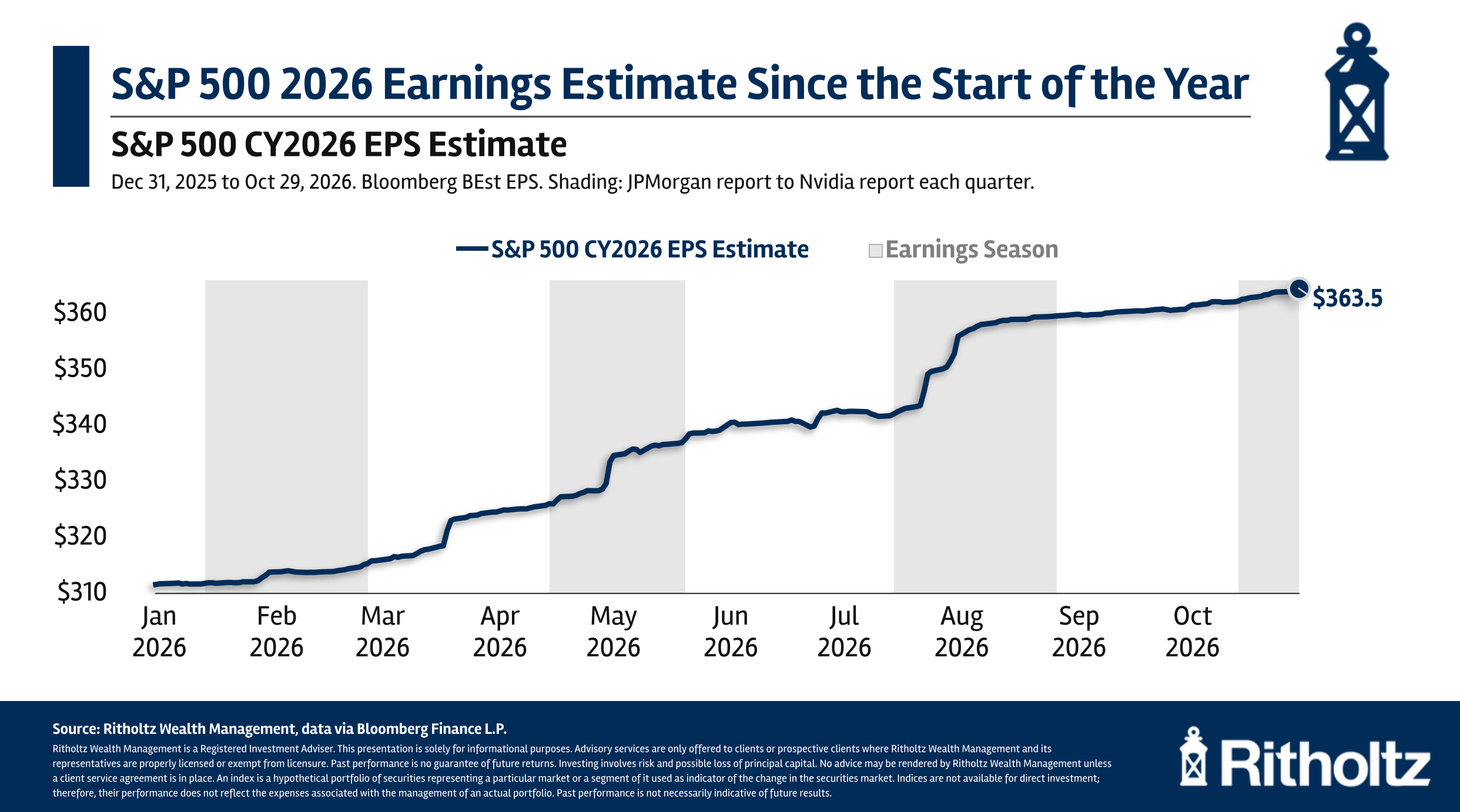
To understand the current market environment, one must look at the rapid evolution of 2026 earnings estimates. At the start of the year, analysts projected S&P 500 earnings of approximately $310 per share. As the year progressed, however, several quarters of better-than-expected corporate performance led to consistent upward revisions. By late October 2026, those initial estimates had climbed by nearly 20%, significantly outpacing the index’s price appreciation of roughly 12% during the same period.
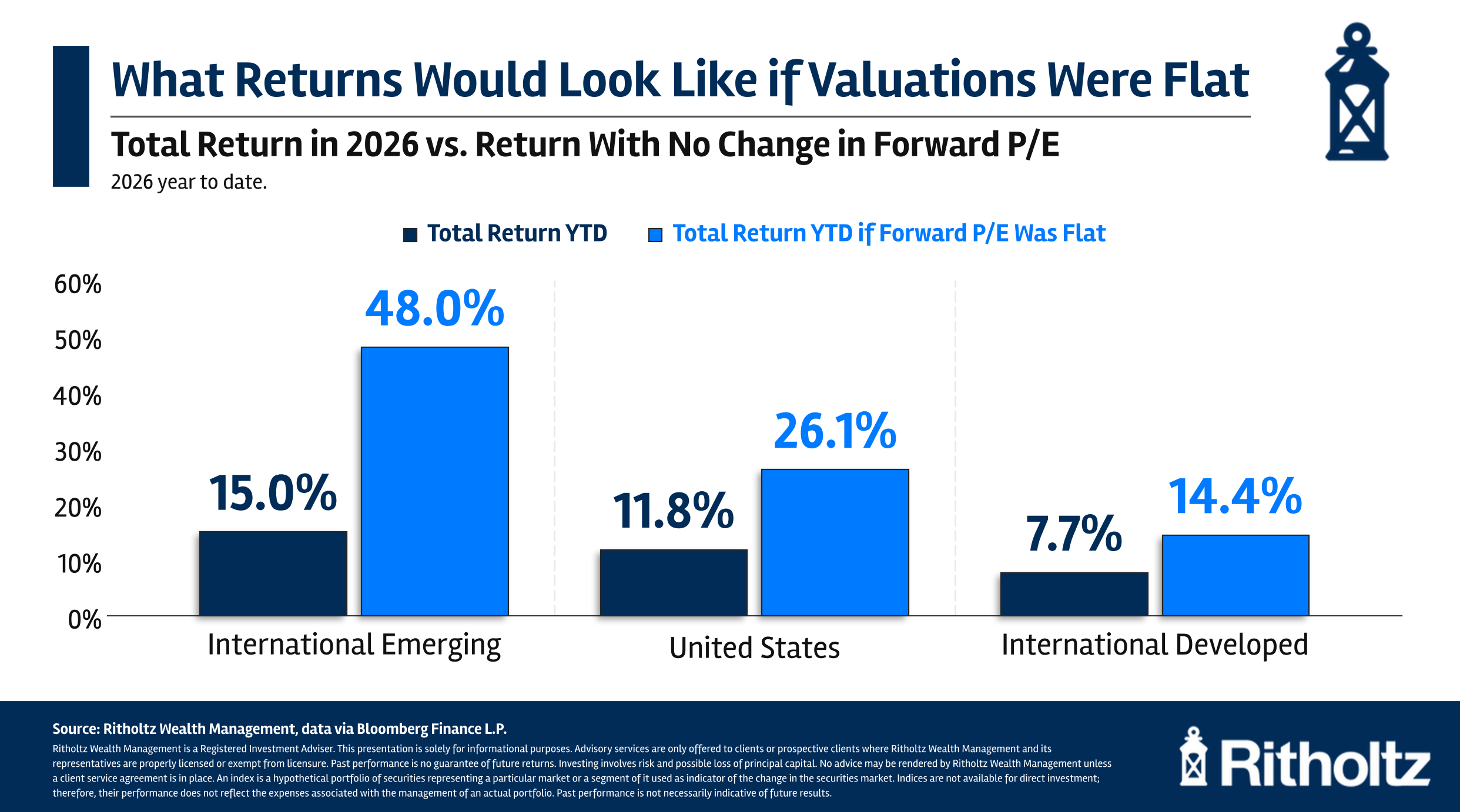
This 30% growth in earnings, contrasted with a more modest 12% increase in stock prices, has effectively resulted in a contraction of valuation multiples. Rather than the market becoming more expensive, as many observers feared during the height of the "AI boom" rhetoric, the rapid acceleration of profitability has caused forward Price-to-Earnings (P/E) ratios to decline. This data suggests that the market is currently pricing in a degree of skepticism regarding the sustainability of these earnings, or perhaps signaling a shift in how investors value high-capital-expenditure growth cycles.
Historical Context of Earnings-Price Divergence
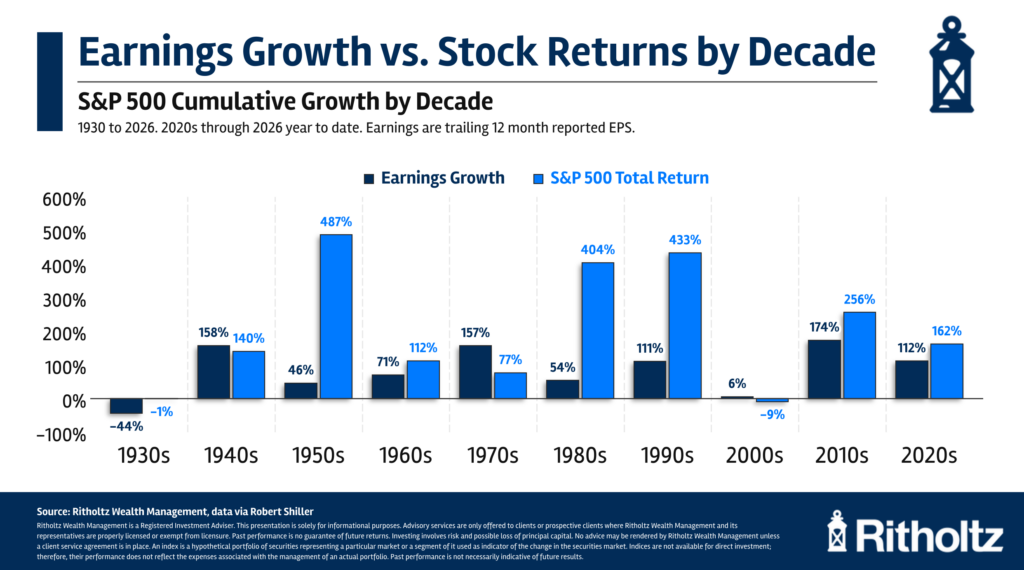
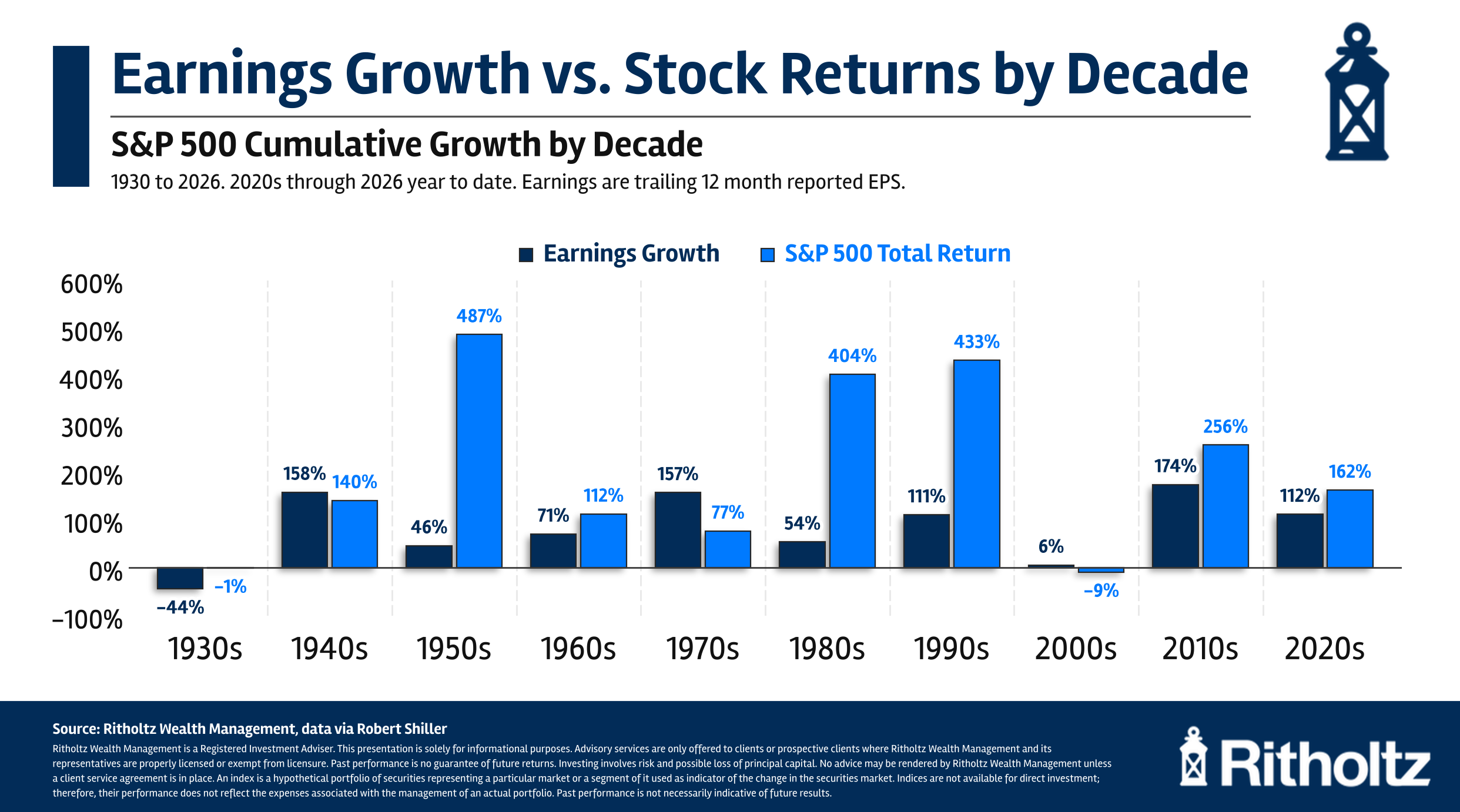
The current situation is not an anomaly in the context of the last century of market history. An examination of S&P 500 total returns against earnings growth by decade reveals that the two metrics are rarely in perfect lockstep. Since the 1930s, the relationship between corporate profits and stock price performance has frequently decoupled.
For instance, the 1970s saw a period where earnings growth significantly outpaced equity market returns, a sharp contrast to the 1950s and 1990s, where stock prices experienced aggressive multiple expansion, often growing far beyond the underlying profit growth of the companies involved. Data indicates that the average absolute spread between earnings growth and stock market returns in any given year is nearly 25%, with the median spread hovering around 17%. This historical precedent suggests that the market often acts as a forward-looking mechanism that occasionally misjudges the timing or the sustainability of profit cycles, leading to these inevitable gaps.
Sector Concentration and the Semiconductor Paradox
A deeper analysis of 2026 earnings reveals a high level of concentration. According to recent reports, roughly two-thirds of the total S&P 500 profit growth this year is attributable to just ten companies. Of that group, the semiconductor sector—specifically companies like Nvidia and Micron—accounts for one-third of the total growth.
This concentration has created a unique "semiconductor paradox." While earnings for semiconductor firms have soared by nearly 200% year-to-date, their stock prices have risen only moderately, and many have faced significant drawdowns from their annual highs. This suggests that the broader investment community is placing a "discount" on these specific earnings, likely due to concerns regarding the cyclicality of the chip industry and the fear that massive capital expenditure on AI infrastructure might eventually lead to a supply glut or diminishing returns on investment.
Market analysts from firms like Yardeni Research have noted that the market’s reluctance to fully price in these record-breaking semiconductor earnings is a classic case of risk management. Investors are weighing the immediate, tangible profit growth against the long-term uncertainty of AI’s return on investment (ROI). If the massive spending currently being reported by tech giants does not translate into long-term productivity gains across the broader economy, the earnings growth seen in 2026 could prove to be transitory.
Implications of AI-Driven Capital Expenditure
The current market environment is heavily influenced by the massive capital expenditure (capex) cycle driven by the AI arms race. Major technology firms are spending tens of billions of dollars on data centers, advanced GPUs, and energy infrastructure. While this spending drives immediate revenue for semiconductor and hardware manufacturers, it also increases the operational expenses of the companies purchasing the equipment.
The implication for the wider market is twofold. First, the earnings growth is currently top-heavy, relying on a narrow slice of the technology sector. If this sector hits a plateau, the S&P 500’s overall growth rate will likely decelerate. Second, the disconnect between earnings and stock prices serves as a reminder that the market is an anticipation machine. It is currently attempting to balance the "AI miracle"—where productivity is expected to skyrocket—against the "AI bubble" hypothesis, where the cost of entry is seen as too high to generate sustainable shareholder value.
Chronology of the 2026 Market Narrative
- January 2026: Initial S&P 500 earnings estimates are set at approximately $310, with optimism surrounding AI adoption.
- Q1-Q2 2026: Corporate earnings reports exceed analyst expectations, leading to a consistent upward revision in annual EPS forecasts.
- Q3 2026: A divergence emerges; while earnings continue to climb, stock prices begin to fluctuate, with semiconductor stocks facing significant volatility despite record profit growth.
- October 2026: Year-end earnings estimates reach a point nearly 20% higher than those set in January, confirming a significant disconnect between the actual profitability of firms and their equity market valuations.
Future Outlook and Analytical Consensus
While the short-term relationship between earnings and market performance is often volatile and frustrating for investors, long-term trends confirm that fundamentals eventually dictate market direction. The current period of expansion is characterized by a "wait and see" approach from institutional investors. They are acknowledging the reality of the profit numbers but are holding back on full valuation expansion until there is clearer evidence that the AI-led productivity boom can sustain itself beyond the current infrastructure build-out phase.
The divergence between earnings and returns observed in 2026 serves as a case study in market psychology. When faced with rapid, unexpected changes in profitability—particularly those driven by a singular, transformative technology—the market tends to exercise caution. It requires not just the promise of future earnings, but the demonstration of consistent, long-term cash flow before fully rewarding companies with higher P/E multiples.
As we move forward, the focus for market participants will remain on the sustainability of these earnings. If the companies currently leading the growth can maintain their margins while the rest of the S&P 500 begins to catch up, the current valuation compression may actually provide a solid foundation for future growth. Conversely, if the semiconductor sector’s earnings are revealed to be a temporary spike resulting from a one-time infrastructure spending spree, the market’s current skepticism will be validated.
In the final analysis, the 2026 market experience confirms that while the headlines are dominated by the revolutionary potential of AI, the underlying mechanics of the stock market remain governed by the same fundamental principles that have applied for decades: earnings are the primary driver of value, but market sentiment is the driver of price. When the two drift apart, it creates a period of uncertainty that tests the conviction of even the most seasoned investors. The challenge remains not in predicting the future of AI, but in correctly timing the transition from speculative growth to realized, durable profit.