The Silent Collapse: Why Europe Must Treat Its Dying Soil as a Strategic Asset

GENEVA AND PARIS — When the European Union convenes to determine which industrial inputs and natural elements constitute strategic assets, its gaze is invariably drawn to the high-tech and the geopolitical. Policymakers obsess over semiconductors, advanced battery chemistries, critical rare earth elements, and clean hydrogen infrastructure—sectors where foreign rivals, notably China and the United States, exert dominant control or pose long-term competitive threats. Yet, despite commanding dense regulatory oversight across every other domain of the single market, Brussels has continuously overlooked a foundational asset that cannot be imported, manufactured, or replicated anywhere else on Earth: Europe’s soil.
Often viewed merely as the passive backdrop of the rural landscape, soil is, in economic and ecological reality, vital critical infrastructure. It forms the biological bedrock of global and continental food systems, acting as the generative medium for approximately 95 percent of the food consumed by humanity, according to the Food and Agriculture Organization (FAO). Beyond agriculture, European soils function as massive carbon sinks, sequestering an estimated 75 billion tons of organic carbon—several times the volume locked within the living biomass of all the continent’s forests combined. Furthermore, the complex, porous architecture of healthy soil serves as a natural sponge and buffer against extreme weather events, mitigating the catastrophic impact of droughts and flash floods that have become regular, destructive features of European summers.
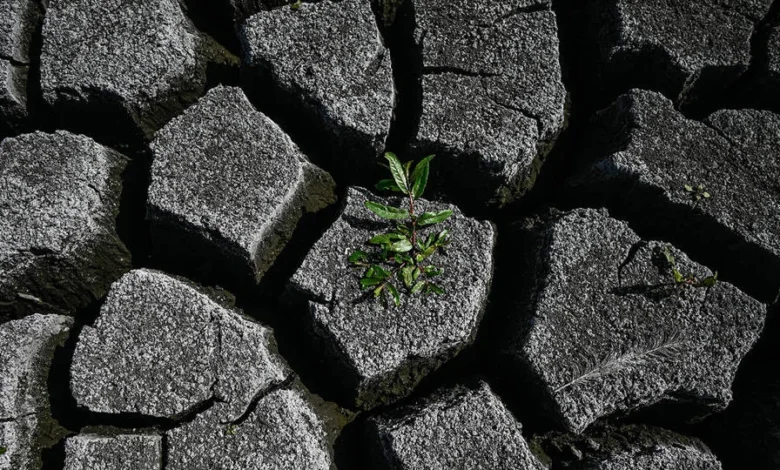
Despite this irreplaceable utility, Europe’s soil base is undergoing a slow, systemic collapse. Data released by the European Commission indicates that between 60 and 70 percent of EU soils are currently classified as unhealthy. This pervasive degradation inflicts a heavy toll on the continental economy, generating losses exceeding €50 billion ($58 billion) annually through diminished agricultural productivity, increased water treatment costs, and compromised ecosystem services. Given that nature requires up to one thousand years to generate a mere centimeter of fertile topsoil, the ongoing degradation trajectory represents an ecological and financial liability of historic proportions.
The Economic Blind Spot of Uncounted Natural Capital
The core driver of this crisis is an accounting failure deeply embedded in modern macroeconomic policy: what is not quantified on a balance sheet is rarely protected by regulatory mandate. Traditional gross domestic product (GDP) metrics are blind to the slow deterioration of natural capital. When a nation’s soil ecosystem collapses, its immediate GDP figures may barely register a shock, even as the country grows materially poorer, more fragile, and less secure.
This dynamic mirrors past policy blind spots that caught European capitals unprepared. Following the Kremlin’s full-scale invasion of Ukraine and the subsequent curtailment of Russian natural gas supplies, European governments were forced to scramble, allocating roughly €500 billion in emergency subsidies to shield citizens and industries from unprecedented energy price spikes. That crisis, however, was sudden and driven by a hostile foreign power. Soil degradation operates differently: it is a slow-moving, cumulative process for which European industrial agriculture and governance are wholly responsible. Because no foreign adversary is overnight withholding a critical input, policymakers routinely fail to appreciate that healthy soil is the primary determinant of systemic resilience—the structural capacity of an economy to absorb and function through environmental shocks.
A Fragmented Regulatory Toolkit
Encouragingly, the European Union is not devoid of legislative instruments; rather, its tools remain isolated within administrative silos. The Soil Monitoring Law, which entered into force in December, established a standardized, bloc-wide framework for evaluating soil health indicators, including organic carbon content, erosion rates, biological activity, and water retention capacity. Additionally, a landmark 2024 regulation mandated that member states compile formal accounts for seven distinct ecosystem services, though the specific hydrological and agricultural services provided by soil remain marginal within national accounts. Furthermore, in July, the European Commission adopted specialized certification methodologies under the Carbon Removals and Carbon Farming (CRCF) framework, designed to help farmers access financial remuneration for verifiable soil outcomes.
Yet, the institutional architecture lacks an overarching strategic plan to bridge these disparate initiatives and convert soil stewardship into a tangible economic advantage for land managers. The historic Common Agricultural Policy (CAP) continues to disburse subsidies primarily for baseline sustainable practices rather than tying financial rewards directly to measurable, verifiable enhancements in soil vitality and water retention. The European Commission now faces a critical opportunity to rectify this deficiency through its forthcoming framework for European climate resilience and risk management, scheduled for release later this year.
A Three-Pronged Blueprint for Industrial and Agricultural Resilience
As business leaders, institutional investors, and agricultural advisors operating across these value chains, analysts argue that the upcoming resilience framework—which seeks to make systemic resilience a mandatory guiding principle for public and private investments—must incorporate three decisive commitments.
First, the framework must expand mandatory ecosystem accounting to explicitly encompass the services provided by healthy soil, beginning with water retention capacity, and mandate their integration into national economic accounts. Second, outcome-based financial rewards must be extended beyond carbon sequestration to reward broader soil health metrics, ensuring that farmers and land managers can capture economic value from verified ecological results. Third, these standardized soil health indicators must be systematically integrated into public funding allocation and investment decision-making processes, mirroring the regulatory weight currently afforded to carbon metrics.
Critics within political circles frequently argue that Europe’s fiscal constraints preclude such expansive environmental commitments. Industry experts and economists, however, contend the exact opposite: dead and degraded soil systematically degrades crop yields, drives up food price volatility, and increases public exposure to costly climate disasters. This ecological fragility functions as a regressive hidden tax on society. Shielding vulnerable populations from the dual pressures of inflated food costs and intensifying climate disruptions requires abandoning the convenient fiction that soil degradation carries zero real economic cost.
Global Horizons and International Diplomacy
Europe’s struggle with land degradation is mirrored globally. In August, the 17th Conference of the Parties (COP17) to the United Nations Convention to Combat Desertification convened in Ulaanbaatar, Mongolia, centering on urgent strategies for land restoration and drought mitigation. While participating governments agreed to mobilize new funding streams for land rehabilitation, negotiations fell short of establishing a legally binding global framework on drought management, laying bare the persistent friction between scientific consensus and political execution.
Nevertheless, pioneering momentum is visible elsewhere. Numerous nations across the Global South, particularly major exporters of coffee, cocoa, and specialized fruits, have begun treating soil health as a core national security and economic asset. Despite these localized advancements, global and regional efforts remain heavily fragmented.
To bridge this divide, Europe should spearhead an international soil alliance, uniting governments committed to rigorous measurement standards and regulatory frameworks that financially incentivize soil restoration. Brussels should leverage this agenda at the UN Biodiversity Conference in Yerevan, Armenia, and the UN Climate Change Conference in Antalya, Turkey, while cementing soil resilience as the cornerstone of its domestic policy overhaul.
Reflecting on the fragility of this inheritance, the institutional failure to account for natural assets stands out as a generational oversight. As the French poet René Char observed, "Our inheritance was left to us by no testament." Soil passes silently from one generation to the next, yet it remains absent from the ledgers of modern economics. For decades, European governance has meticulously tallied what it produces while ignoring what it possesses. Unless and until policymakers rewrite the rules of economic accounting to value the earth beneath their feet, the slow, costly death of the continent’s soil will continue unabated.