Mapping the Corridors of Exploitation Why Localized Strategies are the Key to Dismantling Global Modern Slavery Networks

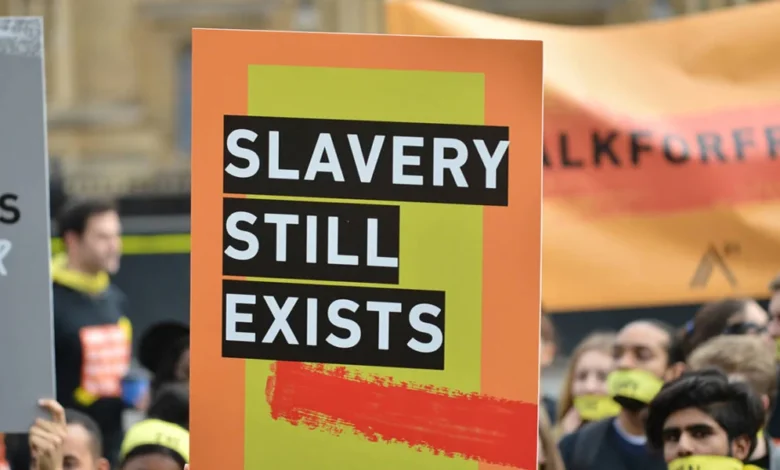
The conventional understanding of human trafficking often relies on broad, macro-level frameworks that view the crisis through the lens of national borders and international migration flows. However, this high-level perspective frequently fails to capture the intricate, granular realities of how criminal syndicates actually function. By shifting the analytical focus from national statistics to the specific "corridors" that link source and destination localities, policymakers and law enforcement agencies can develop more effective interventions. This localized approach, pioneered by experts like Kevin Hyland and Robert D. Marin, suggests that modern slavery is not a vague global phenomenon but a highly organized system of "twinned towns," where specific communities in one country become inextricably linked to specific neighborhoods in another through a pipeline of exploitation.
The concept of "twinned towns" of modern slavery first gained significant political traction in 2016. During the first anniversary of the United Kingdom’s landmark Modern Slavery Act, then-Prime Minister Theresa May highlighted groundbreaking research conducted in the UK and Romania. This research moved beyond generalities to identify how criminal gangs were systematically targeting specific Romanian villages to supply forced labor for specific industries in British cities. This paradigm shift—treating the source and destination as a single, interconnected unit of analysis—remains the most promising path forward for anti-trafficking efforts in 2026 and beyond.
The Evolution of the UK Modern Slavery Act and the "Twinned Towns" Model
The UK Modern Slavery Act of 2015 was a watershed moment in global human rights legislation. It was the first of its kind in Europe, designed to consolidate existing offenses relating to trafficking and slavery while increasing maximum sentences for perpetrators. However, the legislative framework was only as strong as the intelligence fueling its enforcement. In the years following the Act’s inception, Kevin Hyland, serving as the UK’s first Independent Anti-Slavery Commissioner, argued that the "macro" approach was obscuring the tactical reality of the trade.
The "twinned towns" model emerged from the realization that traffickers do not operate at random. Instead, they build logistical infrastructure between specific points. For instance, a recruiter in a specific district of Ialomița, Romania, might have a direct "contract" with a gang leader operating car washes or construction sites in a specific borough of London, such as Brent or Newham. By identifying these specific geographic links, authorities can move away from "needle in a haystack" policing toward targeted disruption of the recruitment and transit routes that sustain these local corridors.
Chronology of Legislative and Strategic Milestones
To understand the current state of anti-trafficking policy, it is essential to trace the timeline of how localized strategies have gained prominence:
- March 2015: The UK Parliament passes the Modern Slavery Act, introducing the role of the Independent Anti-Slavery Commissioner and requiring large businesses to report on slavery in their supply chains.
- July 2016: On the Act’s first anniversary, Theresa May publishes a seminal commentary in The Telegraph, identifying the existence of criminal gangs creating "twinned towns" of slavery, based on collaborative research between UK and Romanian authorities.
- 2017–2019: Expansion of the National Referral Mechanism (NRM). The UK government begins to see a surge in referrals, particularly among Romanian, Albanian, and Vietnamese nationals, confirming the existence of established trafficking routes.
- 2021: The introduction of the New Plan for Immigration and subsequent legislative shifts begin to complicate the protection of victims, sparking a debate between border security and human rights protections.
- 2023: International reports from the ILO and Walk Free Foundation indicate that global modern slavery figures have risen to 50 million, necessitating a more aggressive, intelligence-led approach.
- 2024–2026: Law enforcement agencies in the UK and the EU begin adopting "Corridor-Based Policing," which involves joint task forces permanently stationed in both source and destination localities to share real-time data on recruitment patterns.
Supporting Data: The Scale of the Crisis
The necessity for a localized approach is underscored by the staggering data regarding modern slavery. According to the Global Slavery Index, the prevalence of modern slavery has increased significantly over the last decade. In the UK alone, the number of potential victims referred to the Home Office through the National Referral Mechanism (NRM) reached record highs in the early 2020s, with over 16,000 referrals in 2023—a jump of nearly 20% from the previous year.
Statistically, the "twinned town" phenomenon is visible in the concentration of victim nationalities. In the UK, Romanian nationals consistently rank among the highest numbers of foreign victims. Data suggests that these victims are often not scattered evenly across the UK but are concentrated in specific sectors:
- Manual Labor: Approximately 40% of identified labor exploitation victims are found in construction, car washes, and agriculture.
- Regional Concentration: Certain towns in the East of England and the West Midlands show disproportionately high numbers of labor exploitation cases linked to specific Eastern European regions.
- Debt Bondage: Research indicates that 70% of victims in these localized corridors are trapped through "travel and work" debts, where the cost of transportation from their home village to the UK is used as a tool of coercion.
The Mechanics of the Trafficking Corridor
The "twinned town" dynamic functions as a dark mirror of legitimate economic migration. In a legitimate scenario, a sister-city relationship fosters cultural and economic exchange. In a trafficking corridor, the exchange is one of human capital for criminal profit.
The process typically begins with "grooming" at the source. Recruiters are often members of the same community as their victims, leveraging shared language and trust. They promise high-paying jobs in the UK, often in "guaranteed" sectors like hospitality or cleaning. Once the victim arrives at the specific destination locality, their documents are seized, and they are housed in overcrowded, substandard accommodation—often owned or managed by the same gang.
The "locality-to-locality" link is vital for the criminals because it simplifies logistics. It allows them to use the same transport routes, the same "safe houses," and the same local businesses to launder money. For law enforcement, however, this predictability is a weakness that can be exploited. If the police in a UK town know exactly which village in Romania their local exploitation cases are originating from, they can work with Romanian counterparts to intercept recruiters before they even leave their home soil.
Official Responses and International Cooperation
The shift toward localized analysis has drawn praise from various international bodies, though challenges remain. The Council of Europe’s Group of Experts on Action against Trafficking in Human Beings (GRETA) has frequently emphasized the need for "transnational referral mechanisms."
In a statement regarding the UK-Romania cooperation, a spokesperson for Europol noted: "The success of anti-trafficking operations in the mid-2020s has been largely due to Joint Investigation Teams (JITs). When we stop looking at trafficking as a border issue and start looking at it as a logistical chain between two specific postcodes, the conviction rates for organized crime leaders begin to climb."
However, NGOs like Unseen UK and Anti-Slavery International have raised concerns that an over-reliance on law enforcement can sometimes overlook the needs of the victims. They argue that while "twinned town" intelligence is excellent for arrests, it must be matched by "twinned support" systems. This would involve ensuring that a victim rescued in London has a clear, safe pathway back to their home locality, with reintegration services that prevent them from being re-trafficked by the same local gangs.
Fact-Based Analysis of Implications
The implications of adopting a localized corridor approach are profound for both domestic policy and international relations.
First, it changes the nature of "Border Force" operations. Rather than just policing the physical border (ports and airports), the focus shifts to "intelligence borders." This involves monitoring the financial and digital footprints of recruiters in specific source localities.
Second, it necessitates a rewrite of corporate social responsibility. If a company operates in a UK town known to be a destination for a trafficking corridor, its "Section 54" transparency statement under the Modern Slavery Act must be more than a boilerplate document. It must demonstrate an awareness of the specific risks associated with the local labor market and its links to source regions.
Third, the localized approach challenges the "hostile environment" narrative in immigration policy. By recognizing that victims are often brought to specific UK localities through highly organized criminal coercion rather than simple "illegal migration," the argument for victim-centered protection becomes more compelling. If the state acknowledges that these corridors exist, it must also acknowledge its duty to protect those caught in them.
Future Outlook: Technology and Targeted Prevention
Looking toward the end of the decade, the integration of Big Data and AI offers new tools for mapping these corridors. Predictive analytics can now identify "at-risk" localities by cross-referencing economic downturns in specific European or Global South regions with the sudden proliferation of unregulated labor providers in specific UK industrial hubs.
The work of Kevin Hyland and Robert D. Marin serves as a reminder that while the scale of modern slavery is global, its heartbeat is local. Dismantling these networks requires more than just high-level treaties; it requires a granular, street-level understanding of the links that bind a village in one part of the world to a factory or a car wash in another. By treating these "twinned towns" as the primary unit of intervention, the international community can finally begin to sever the corridors of exploitation that have remained hidden in plain sight for too long.
The move from a national perspective to a corridor-based strategy is not merely an academic shift; it is a tactical necessity. As criminal gangs become more sophisticated in their use of technology and localized recruitment, the response from governments must be equally precise. Only by mapping the specific routes of the trade can society hope to close them for good, ensuring that the promise of the Modern Slavery Act is realized not just in the halls of Parliament, but in the specific communities most vulnerable to this enduring crime against humanity.