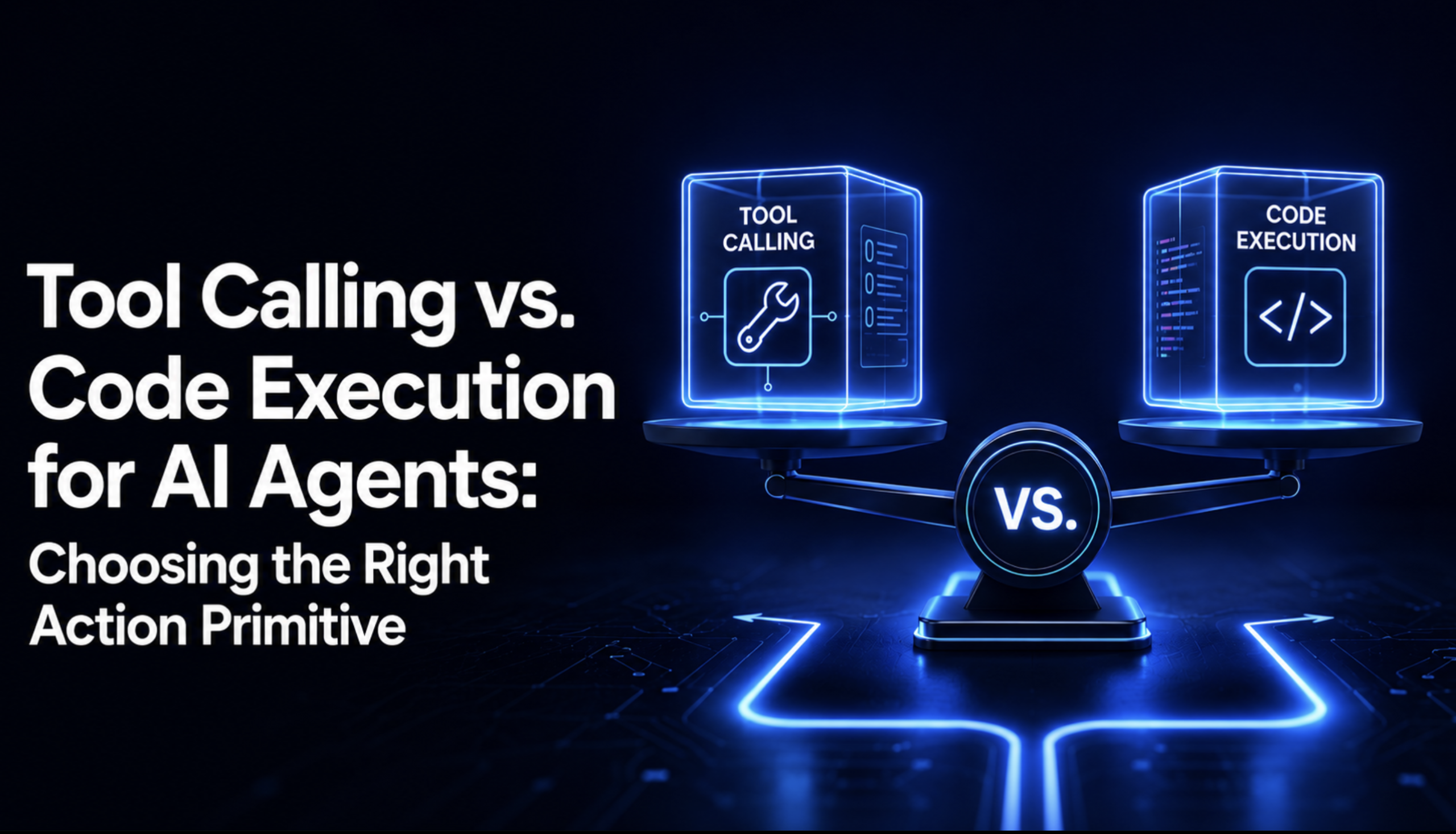
Tool Calling vs. Code Execution for AI Agents: Choosing the Right Action Primitive

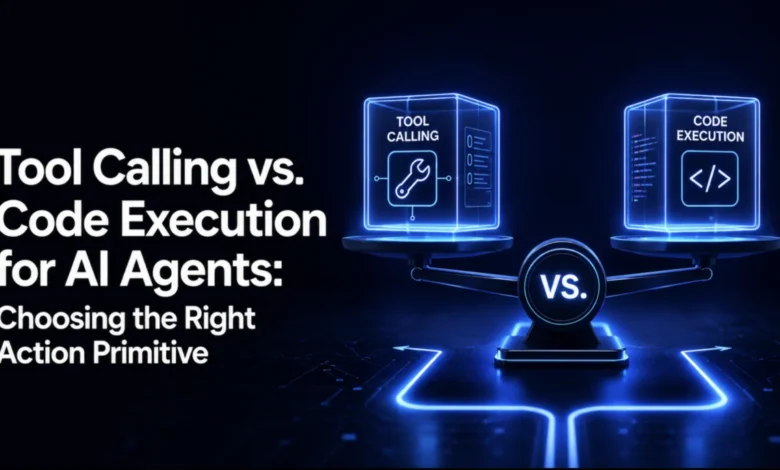
In the rapidly evolving landscape of artificial intelligence, the transition from simple chatbots to autonomous agents hinges on one critical development: the ability to take action. As developers scale these systems to manage complex enterprise workflows, they are forced to reconcile two distinct architectural primitives—tool calling and code execution. While both allow models to interact with external environments, they operate on fundamentally different mechanics that significantly impact latency, cost, and the integrity of the agent’s reasoning process. Understanding these differences is no longer just a technical preference; it is a fundamental design requirement for building robust, scalable AI infrastructure.
The Mechanics of Agentic Action
At its core, an action primitive is the interface between a language model’s latent space and the external world. Whether the goal is to query a database, perform a financial reconciliation, or trigger an API, the model must transition from generating text to executing a function.
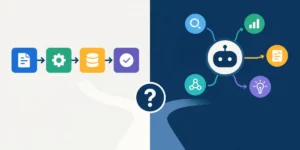
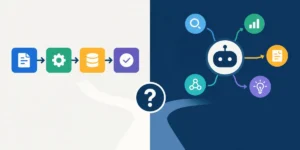
Tool calling, the industry standard for the past several years, functions through a synchronous, iterative loop. When a model determines an action is required, it generates a structured JSON payload identifying the tool and its arguments. The host application intercepts this request, executes the function in a controlled environment, and feeds the result back into the model’s context. This process is inherently transparent; every step is logged, and the model observes the direct output of its request before proceeding.
Conversely, code execution—a more recent architectural shift—treats the model as a programmer rather than a function caller. Instead of requesting a single operation, the model writes a script in a language like Python or TypeScript. This script runs within a sandboxed environment, allowing for loops, conditional logic, and parallelized calls. The model sees only the final output of the script, rather than the raw, verbose data generated by individual intermediate steps.
A Study in Scaling: The Cost of Context
To understand why this choice matters, consider the task of auditing employee expenses. If an agent must analyze twenty employees’ Q3 travel budgets—each involving dozens of line items for flights, meals, and lodging—the "tool calling" approach becomes a logistical nightmare. Each receipt would trigger an individual tool call. If twenty employees each have fifty line items, the agent processes 1,000 distinct data objects. This forces the model to load over 50KB of raw data into its context window, much of which is irrelevant to the high-level goal of identifying budget overruns.
In this scenario, the model is burdened by "context bloat." It must parse and reason through every individual receipt, increasing token consumption and latency, while simultaneously increasing the probability of "hallucinations" caused by information overload. Code execution solves this by allowing the agent to write a script that performs the arithmetic internally within the sandbox. The model only receives the final, summarized result, keeping the context window clean and the reasoning process focused.
Chronology of Architectural Evolution
The development of these primitives follows the broader timeline of LLM maturation. The 2023 "Agentic Era" began with basic JSON-based tool calling, standardized by frameworks like LangChain and various proprietary SDKs. By early 2024, researchers identified the limitations of this approach for complex, multi-step tasks.
The publication of the "CodeAct" paper by Wang et al. in February 2024 provided the academic bedrock for the shift toward code execution. The researchers demonstrated that by allowing models to use executable code, agents achieved a 20% increase in success rates on complex benchmarks. This paved the way for Anthropic’s November 2025 rollout of "Programmatic Tool Calling," which integrated code execution directly into the API layer. This feature allowed developers to tag specific tools as "allowed callers" within a script, creating a bridge between traditional function calling and full-scale programmatic autonomy.
Data-Driven Performance Metrics
The shift toward code execution is backed by measurable gains in efficiency and accuracy. According to benchmarks released by major AI laboratories, the transition from tool calling to code execution for complex tasks has resulted in a staggering reduction in token usage. In one documented workflow—migrating data from a document management system to a CRM—token requirements were slashed by 98.7%, dropping from 150,000 to just 2,000.
Furthermore, internal benchmarks on the GAIA (General AI Assistants) dataset indicate that code-centric agents outperformed their tool-calling counterparts in accuracy. Specifically, task completion rates rose from 46.5% to 51.2% when programmatic orchestration was utilized. These statistics underscore that code execution is not merely a cost-saving measure; it is an accuracy-enhancing architecture that reduces the cognitive load placed on the model.
Strategic Considerations for Enterprise Implementation
While code execution offers clear advantages for complex tasks, it is not a universal replacement for tool calling. The choice between the two requires a nuanced assessment of four specific factors:
- Task Complexity and Scope: Simple, single-step lookups (e.g., retrieving the current weather or a specific stock price) gain nothing from a sandbox environment. The overhead of initiating a code execution session can actually introduce latency that outweighs the benefits.
- Data Privacy and Security: Code execution necessitates a sandboxed environment. For organizations handling highly sensitive PII (Personally Identifiable Information), the security of the sandbox is paramount. If the infrastructure for secure sandboxing is not already in place, the operational overhead may be prohibitive.
- Auditability and Debugging: Tool calling is inherently more "traceable." Because every action is logged as a discrete event in the conversation history, auditing a failure is straightforward. Debugging a complex script written by an AI, however, requires a different set of developer skills and observability tools.
- Contextual Reasoning: If the agent’s objective is to "notice" something within a large document—such as identifying a specific tone or detecting a subtle error in a legal contract—it is essential that the model sees the data directly. Filtering data through a code script in this context would be counterproductive, as it would strip away the very information the model needs to analyze.
The Hybrid Future
The most advanced production-grade agents currently in operation rarely rely on a single primitive. Instead, they adopt a hybrid model. They utilize standard tool calling for straightforward interactions and pivot to code execution for aggregation, fan-out, and data-heavy processing.
Anthropic’s recent engineering updates reflect this reality, emphasizing the importance of "Tool Search" and "Tool Use Examples" to assist models in navigating large libraries of functions. This modular approach allows developers to treat primitives as tools in a broader toolkit rather than as a permanent architectural commitment.
Broader Implications and Outlook
The move toward code execution represents a significant shift in how we define the role of artificial intelligence. By shifting the burden of logic from the model’s internal weights to verifiable, executable code, we are creating more reliable and efficient systems. As these patterns continue to mature, we can expect to see increased integration between IDEs and AI agent frameworks, potentially blurring the line between "coding" and "agentic orchestration."
Ultimately, the goal of an AI agent is to deliver accurate outcomes with minimal friction. Whether that is achieved through a single, clean JSON call or a complex, multi-threaded Python script is a matter of architectural strategy. For developers and engineers, the skill of the future lies not in mastering one method, but in understanding the specific constraints of the problem at hand to select the most effective primitive. In the race to build autonomous agents, those who master this distinction will be the ones who build the most resilient and scalable systems.